
Participant and Carer’s Guide to the Eating Disorders Residential Treatment Centre
What happens before, during and after your stay.
Welcome to the ACT Eating Disorders Residential Centre
We want you to feel comfortable and confident about the care you receive here.
This guide has important information about what happens before, during and after your stay.
As you read through, write down any questions in the spaces provided. Our team is happy to answer any questions you have along the way.
We provide a supportive and home-like environment to work toward your recovery goals. Our program is based on the best available evidence for eating disorder treatment. You can read about the treatment program.
Support is provided for up to three months. Treatment at the centre is publicly funded so there is no cost.
Know your health care rights and responsibilities
You can expect to receive high quality services and care from us. It is important you know what to expect from us and understand your responsibilities during a stay.
The Australian Charter of Healthcare Rights (‘the Charter’) explains the basic rights all patients and consumers are entitled to receive when accessing health care services.
They are:
- access
- safety
- respect
- partnership
- information
- privacy
- give feedback.
The Charter is available in paper version. You can also access translated, Easy English and Auslan versions at www.safetyandquality.gov.au
Privacy
We respect your privacy. To care for you safely, we will need information about you and will keep records of your treatment and care. We will always seek your consent to share information with a carer. We will only share your information without your consent in certain circumstances, for example, treatment is urgent and you are unable to communicate.
Consent
We will talk to you about your options and ask for consent before starting any treatment or procedures. If you have any questions about your care, please speak with a member of your care team.
We will record your decision in your clinical notes. In most cases, you are allowed to change your mind at any time if you do not want to continue treatment.
More information
Scan the QR code for more about your health care rights or visit Rights and responsibilities

Model of care
Our Model of Care has more information about the centre. If you would like a copy visit the website or ask for a paper version:

Closed-circuit television
Closed-circuit televisions (CCTV) are in operation at the centre to ensure the safety and security of people and equipment. Signs are displayed at the entry and exits.
We value your privacy and rights. There is no CCTV in areas that you expect privacy. For example:
- bedrooms, toilets and bathrooms
- consult and interview rooms
- any other areas prescribed by privacy regulations.
Your health care information
Accessing previous health records with CHS
We keep a record of all treatments and medicines you receive.
We will not release your health records to a third party without your consent.
You can access your own health record at any time.
More information
Health record request forms are available on our website. Scan the QR code below to find the page.

Before you arrive
Getting here
The centre is located at 46 Madgwick Street, Coombs.
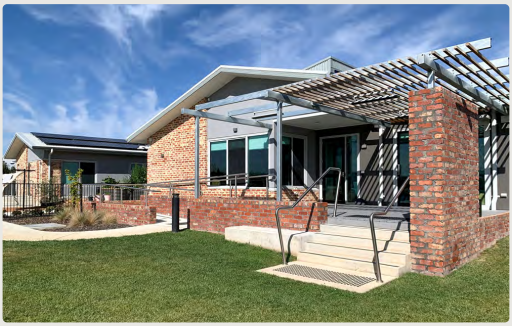
Arriving by taxi or hired vehicles
You can be dropped off or picked up at the front entrance.
Arriving by bus
The nearest bus stops are on Annabelle View, near Harold White Avenue. You can use the Transport Canberra journey planner to plan your travel.
Arriving by car
There is on-site parking, including accessible parking.
Pre-admission
The pre-admission assessment occurs before any planned admission.
You will meet with different members of the treating team so that they can understand your recovery goals and work with you to decide if the centre is the right treatment for you right now.
You will have the opportunity to visit the centre to get a feel for the space before you start.
Assessments may include:
- Medical appointment with the Nurse Practitioner.
- Appointment with our psychiatrist and a mental health clinician.
- Dietitian assessment.
- Orientation–meet centre staff member and tour the centre.
You can write down any questions or concerns you might like to remember to talk to your treating team about.
If a bed is not available immediately, we will provide options for support while you wait.
Your admission process
Your admission date and time will be organised by the intake clinician.
Centre staff will help you throughout the assessment appointments, admission process and your stay at the centre. They will meet you when you arrive to welcome you to the centre.
Building access
Access to the centre is via an intercom located at the front entrance.
We will give you a bracelet when you arrive that will give you access to your bedroom and shared spaces. This bracelet acts like your key; you will need it to move throughout spaces in the centre.

We are a smoke-free centre
All Canberra Health Services locations are smoke-free.
There is no safe level of exposure to environmental tobacco smoke; therefore, smoking products including e-cigarettes, herbal products or personal vaporisers are not permitted.
Our centre is also alcohol-free.
If you have concerns about not using nicotine, alcohol, or other drugs during your stay, please talk to your key worker about the support we can provide.
Help for individual needs
If you need help, talk to your key worker or any member of your treating team. We can make changes to support you and your carer.
Help for a physical disability
Wheelchairs are available upon request and there are accessible toilets in the centre. Please let us know how we can support you.
Help for people who are Deaf or hard of hearing, blind or have low vision
We welcome guide dogs and audio dogs at the centre. Please talk to the team if you would like to bring another assistance animal. Hearing loops and braille are available in some locations. Please let us know if you need an Auslan interpreter and we can arrange this for you.
Inclusion for all
The centre is an inclusive and welcoming space for everyone, regardless of gender, sexual orientation or identity, religion, background, culture or race. Staff, participants and visitors should be respectful to others at the centre. Discriminatory behaviour or language is not tolerated.
Spiritual support
Spiritual support services are available throughout CHS. Talk to a staff member if you would like more information about how to access this service.
Translating and interpreting help
Let us know if you need an interpreter–we can arrange this service for you. If you are a carer, you can arrange for an interpreter for free by calling Translating and Interpreting Service on 131 450.
Support for Aboriginal or Torres Strait Islander peoples
If you or your family members identify as Aboriginal or Torres Strait Islander peoples, let your key worker know. This helps us plan and deliver suitable health services and ensures your health treating team are considerate of your cultural practices and needs. Our Aboriginal or Torres Strait Islander Liaison Service can be contacted by phoning 02 5124 2055. You can also ask your key worker about accessing this service.
While you’re here
What to bring
We want the centre to be a safe and inclusive environment for everyone.
Wear comfortable clothes that are suitable for sitting or gentle outdoor activity. We ask you to wear day clothes for the time that you spend engaging with others and keep pyjamas for sleep and exercise clothes for exercise. Please avoid wearing revealing clothing or anything with offensive language, slogans or pictures.
You will have access to a laundry to wash your clothing and any personal linen (such as a pillow-case, blankets or doona) during your stay.
Essential items to pack:
- Personal hygiene items/toiletries (for example, toothbrush and toothpaste, deodorant, self-care products, sunscreen).
- Clothing both for indoors and outdoors, including options for going out of the centre to cafe or restaurants. Extra jumpers and cold-weather options are recommended.
- Footwear appropriate for indoors and outdoors (including enclosed shoes).
- Hat and sunglasses.
- Backpack/day pack to carry personal items and take with you on outings.
- 3 days supply of medications.
You may not have access to shops in the first few weeks of the Stability phase. We encourage you to bring items to make your room feel more homely.
Additional items (optional):
- Pillow or doona and cover.
- Journal, books, or small hobbies (for example, colouring, crochet, knitting etc.)
- Comfort items, such as sensory items, cushions or photographs.
- Laptop, tablet, or mobile phone, and chargers.
We ask that you do not share your belongings and keep them for your own use. If you need something, for example warmer clothing, let us know and we can arrange a way to get this for you.
What not to bring:
- Cigarettes or vapes.
- Alcohol, drugs, knives/weapons, cigarette lighters/matches, sharp objects, or other prohibited items.
- Large electrical appliances, such as televisions or coffee machines.
- Large amounts of cash or valuable items.
- Food or drinks from home. There will be opportunities to bring in your own food and drinks in later stages of care.
Environment checks
There may be times when searches may be necessary to provide a safe care environment. Any search of your person or property will only occur in very specific circumstances and with your consent.
Belongings and valuables
When you arrive at the centre, a staff member will assist you to unpack your belongings.
This is for a couple of reasons:
- We want to make sure that you leave with all the belongings that you came with.
- We want to make sure that you do not bring in any items that could make you or anyone else unsafe or negatively affect your or anyone else’s recovery.
- Staff may need to hold some items for you when they are not in use.
We discourage you from bringing in valuable items. We recommend that you leave them with a trusted person. You can ask the staff to keep valuable items in our safe until you are discharged.
Please keep all personal items in your room. If any of your belongings go missing during your stay, please tell us so we can investigate this fully.
Telephone and computer use
You are welcome to bring your laptop, tablet, or mobile phone to the centre. Please do not use these during individual or group therapy unless it is part of an activity. Ask for consent before taking any photos of other people. If we ask you, please put away your electronic devices. You are responsible for personal items at all times.
Our program supports you to develop structure and routine including healthy night-time bed and sleep routine. We encourage you to put away electronic items after 9 pm to allow time for settling into your bedtime routine.
WIFI – Internet access
You will be able to access our free WIFI during your stay.
Electronic games and entertainment
We will check that electronic games and entertainment (such as movies) brought into the centre are appropriate. This is because even a ‘G rated’ movie or game can have negative effects. Please do not bring games or movies of a MA15+ rating or above.
Protecting against harmful effects
If we are concerned that your use of an electronic device may be causing harm to you or anyone else, we may ask you to remove it or limit use. Examples of harmful use include:
- accessing/viewing inappropriate sexual content
- violent content
- ‘pro eating disorder’ content
- taking photographs, or recording staff or other people without their consent
- making calls of a threatening or harassing nature.
Electronics and appliances
You are welcome to bring small electrical appliances,such as:
- electric toothbrushes
- electrical razors
- hairdryers.
Check with your key worker if you would like to bring any other items not mentioned already.
All electrical items brought into the centre must be in good working order.
You can write down any questions or concerns you might like to remember to talk to your treating team about.
The therapeutic environment
Your treating team
Your treating team is made up of doctors, nurses, allied health team members, and non-clinical team members. You will meet different team members during your stay. Our team members wear name badges and will introduce themselves to you. You can ask your treating team any questions you have about your treatment and care.
Your treating team may include:
- Consultant Psychiatrist
- Nurse Practitioner
- Nursing staff
- Allied Health and allied health assistants
- Students on placement.
Your key worker or the nursing team leader is your first point of contact if you have any concerns throughout your stay. They will work closely with the rest of the team to co-ordinate your therapy and care.
Stages of care
Our treatment approach has three stages:
Welcome and stability phase
- This stage is focused on orienting you to the treatment program, completing assessments and settling you into the Centre.
- You and your treating team will set realistic challenges based on your recovery goals. You will work towards meeting these with a high level of support.
Challenge phase
- You will focus on exploring and developing new skills to tackle factors that maintain the eating disorder with a moderate to high level of support.
- You will focus on applying skills learnt in a range of different situations (e.g. social settings) with a low to moderate level of support.
Connection and Graduation
- You will focus on preparing for your return home with a lower level of care.
- You and your treating team will reflect on and celebrate your achievements. We will support you with the transition home and link you in with appropriate ongoing supports.
The stage you are in informs your care plan, including level of support at mealtimes, participation in group activities, household tasks, and leave arrangements. At each stage, you will set recovery goals for progressing to the next stage. Other participants will be in different stages of the program to you.
You will have regular meetings with the treating team to discuss the stage of care that provides the right level of support for you.
Participating in your care
It is important to ask questions about your care and treatment options. Speak up if you have questions or concerns. You should also ensure you receive all the information you need to make informed decisions.
Questions to ask about your treatment, medical procedure or therapy:
- Why do you think this is right for me?
- Is this new or uncommon? Is there research that says this is right for me?
- How many times have you done this medical procedure?
- What has happened in the past when you have done this?
- How quickly do I need to have this? What will happen if I do nothing?
- How long will it take me to get better afterwards?
- Are there things about my life I will need to change?
- Will it cost me anything?
- What else can you tell me that will help me decide if this is right for me?
- What if I need time to talk with my family, friends or someone else about this before I decide?
Involvement of Carers, Family,and Supporters
We actively encourage the involvement of carers, family, and supporters in your treatment. This can include attending care planning meetings, individual therapy sessions with you, meal support sessions, and carer skills and support groups. You and your treatment team can arrange this as part of your care plan. Carers and families can also seek information and support through the Butterfly Foundation, Carers ACT.
You can write down any questions or concerns you might like to remember to talk to your treating team about.
Daily routines
Therapy
Our therapy program is trauma-informed and focuses on healing your relationship with food, exercise, and your body.
This includes regular and adequate eating of three meals and three snacks each day to support your physical and psychological recovery.
Group and individual therapy sessions aim to identify factors that maintain the eating disorder and help you learn different ways of responding to your thoughts and feelings. You will also work on developing self-worth, identity, and quality of life outside of the eating disorder. The therapeutic program will vary depending on the expertise and availability of staff and therapists during your stay.
Group Therapy
Our team runs various group therapy sessions at the Centre. While the focus and structure of the group sessions varies, they may include:
- evidence informed talking therapies for eating disorders and other cooccurring mental health issues
- non-verbal therapies like creative arts therapy, music therapy, and movement groups
- psychosocial interventions such as horticulture and animal assisted therapies
- off-site excursions to develop flexibility and normalise social eating, dependent on your stage of care
- journalling, self-reflection, and mindfulness–sometimes this may be self or peer led.
You are expected to attend all group therapy sessions unless you have an agreement with your treating team. For example, you have approved leave or you are participating in another therapeutic activity.
Individual Therapy
You will also have a health professional who will be your individual therapist. They could be a mental health nurse, psychologist, social worker, or occupational therapist.
Individual therapy sessions are a time to explore and address issues specific to you. Your carers, family, or supporters may be included in sessions with your consent.
Therapies may include:
- Enhanced Cognitive Behavioural Therapy for Eating Disorders (CBT-E)
- Specialist Supportive Clinical Management (SSCM)
- Maudsley Model of Anorexia Nervosa Treatment for Adults (MANTRA)
- Motivational Enhancement
- Interpersonal Psychotherapy (IPT)
- Other cognitive and behavioural therapies, such as Acceptance and Commitment Therapy (ACT) and Dialectical Behaviour Therapy (DBT).
Individual time
The Centre has spaces for quiet time, and there are opportunities for time alone in your room each afternoon. The Centre has board games, TV and craft supplies.
Nutrition
Our dietitians will work with you to create a meal plan to support your recovery.
They will also provide individual and group education sessions about nutrition and nutrition-related topics based on the most up-to-date research and guidelines. This will help you to become more informed about food and nutrition and challenge disordered beliefs about food and nutrition.
You can write down any questions or concerns you might like to remember to talk to your treating team about.
Meal Support Therapy
Our program aims to help you develop a new and recovery-focused relationship with food. We recognise that meal times can be stressful. The program has been designed to provide support before, during and after meals.
We will sit with you at meal times to help you develop healthy eating behaviour, provide encouragement and distraction.
Meal support non-negotiables
You are expected to complete all meals that are provided during the program. Most meals will take place in the dining room as a group. If you are having difficulty completing a meal, we will support you to practice skills that you have learnt during treatment.
If you do not complete a meal, you will take an oral nutritional supplement.
Menus
The menus are carefully designed by our dietitians. The menu is designed to support your recovery, focusing on regular and adequate eating, increasing variety, and including food challenges.
You will be able to choose from a limited menu for main meals and snacks. We will take into consideration your preferences, allergies, sensory sensitivities, and religious and/or cultural considerations.
Food preparation
As part of recovery, you will learn to serve yourself appropriate portion sizes for your nutritional needs. Our dietitians will provide education to help guide you in this process. Depending on the level of support you require and stage of care your food will be either be served by a staff member, yourself under supervision, or yourself without supervision.
All meals and drinks will be provided for you at the centre. Food preparation occurs offsite. If you would like to bring in additional food items, please discuss this with your dietitian. You will have access to a shared fridge and pantry to store any items brought from home.
Other meal support opportunities
Depending on the goals in your care plan and stage of care, you will also have the following opportunities:
- cooking and preparing meals for yourself and/or with others
- spontaneous snack choice
- surprise snack
- independent food challenges
- meal times with carers, families, or supporter
- eating out at cafes or restaurants.
Post-meal support
The time after a meal can be very hard with eating disorder thoughts and distressing emotions becoming overwhelming. We will help make sure you have enough supervision and support after meals. This may involve scheduling group or individual therapy sessions after meals or being around your key worker or support staff during recreation time. The amount of post meal support will depend on your stage of care.
We will encourage you to use the bathroom before meals. You will only be able to use the bathroom during meals or in post meal support time in exceptional circumstances. In these cases, one of our team will be nearby and may ask you to count, talk or sing while using the bathroom. We will also check the contents of the bowl before you flush the toilet.
You can write down any questions or concerns you might like to remember to talk to your treating team about.
Medical care
Medical team
Our psychiatrist will review your mental state, psychosocial functioning, and medication based on feedback from you and your key worker. You will meet with them throughout your stay.
You will also meet with our nurse practitioner who will look after your physical health needs during your stay.
Our medical team will talk to your regular GP about how to best support you while at the Centre and after you leave. Appointments with your regular GP cannot be billed under Medicare during your stay. If you do require an appointment with your regular GP, we will discuss payment arrangements with you.
Medication
All medication will managed by the Medical team during your stay. The Pharmacy service will deliver the medication to the centre, and it will be stored and given to you by the nursing staff. You may need to use your own supply of medication for the first few days until the pharmacy can deliver to the Centre.
You have the right to decline medication. If you do, the nursing staff will let the treating team and key worker know. We may arrange for you to see the psychiatrist or doctor to talk about any issues or changes to your medication.
Vital Signs check
Nursing staff will check vital signs every morning before breakfast to monitor your physical health. We will let you know if you need vital sign checks at other times of the day. If at any point you start feeling unwell, please talk to the nursing staff. You may have routine bloods taken during your stay.
Weight check
Your weight will be measured at a minimum of once per week or as needed as part of your care plan.
Outings, visitors and leave
Social outings
We will sometimes go on outings as a group. Activities will be focussed on having fun and group connection and may include going to a gallery or movie. You will be required to pay for any costs associated with the activity. However, we will be sensitive to financial issues so that cost does not prevent you attending.
Restaurant /café outings
Dependant on your stage of care, we will occasionally go to a restaurant or cafe for a meal. These outings provide an opportunity to get used to eating out, choosing from a menu, and selecting appropriate portion sizes in that setting, in a supported environment.
Visitors and leave
We recognise the important role that loved ones have in supporting you. Visits and leave with carers, family and support people will be discussed and included in your care plan according to your stage of treatment.
Visits and leave are timed to fit in with the therapeutic program and support your full participation in treatment. We will check in with you before and after leave to support your recovery goals and care plan.
During the Stability phase you will not have access to leave, to help you settle into the Centre and the program.
Please notify staff of your intention to leave the centre at any time or if you wish to self-discharge.
Important information for visitors:
- please check with us before bringing any items into the centre
- alcohol, drugs, knives/weapons, cigarette lighters/matches, sharp objects, or other prohibited items are not to be brought onto the premises or given to participants
- participants should not be given additional medications to those prescribed at the Centre
- children visiting the centre must be accompanied and supervised by an adult
- visits generally take place in the open communal areas. If there is need for privacy, staff can assist with providing a quiet space
- We recommend you contact us prior to visiting.
We can give visitors information about resources available near the centre, including:
- the closest café facilities
- access to toilet / bathroom / baby change facilities
- courtyard and garden areas.
The safety of participants, staff and visitors is important to us. Visitors are expected to show respect towards participants and staff at the centre. Visitors may be asked to leave if:
- the safety of the person, visitors or staff may be compromised, or
- staff determine they do not have a legitimate reason to be at the centre.
If a visitor becomes distressed by their visit, staff will provide supportive counselling and assist the person to access appropriate support.
You can write down any questions or concerns you might like to remember to talk to your treating team about.
A typical day
Each day follows a set structure for meals and activities. Below is an example of a typical day, however, the activities we offer can vary. We will give you the current schedule when you arrive at the centre.
On weekends, there is additional free time to allow for visitors and quiet time.
| Time | Activity |
|---|---|
| 7:00 am - 8:00 am | Wake up/self care |
| 8:00 am - 8:15 am | Vitals/ medication |
| 8:15 am - 9:00 am | Breakfast |
| 9:00 am - 10:00 am | Group therapy/ individual therapy time |
| 10:00 am - 10:30 am | Morning tea |
| 10:30 am - 11:30 am | Group therapy/ individual therapy |
| 11:30 am - 12:30 pm | Group therapy/ individual therapy time |
| 12:30 am - 13:30 pm | Lunch |
| 13:30 pm - 14:30 pm | Group therapy/ individual therapy time |
| 15:00 pm - 15:30 pm | Afternoon tea |
| 16:00 pm - 17:00 pm | Leave |
| 17:00 pm - 18:00 pm | Dinner |
| 18:00 pm - 19:30 pm | Family/friend visit or me time or movie time |
| 19:30 pm - 20:00 pm | Supper |
| 20:00 pm - 20:30 pm | Observation time |
| 20:30 pm - 21:00 pm | Bed time |
House upkeep
You will work with our team to contribute to the house upkeep. This creates a home-like environment and strengthens the ‘shared community’ feel at the centre.
Jobs we do together include:
- tidy the shared living areas
- prepare drinks at mealtimes
- table clean-up
- rubbish/recycling
- care for the garden.
Roommates and rooms
Most of the bedrooms are shared rooms. We understand that people have different experiences and preferences about roommates. Roommates are decided with consideration of the safety of everyone at the centre. You may be required to change rooms or roommates during your stay.
We ask that you be respectful of the shared space and your roommate’s preferences (for example, noise level, cleanliness). You will be responsible for making your bed each day and keeping your bedroom and bathroom tidy.
You are unable to access your bedroom during the day. Please gather all belongings that you may need for the day before leaving your room for breakfast. There is a place to store your belongings.
Bedtime
You will be able to return to your room to get ready for bed after the evening snack post meal support time is over. We ask you do not leave your room after lights are out (10pm) unless you need to go to the bathroom or seek support from staff.
House meeting
The house meeting is a chance to update everyone on changes occurring throughout the house including new admissions, staffing changes, upcoming outings, external visitors and program changes. It is also an opportunity for participants to report maintenance issues. Issues with the treatment program are not addressed in this meeting.
Communicating about difficulties in the program
The centre is a voluntary treatment program. This means that no one can make you attend or stay if you do not want to. We expect that if you come to the centre you agree to fully participate in eating disorder treatment and respect the guidelines that we put in place to keep everyone at the centre safe.
We also understand that recovery from an eating disorder is extremely challenging and that you may have difficulty progressing toward your recovery goals. If you feel like the centre is not the right place for you, talk to your treating team so that we can problem solve how to best support you. If the centre staff have concerns that the level of support we are providing is not meeting your needs, we will discuss this with you.
Indicators that treatment at the centre may not be meeting your needs include:
- not attending therapy sessions
- not adhering to your nutritional plan
- engaging in behaviours that interfere with recovery
- self-injury
- inappropriate personal device use
- inappropriate conduct with others
- not participating in medical checks, including weighing and vital observations.
If you are observed to have difficulty progressing toward your care plan goals or not following the Participant Agreement, your treating team will talk to you about what support is needed to progress toward your recovery goals, including whether a different stage of care is more appropriate.
If you are not able to fully engage in the program or adhere to the participant agreement, or it is not meeting your needs at this time, it may be agreed that you take a break. The treating team will discuss the barriers and alternative supports with you. Carers, families and supporters will be involved when possible.
Unplanned discharge
Your safety and the safety of everyone at the centre is a priority for the treating team and CHS. The following behaviours will result in discharge from the centre:
- alcohol/ or other drug intoxication
- violent or aggressive behaviours toward others
- sexual misconduct
- criminal activity whilst on the centre premises.
- non adherence to the participant agreement and treatment non negotiables.
You can write down any questions or concerns you might like to remember to talk to your treating team about.
Keeping you safe
We will keep track of your physical and psychological health. As part of therapy, you will learn strategies to manage distress. We are here to help you practice these strategies as needed during your stay.
If things are getting worse and you cannot be safely managed in the centre, we will call an ambulance to take you to the Emergency Department. Ambulance insurance is recommended as the centre is not resourced to cover costs of transportation.
See details here: www.esa.act.gov.au/about-esa-emergency-services/ambulance/fees-and-charges

Sexual Safety
People are often very vulnerable when they are in a treatment program. It is not okay to have sexual and intimate contact with other people (including consensual) while you are here. To make sure everyone is safe – any unwanted touching, sexual comments, indecent exposure and other unsafe behaviours Will be taken seriously.
Please let a staff member know if you experience something that makes you feel uncomfortable while you are in the Centre.
Preparing to leave
From the time you start at the program, we will support you to prepare for returning home. Some of the ways that we do this include:
- making sure you have a care team set up. This may include GP, psychologist/counsellor, dietitian, psychiatrist in the private or public setting
- including your carers, family, and/or supports in meal support and therapy sessions throughout your stay
- including your carers, family, and/or supports in care and discharge planning throughout your stay with;your consent.
When it is time for you to say goodbye, we will acknowledge your courage and progress with a graduation ceremony. We encourage you to take your journals and worksheets with you so you can remind yourself of what you have learnt and how far you have come.
We ask for your feedback so that we can continue to improve our program.
To provide feedback on your experience at the Centre, scan the QR code below or go to:

Feedback forms for compliments and complaints are available in the Centre, you can also scan the QR code below

Please let us know if you want to express your appreciation another way. Thank you notes and cards are always appreciated.
Research and evaluation
We are committed to the ongoing improvement of the centre and advancing understanding of how to best support people with eating disorders. With your consent, we may request to use de-identified data including responses to questionnaires completed during your stay as part of program evaluation.
The outcome of this evaluation may be presented at conferences or published in peer-reviewed journals to advance the understanding of the effectiveness of residential programs.
The centre also partners with other institutions, such as universities, and you may be invited to participate in this research while a participant at the centre.
All research participation is voluntary. Any decision to participate or not participate in research will not affect the treatment that you receive at the centre (unless there is a specific trial of a treatment). You can change your mind and withdraw your consent to participate in research at any time.
After you leave
After you leave the centre
Lost property
If you think you may have left something behind, please let us know as soon as possible. Any property remaining at the centre a week following discharge may be disposed of unless alternative arrangements have been made.
GP follow up
We will ask you to see your GP or another health professional for a follow-up appointment. If you have already given us permission to share your discharge summary, your GP will have all the information they need for your appointment.
Discharge/ Follow up appointments
After your stay here, you may be an outpatient at Canberra Hospital or one of our community programs, or you may attend another health care provider or service. Attending these appointments will help you to maintain progress made while at the centre and stay well.
We will arrange your follow-up care with you while you are still in the centre. This includes communicating with you and your community care team in discharge planning and throughout your stay to support the transition home.
There are some services you can self-refer to, or you can ask your GP or other health care worker to refer you.
What to do if you’re not getting better
If you are feeling unwell or your eating disorder symptoms are worsening, you should talk to your GP. If you are very sick, please call 000 or go to the nearest emergency department.
Useful contacts and resources
Canberra Health Services:
ACT Eating Disorders Clinical Hub
Phone: 02 5124 4326
Email: CHS.edch@act.gov.au
Web: www.canberrahealthservices.act.gov.au/services-and-clinics/services/eating-disorders-clinical-hub
Access Mental Health
24 hours/seven days a week
Phone: 1800 629 354
For people who have concerns about their own or someone else’s mental health. We provide information, make recommendations, and/or refer you for further mental health support.
Canberra Hospital Switchboard
24 hours/seven days a week
Phone: 02 5124 0000
Consumer Feedback and Engagement Team
Phone: 02 5124 5932
Email: HealthFeedback@act.gov.au
Central Health Intake
Monday to Friday (excluding public holidays).
Community based services phone: 02 5124 9977, 8am – 5pm
Hospital services phone: 02 5124 2415, 8.30am – 4.30pm
Please note that both phone lines close at 3.30pm every Wednesday for quality and staff training.
Central Health Intake (CHI) offers a single point of entry for ACT residents to access a wide range of services.
Advocacy and support organisations in the ACT:
Health Care Consumers’ Association of the ACT (HCCA)
Phone: 02 6230 7800
Email: adminofficer@hcca.org.au
Web: www.hcca.org.au
Carers ACT
Phone: 02 6296 9900
Email: carers@carersact.org.au
Web: www.carersact.org.au
ACT Disability, Aged and Carer Advocacy Service (ADACAS)
Phone: 02 6242 5060
Email: adacas@adacas.org.au
Web: www.adacas.org.au
Advocacy for Inclusion (AFI)
Phone: 02 6257 4005
Email: info@advocacyforinclusion.org
Web: www.advocacyforinclusion.org
Women with Disabilities ACT (WWDACT)
Email: info@wwdact.org.au
Web: www.wwdact.org.au
Migrant and Refugee Settlement Services (MARSS)
Phone: 02 6248 8577