
Listen to this episode
About this episode
McGrath Breast Cancer Nurse, Kerryn, discusses myths and preconceptions surrounding breast cancer, including the misconceptions about chemotherapy and hair loss. She shares her journey into nursing, her role in supporting patients and families and the evolution of cancer treatment. The conversation also covers the vital impact of the McGrath Foundation in providing specialised cancer care.
Guest speaker
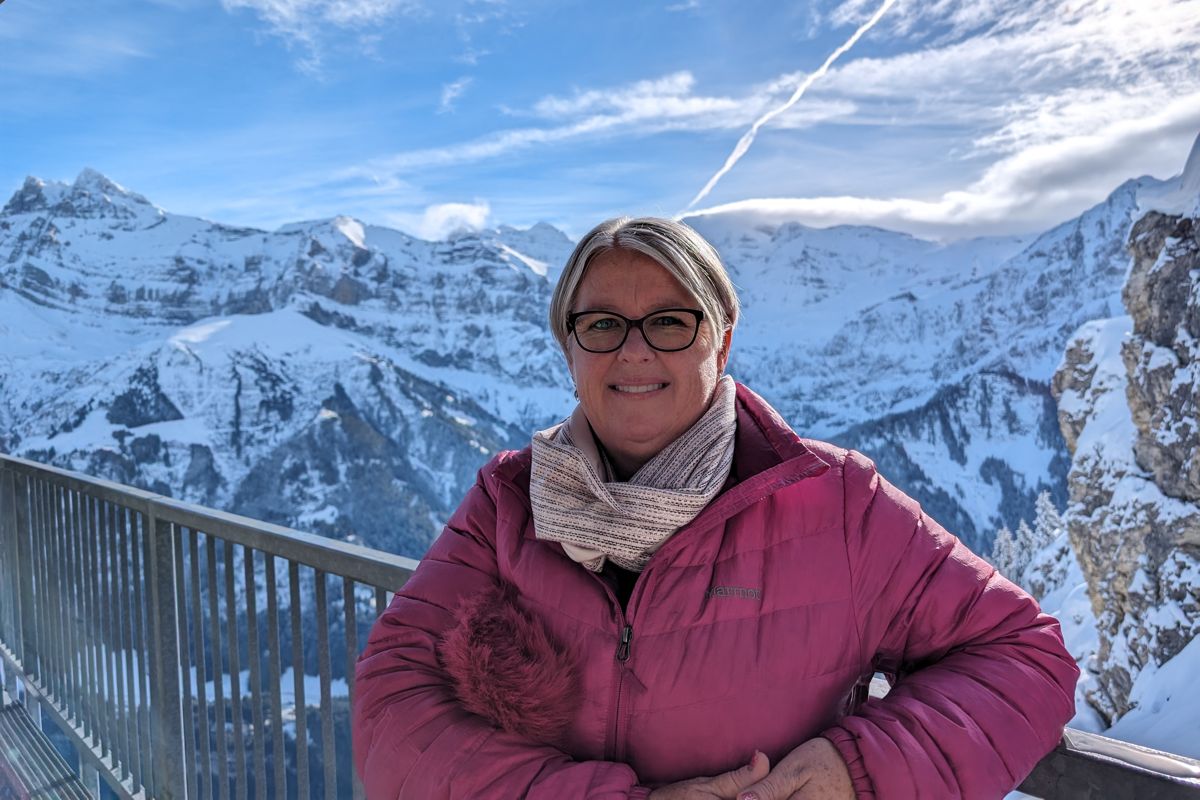
Kerryn Ernst
Kerryn is the Metastatic Breast Cancer Specialist Nurse within the Cancer Supportive and Palliative Care Team. Partly funded by the McGrath Foundation, she provides support and care coordination to people with metastatic breast cancer receiving treatment at the Canberra Region Cancer Centre.
Kerryn has also played a pivotal role in the development of the McGrath Model of Care and the Cancer Navigator role. She holds a Master of Nursing (Nurse Practitioner Oncology / Breast Cancer) and a Master of Palliative Care from Flinders University, along with other specialist certifications.
Kerryn’s expertise spans advanced patient care, workforce development, and project management, including initiatives to enhance Advance Care Planning and improve service delivery.
Dedicated to patient-centred care, Kerryn is committed to fostering innovation, professional development, and high-quality outcomes in oncology nursing.
Transcript
[00:00:00] Dr Sanjaya Senanayake: Hi, this is Dr Sanjaya. Did you know that not all breast cancer patients receiving treatment are too ill to work or will lose their hair? My latest Behind the Curtain guest, Kerryn Ernst, speaks to me about the breast cancer myths and preconceptions that she has encountered as a McGrath Breast Cancer Nurse.
[00:00:26] Dr Sanjaya Senanayake: From the time of diagnosis and throughout treatment, Kerryn is there every step of the way to support patients and their families along the breast cancer journey. Let's jump into our chat.
[00:00:45] Dr Sanjaya Senanayake: Hi everyone, it's Dr Sanjaya here and welcome to our Behind the Curtain podcast. Today we have Kerryn Ernst with us. Kerryn is a Metastatic Breast Cancer Specialist Nurse working at Canberra Health Services and the McGrath Foundation. And I'm sure we're going to hear a lot of interesting things from Kerryn today.
[00:01:07] Dr Sanjaya Senanayake: So Kerryn, thank you for joining us. Kerryn, when did you first get interested in nursing?
[00:01:15] Kerryn Ernst: In year 11. So, I knew I didn't want a desk job. So, a lot of the options in Canberra were sort of to go into the public service or to go to uni. But, I just knew I always wanted to be a nurse and care for people and, I just liked the idea.
[00:01:25] Kerryn Ernst: I've always loved hospitals. Love the idea of hospitals. Just busy. Always moving. People doing stuff.
[00:01:31] Dr Sanjaya Senanayake: And is that because there's a family connection, or?
[00:01:41] Kerryn Ernst: Nope. I'm the first nurse in the family. Yeah, I think my youngest son's looking at paramedicine.
[00:01:44] Kerryn Ernst: So that'll be nursing and paramedics degree. Yeah, he's very interested in it.
[00:01:48] Dr Sanjaya Senanayake: Right. And again, you mentioned that you grew up in Canberra, was it? So, you're a Canberran?
[00:01:54] Kerryn Ernst: From the age of 11, but yes, I've only been thinking the last few years, yes, I'm a Canberran. So, been here most of my life now.
[00:02:01] Kerryn Ernst: Married here, children born here, I'm Canberran.
[00:02:05] Dr Sanjaya Senanayake: And very happy with Canberra?
[00:02:06] Kerryn Ernst: Love it. Love it.
[00:02:09] Dr Sanjaya Senanayake: Surprisingly of the people I've interviewed, many have come from other places, but quite happy to settle down and call Canberra home.
[00:02:20] Kerryn Ernst: Yeah, exactly. That's what I did. I left the big hospital, Royal North Shore.
[00:02:23] Kerryn Ernst: I worked there for a few years and overseas at St Vincent's Hospital in Dublin. So, I did my time and, you know, got all the career highlights out of the way and then came to Canberra. But then my career's just been great since I got here as well.
[00:02:35] Dr Sanjaya Senanayake: And of course, getting into nursing is one thing, it's like becoming an intern, and then you have to decide what you're going to do within that profession for the rest of your life.
[00:02:43] Dr Sanjaya Senanayake: Was it a very easy connection to oncology and cancer, or was it fortuitous, or how did you fall into that?
[00:02:51] Kerryn Ernst: I think it was a combination. Canberra nursing always, it always held some sort of appeal. I don't know why, if it was that whole, sort of private business. I mean, this is 25 years ago. Cancer was, you know, people didn't talk about it, and you didn't see people with cancer as much as you do now.
[00:03:09] Kerryn Ernst: And then my first placement as a new graduate at Royal North Shore Hospital was in oncology and very lucky to be on a ward where there were, you know, eight level two nurses. Lots of new grads. North Shore used to take 100 new grads a month in the consortium, you know, the new grad years. So very, very well supported.
[00:03:29] Kerryn Ernst: Paid to go and do your graduate certificate in oncology, so I did that. And then my auntie was diagnosed with a very aggressive breast cancer over in Port Lincoln. And it was around the same time that I remember seeing Jane and Glen McGrath on the TV when they turned the tomato sauce bottles pink.
[00:03:46] Kerryn Ernst: They did it as a fundraiser, one of the first things they did. And I remember seeing that and thinking, oh, that's going to be great for my auntie. She had no support, had to travel to Adelaide for her treatments and things. Yeah. Lots of complications, wound breakdown, the whole lot. And I just remember thinking, I want to work for them.
[00:04:02] Kerryn Ernst: And here I am 15 years later.
[00:04:03] Dr Sanjaya Senanayake: Wonderful. And has most of that work. been in Canberra, or has it?
[00:04:08] Kerryn Ernst: Yeah, since I've been with the McGrath Foundation, yes, it's been here with Canberra Health Services. So, Professor Stuart Harris, who has since retired, had the vision to have a breast cancer nurse for patients with metastatic disease.
[00:04:22] Kerryn Ernst: So, I was the first Metastatic Dedicated Breast Care Nurse with the McGrath Foundation and now there are up to about 30 nurses around the country.
[00:04:29] Dr Sanjaya Senanayake: Oh, wonderful. And that's a name I actually remember very fondly, Professor Robin Stuart Harris. I've known him for a long time and his dad actually did a lot of pivotal research into influenza back in the UK.
[00:04:44] Dr Sanjaya Senanayake: So
[00:04:45] Kerryn Ernst: Ah
[00:04:45] Dr Sanjaya Senanayake: Very nice guy.
[00:04:46] Kerryn Ernst: Yes. He is very nice.
[00:04:48] Dr Sanjaya Senanayake: And now, with this role, what sort of things do you do, Kerryn?
[00:04:52] Kerryn Ernst: Yeah, so, getting a cancer diagnosis is pretty shocking for a lot of people. Getting told that your cancer has recurred or that it's metastatic in the first instance, can be in Dr Craft's words, catastrophic for a patient. It really is very confronting. So, despite the emergence of new treatments, better diagnostic tools and things like that, we still can't cure metastatic breast cancer. So, my job is to try and help people understand their diagnosis. A lot of people have had cancer treatment in the past, and it might be 30 years, and now they've got a spot in their liver, and they don't understand how that's related to their breast cancer from 30 years ago.
[00:05:37] Kerryn Ernst: So trying to educate people about that. Sometimes they have a lot of cancer, and they've never been diagnosed with cancer before, and it's in lots of different sites. So trying to help people understand that would be the majority of my work. Coordinating treatments and appointments and blood tests and scans and everything is another part.
[00:05:56] Kerryn Ernst: So a lot of liaison within the multidisciplinary team. Um, and then, yeah, a lot of managing side effects and treatments and then of course, you know, advanced care planning. That's something I'm quite passionate about. That everyone should have their advanced care plan done. There's no certainties in life, so, yeah.
[00:06:17] Dr Sanjaya Senanayake: And look, with advance care planning, obviously it's touching on a topic that people don't really think about and like to talk about. Do you find people are very receptive to that, or it can vary?
[00:06:31] Kerryn Ernst: Uh, it can vary. I think, I've recently done some work with the advance care planning team, and we would go out to COTA at Hughes, Council of the Aging, people there were making appointments to come in, perfectly healthy and well people, were completing their advanced care plans, which was really good to see, that people are proactive about it.
[00:06:51] Kerryn Ernst: But they're the healthy, well people at home, you know, we've got sick people in hospital. And these patients, we don't know what their choices are and we don't know who to contact and we don't know, well, we do have contact details, but you know, the important people to have, so I think it's just really important thing to have done and I think a lot of people are relieved when it is done.
[00:07:07] Kerryn Ernst: It's just something they don't have to think about anymore. It's done.
[00:07:10] Dr Sanjaya Senanayake: And you've talked about the McGrath Foundation. So how do you balance that or how does that connect with your Canberra Health Services role and what you do with them?
[00:07:22] Kerryn Ernst: So, the McGrath Foundation fund breast care nurses around the country and so their aim is 250 nurses by 2025.
[00:07:29] Kerryn Ernst: I think we're close to that at the moment. And now they're looking at taking on all cancer nurses. So, they're going to fund other tumour streams now, so moving into the lung cancer space and brain tumours and things like that, knowing that their cancer specialist nurses make a difference in the patient's cancer experience.
[00:07:48] Kerryn Ernst: So, they give us professional development, a nurse portal, support, all that sort of thing, but basically the day to day running of my job is through my manager here at Canberra Health Services.
[00:08:00] Dr Sanjaya Senanayake: So really, it does sound like the McGrath Foundation has been a game changer.
[00:08:04] Kerryn Ernst: Yeah, yeah, it is. Breast cancer is very common and there are a lot of patients that come through our cancer service with breast cancer, but there are other cancers as well and they don't get the same, you know, they used to say it's the pink and the sort of the attractive cancer to have.
[00:08:20] Kerryn Ernst: Yeah, and there are other people that deserve as much support breast cancer patients get. So they're moving into that field now.
[00:08:28] Dr Sanjaya Senanayake: Yeah, and cancer, of course, has changed recently. Of course, everyone knows chemotherapy, but a few years ago, this phenomenon called immunotherapy appeared, and it's just changed the whole cancer landscape.
[00:08:45] Dr Sanjaya Senanayake: I imagine in order to communicate effectively with your clients and your patients, you have to keep on top of all this.
[00:08:53] Kerryn Ernst: Yeah, we do. So, the immunotherapy, you know, it has made an appearance in the triple negative breast cancers, but very much used in melanoma and lung cancers. And I know that from my colleagues that I sit with, there's 20 of us and we all sit near each other.
[00:09:06] Kerryn Ernst: So you overhear things, but, you know, close relationships with the drug reps, because they're the ones that keep us up to date. They're the ones that tell us, you know, the side effects, what to look out for, managing the toxicities. And, of course, we're the point of contact for the patient. So we're the ones that they ring when they say, I've got this going on and I need some help.
[00:09:23] Kerryn Ernst: So, and try and keep them out of hospital. That's our aim.
[00:09:26] Dr Sanjaya Senanayake: And, uh, you touched on it now. With breast cancer, immunotherapy, not a huge role at the moment?
[00:09:33] Kerryn Ernst: No, more in the triple negative space. So everyone's, and this is something, um.
[00:09:38] Dr Sanjaya Senanayake: Just explain that too, what a triple negative means.
[00:09:40] Kerryn Ernst: Yeah, so everyone's breast cancer is a different experience.
[00:09:43] Kerryn Ernst: So, you can have two people sitting side by side in the waiting room and they're going to be offered different treatments and different, um, things based on their type of breast cancer. So basically there's three receptors that we look at. The HER2, the estrogen and the progesterone. You can have positive of all three, you can have negative of all three, you can have a combination of any of them, um, and that all comes down to your histopathology, what they take when you have your surgery, if you have surgery, or if they've taken a biopsy, because not everyone has breast cancer surgery, not everyone gets chemotherapy, not everyone needs radiation, it's all very different.
[00:10:13] Dr Sanjaya Senanayake: That's true, the journey is very different, isn't it? There are a whole lot of myths and preconceptions. I think you also touched on one then when you were saying you're listening to your colleagues who are specialist nurses in other forms of cancer. Because I often have people come up to me and go, but cancer is cancer.
[00:10:31] Dr Sanjaya Senanayake: I actually say, well, actually it's not. They do have some commonalities, but a melanoma versus a lung cancer versus a breast cancer versus a sarcoma, they're quite different in how they behave and how they're treated. What sort of myths and preconceptions around cancer, breast cancer, have you encountered?
[00:10:50] Kerryn Ernst: Um, they're not giving me chemotherapy because it's advanced. So, they're not giving me treatment because my cancer is metastatic. That's not true. Um, or they're starting me, they're just giving me the tablet because, you know, I'm expected to die. Well, that's first line treatment in that type of breast cancer.
[00:11:06] Kerryn Ernst: So, I guess, yeah, just because your neighbour got chemotherapy and you're not doesn't mean that we've given up on you. Doesn't mean that you're not going to get it at some point. It just means that this is the right treatment for you now. And it's, you know, it's international, the treatments for breast cancer.
[00:11:24] Kerryn Ernst: They follow lines of treatment. So the treatment you get in Canberra would be the same if you went to Sydney. A lot of people spend a lot of time looking for second opinions, going interstate, and it's pretty standard how we use the treatments. So, you know, and we contribute to the CASP trials and things here as well.
[00:11:43] Kerryn Ernst: So you can get everything in Canberra that you need to get, I think.
[00:11:47] Dr Sanjaya Senanayake: I think that that is really important. You're right. We do see people, not just with cancer, with other conditions, thinking, oh, maybe I'm better off seeing the big professor in Sydney or Melbourne. But generally the standard of care for most conditions, including cancer, is the same wherever you do it. Any others?
[00:12:03] Kerryn Ernst: Yep. Oh, the nausea is a big one, so, oh, you know, I'm not having chemotherapy because I'm going to spend the next, you know, six months vomiting. The supportive medications that we give now, the anti-nauseas, the other drugs that we use to manage nausea have changed so much now.
[00:12:20] Kerryn Ernst: So, most people manage to work full time, or you know, work at least, they might take a day off for treatment, they might take the day off after treatment because it's been a long day, they've been busy, but most people work and manage their cancer treatment very well.
[00:12:34] Dr Sanjaya Senanayake: Yeah, look, and I think that is a misconception that a lot of us, even within the health care profession would have, we'd say, oh, you're having chemotherapy.
[00:12:41] Dr Sanjaya Senanayake: Well, you better take some time off and lie in bed or lie on the couch in front of the TV because you won't be able to do anything. But that's not true.
[00:12:48] Kerryn Ernst: Although Catherine Princess of Wales, you know, she can't be having chemotherapy. She hasn't lost her hair. Well, there are agents that we give where you don't lose your hair.
[00:12:55] Kerryn Ernst: So, you know, I shouldn't be talking about the royals, but she has had treatment for cancer, and you don't lose your hair. So that's a misconception as well. You won't look sick. You don't have to look sick.
[00:13:05] Dr Sanjaya Senanayake: Yeah, so it doesn't have to be a horrendous journey. And in terms of coolest things you've done, what would you what would you suggest?
[00:13:17] Dr Sanjaya Senanayake: I mean, I know you've done some fellowships and being clinical lead for certain projects. What sort of things jump out of you of your long career?
[00:13:27] Kerryn Ernst: Probably the Churchill Fellowship was pretty cool. I had to interview for that. Had to do an application, and then you're lucky if you get to interview. It's quite a prestigious award. But the interview, over at the ANU, I honestly felt like I was being interviewed by the village people.
[00:13:41] Kerryn Ernst: There was like a fireman, a policeman, it was quite funny. So I just kept waiting for them to break into the YMCA. And then to get that letter under embargo that you've been chosen for a Churchill Scholarship is quite thrilling actually. And then, yeah, they paid for me to travel to the US and Canada to look at different cancer centres.
[00:14:01] Kerryn Ernst: And so that's helped shape our model of care and how we do things over there.
[00:14:06] Dr Sanjaya Senanayake: And, although we talked about treatment within Australia, major centres all being the same, did you find many differences when you went to the US and Canada?
[00:14:16] Kerryn Ernst: Yeah, so the access to health care was a big thing.
[00:14:21] Kerryn Ernst: Um, I remember sitting outside the Princess Margaret Cancer Centre in Toronto and a lady came out just to eat her lunch in the sunshine and we just got talking, as you do, you know, Australian overseas, you start talking to everybody. And, she'd had treatment for breast cancer. She was flying from India to Canada for her treatment.
[00:14:42] Kerryn Ernst: This is just something that she was doing, I think she had family in Canada as well. But she didn't have a lymphoedema garment, she hadn't seen a breast care nurse, she didn't know any of the things that we do here that we do really well, so, I think the McGrath Foundation putting nurses, I mean, like I said, we've got nearly 250 nurses across the country, and a lot of them in remote and regional areas as well.
[00:15:02] Kerryn Ernst: So just that point of contact for people, because they just, they don't have that, and that's a very easy service to give people. Just that information, like, can I travel, what should I be doing when I travel? So, yeah.
[00:15:15] Dr Sanjaya Senanayake: And that's also interesting, because when we talk about things being different in the U.S and Canada.
[00:15:21] Dr Sanjaya Senanayake: You think, oh, rich countries there, you know, rich, highly developed countries, even more so than Australia, they'll be better than us, but not necessarily. Not always better.
[00:15:28] Kerryn Ernst: No. They have a lot of people doing a lot of jobs, but they've got one person that's dedicated to booking that thing, whereas we have a team of people.
[00:15:36] Kerryn Ernst: That might not focus on that one thing, it just comes up in the job. So it's very, but they're also very, that's not my job. Whereas, we sort of go, oh, I'll talk to your doctor about that, and I'll help you with that. So we, we probably, not, not outside scope or anything like that, but we're probably more encompassing of other things that can impact someone with cancer, rather than they just do that bit there.
[00:15:58] Kerryn Ernst: That's what they'll focus on in their job. So, I found that quite difficult.
[00:16:02] Dr Sanjaya Senanayake: So, it's more holistic here?
[00:16:04] Kerryn Ernst: Yeah, I think so. And more collaborative with the multidisciplinary team. Like the breast cancer multidisciplinary team has been up and running for about 25 years. And they still have some good discussions about patients.
[00:16:15] Dr Sanjaya Senanayake: And tell me who would be in that multidisciplinary team?
[00:16:18] Kerryn Ernst: Oh, we've got medical oncologists, radiation oncologists, there are registrars, surgeons, breast surgeons, pathology are there, radiology are there, genetics attend, breast care nurses attend, probably forgetting someone very important, but that's about it, and they get together and they have really robust discussions about what's best for that patient, for the, for treatment.
[00:16:41] Dr Sanjaya Senanayake: Yeah, look, and certainly, again, going to my field as well, when you have heart infections, what we call endocarditis, there's good studies out there showing that if you have a multidisciplinary team with a heart surgeon, a cardiologist, an infectious diseases physician, you have better outcomes. I think, at a very simplistic level, you get the relevant people in a room together, talking, things happen.
[00:17:06] Dr Sanjaya Senanayake: The corridor consult.
[00:17:08] Kerryn Ernst: Yes, yes, yes, things happen.
[00:17:12] Dr Sanjaya Senanayake: And now, how long have you been in this role for?
[00:17:15] Kerryn Ernst: Uh, well, I've been a cancer specialist nurse for 16 years. I've been the metastatic breast cancer specialist nurse for 15 years.
[00:17:23] Dr Sanjaya Senanayake: In that 15 years in Canberra, what sort of changes have you seen?
[00:17:29] Kerryn Ernst: Well, I think the biggest thing is the treatment changes. So, the new CDK four sixes, they're a new tablet given with endocrine therapy. Some of the new, like I said, the few triple negative breast cancers, like the treatment, immunotherapies for those. I mean we've always had the multidisciplinary team, so that's a constant.
[00:17:50] Kerryn Ernst: I think the, my team has grown, when I started there was probably five positions. We're up to 20 cancer specialist nurses now, which just goes to show the growth of the hospital and cancer services. We all have our little area of specialty. So, what else has changed? The new hospital.
[00:18:12] Dr Sanjaya Senanayake: Oh, of course, that's right. And within the metastatic breast space, are you the only specialist nurse or do you have others working in the space with you?
[00:18:20] Kerryn Ernst: There's two, breast cancer specialist nurses for early breast cancer and then just me for the metastatic.
[00:18:26] Dr Sanjaya Senanayake: Okay, so, yeah, so that really is, uh, going down into fine detail, isn't it?
[00:18:32] Dr Sanjaya Senanayake: Early versus specialist. Is it something you could sort of switch to? You could switch between those positions or is it quite different?
[00:18:40] Kerryn Ernst: They can be quite different. So, I mean, the treatments are changing now for early breast cancer. So, they're using some of the drugs that I've used in the metastatic setting, they're using for longer term treatment for early patients to try and, you know, reduce the risk of recurrence.
[00:18:58] Kerryn Ernst: So, they're using those drugs that I've already been using for years. So that's probably one of the, but it is, it's very different. So my patients, a lot of them say, well, the difference is that they know the number of the bus that's going to hit them. So, you know, they sort of, a lot of patients with early breast cancer, I think I could say they live in fear of recurrence, and that's a very known thing.
[00:19:21] Kerryn Ernst: It's, you know, living with uncertain prognosis and stuff is, is very difficult as well. But I think my patients, they know that they've got, they just know that that's it now. But we don't have an infinite number of treatments. So, it's more of a marathon, not a sprint. We try to taper doses, get things right, keep them on a treatment for as long as we can.
[00:19:42] Kerryn Ernst: So just managing the side effects and keeping them on that treatment. Because when I started the prognosis, everybody was sort of seen and treated and were deceased within three years.
[00:19:54] Dr Sanjaya Senanayake: But now it's a whole different ballgame, isn't it?
[00:19:57] Kerryn Ernst: Now I've got patients that I've been looking after for ten years.
[00:19:59] Kerryn Ernst: So it's, you know, it's improved a lot, it has.
[00:20:04] Dr Sanjaya Senanayake: And that was my next question. When do you say goodbye or end that professional relationship with a patient who's in remission? Or do you continue that because it could potentially always come back?
[00:20:18] Kerryn Ernst: There’s been whispers of remission in the metastatic breast cancer space.
[00:20:23] Kerryn Ernst: Most people will be on a treatment. There's a few. Look, only a handful of people that have been on treatment for many, many, many years and they're having a treatment holiday. But I guess we would think at some point it's going to come back. But yeah, it's mostly just, I'm always available. The referral is always open for people to see me if they need to or contact me.
[00:20:47] Dr Sanjaya Senanayake: So how many people would you now have under your care?
[00:20:52] Kerryn Ernst: Well, thinking that I only see people that come to Canberra Health Services. About 120 at the moment.
[00:21:00] Dr Sanjaya Senanayake: About 120. Well, that will keep you busy, Kerryn.
[00:21:04] Kerryn Ernst: It keeps me out of some trouble.
[00:21:05] Dr Sanjaya Senanayake: Now, you touched on another issue where in the ACT we're surrounded by New South Wales.
[00:21:11] Dr Sanjaya Senanayake: We have intimate relationships with those surrounding areas because a lot of people work in Canberra and use the health facilities. Do metastatic breast cancer patients in surrounding New South Wales use our services or?
[00:21:26] Kerryn Ernst: Absolutely. So yes, because we're the nearest public cancer centre, then yes they do, a lot from Queanbeyan and Sutton and Gundaroo and everywhere.
[00:21:35] Kerryn Ernst: Um, and always here to support them, but the model of care for the McGrath Foundation is that nurses, uh, sorry, patients should be supported by the nurse sort of closest to their postcode. So, there is a McGrath breast care nurse who does all cancers, so that's the thing, if there's not a metastatic McGrath breast care nurse in a health centre, the early breast cancer nurses will look after metastatic patients as well.
[00:21:57] Kerryn Ernst: So, we've got, Belinda, she's on maternity leave, but Jen's covering her out in Queanbeyan, and she, she looks after all the patients from that area. So, we would sort of share care, like if I know that they've come in and this has happened, we just let Bel know, or let Jen know. So, it's sort of a, but they can reach out to her because a lot of people just have questions about, you know, what next?
[00:22:18] Kerryn Ernst: What do I have to do? What does this mean? All those sort of questions. And any breast care nurse can answer them.
[00:22:23] Dr Sanjaya Senanayake: And I guess the future, what do you think the future holds? The next 10 years, are we going to need more specialist metastatic breast cancer nurses? Are we going to see a burgeoning of cancer or what do you think, what do you see in the future?
[00:22:38] Kerryn Ernst: I think we're going to see patients living longer hopefully better on treatments. So, getting more bang for their buck out of each treatment, I guess. Well, I'd like to see some improvement in the triple negative breast cancer space. Because that's still quite a, um, poor prognosis, it's a very aggressive type of cancer.
[00:22:58] Dr Sanjaya Senanayake: If you were starting out in nursing, and you're listening to this podcast and thinking, oh, what Kerryn’s doing is amazing. What sort of pathway would you suggest they follow?
[00:23:11] Kerryn Ernst: I think you need to say yes to, so find an area that you love first of all. So, everyone has their, their chosen field. Do that, do the hard yards, do the ward work, do the night shifts, do it all because you're talking to patients and you're getting experience and that, that counts for more than you'll ever know.
[00:23:31] Kerryn Ernst: Say yes to new opportunities, do your study, do some postgraduate study because that, you know, that's still, you get more credit if you’ve done the study and done the time as well. And then just keep learning, I think is the thing I've learned. So I've done two masters degrees and a couple of grad certs and I think it's um, and I'm you know always looking at doing something else so, um, just keep learning and keep interested in stuff and always just think of the patients first.
[00:24:01] Dr Sanjaya Senanayake: Okay, excellent. And, Canberra as a place to work in?
[00:24:05] Kerryn Ernst: Oh, awesome. We do have a bit of traffic, so this whole no traffic thing, there is a bit of traffic. But it's usually for about half an hour and it's gone.
[00:24:17] Dr Sanjaya Senanayake: Oh, look, you're right. Twenty years ago, there wasn't any, but now there's a little bit depending on where you live.
[00:24:20] Kerryn Ernst: Exactly. Well, I come from the other side of town, so it's not too bad, really. It keeps moving, anyway. You're not stuck in traffic. It's more on the road than it used to.
[00:24:29] Dr Sanjaya Senanayake: For our 6 million viewers, 6 million listeners in Melbourne and Sydney, just to let you know that it's not traffic, okay? It's not real traffic.
[00:24:38] Kerryn Ernst: Yeah, it's nothing like what the other cities have, no. But it's a great place to live, um, you know, the opportunities, even just going to the open days for ADFA and UC. There’s really good opportunities for young people. I've got two sons, there's five universities to choose from in Canberra. So it's really, it's easy living, it's lovely, Canberrans are good people.
[00:25:01] Dr Sanjaya Senanayake: Look on that wonderful note, talking about Canberra and after telling us about your amazing career and the wonderful job that you do, I would like to thank Kerryn Ernst for her time today on the Behind the Curtain Podcast.
[00:25:14] Kerryn Ernst: Thank you. Thank you for having me.
[00:25:16] Dr Sanjaya Senanayake: Anytime.
[00:25:23] Dr Sanjaya Senanayake: Thank you for listening. I hope you'll join us Behind the Curtain for our next episode, where we'll delve into the story of another of our fantastic health professionals here at Canberra Health Services. If you're interested in starting an exciting career with us, head to our website. to join Team CHS and that website is www.canberrahealthservices.act.gov.au/careers
[00:26:14] Sanjaya Senanayake: I acknowledge the Ngunnawal People as traditional custodians of the ACT, the land I’m recording on, and recognise any other people or families with connection to the lands of the ACT and region.


