
Listen to this episode
About this episode
In this episode of 'Behind the Curtain,' Dr Sanjaya and Jessica Puniard, a Mortuary Services Supervisor at Canberra Hospital, discuss her unexpected career path from a nurse assistant and pathology collector to a mortician. She provides insights into the processes and responsibilities involved in handling deceased patients, including the transfer to the mortuary and specialized practices for handling deaths requiring autopsies or following specific religious customs.
Guest speaker
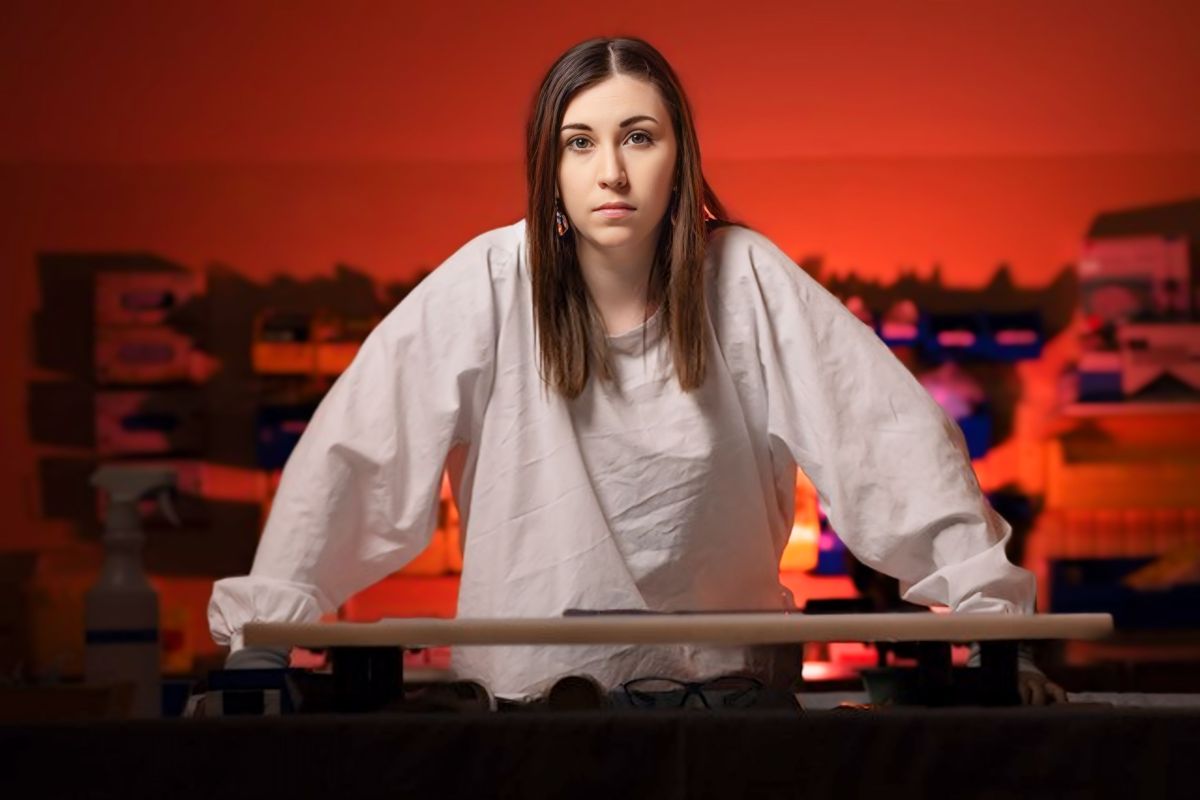
Jessica Puniard
Jess is a dedicated and compassionate professional with a unique blend of experience in health care and mortuary services. Currently, she works as the Mortuary Services Supervisor at the Canberra Hospital, overseeing the dignified care of deceased individuals and supporting families during difficult times.
Prior to this role, she worked as a Mortician and Funeral Director at a local funeral home, providing personalised funeral services and ensuring that final farewells were conducted with respect and compassion.
Her background in health care is extensive, with experience as a Medical Practice Assistant, Phlebotomist, and Medical Receptionist in various settings, including rural and metropolitan areas. Holding a Certificate III in Pathology and a Certificate IV in Medical Practice Assisting.
Outside of work, she cherishes her role as a wife and mother of two. In her free time, she enjoys unwinding with true crime documentaries and exploring the great outdoors on camping trips with her family.
Transcript
[00:00:00] Dr Sanjaya Senanayake: Hi, this is Dr. Sanjaya. Ever wondered what happens when someone passes away? Where do they go? Who looks after them, and what do they do? Mortuary Services Supervisor Jessica Puniard joins me on behind the curtain to talk about what it is really like working in Canberra Hospital's mortuary. Let's jump into our chat.
[00:00:36] Dr Sanjaya Senanayake: Welcome everyone to our latest episode of Behind the Curtain, and on today's podcast, we have another special guest from our Canberra Health Services community. Let me introduce you all to Jess Puniard.
[00:00:51] Jess Puniard: Hi there.
[00:00:52] Dr Sanjaya Senanayake: Working in a mortuary, so is the term mortician?
[00:00:56] Jess Puniard: Yes, technically, I'm a mortician or a mortuary assistant. I was at a funeral home before I came to the hospital here, and I was a mortician at the funeral home.
[00:01:10] Dr Sanjaya Senanayake: And how does one get into a career like that? Were you at a funeral as a child and thought, oh, I really want to do this, or…
[00:01:17] Jess Puniard: [Laugh] That'd be a bit morbid. But, no, I never expected to get into this this field of work. I wanted to be a paramedic or a nurse. My mum was a nurse and I loved what she did and always wanted to follow in her footsteps. I left Canberra, left school and I got a job in pathology as a collector. I was working in a private hospital collecting blood from patients on the wards and I was picking up all the specimens from theatre.
[00:01:51] Jess Puniard: And it fascinated me seeing the specimens and working within the lab, but I loved the patient contact and the patient care that I had. I moved around a little bit, as I said, when we moved down to New South Wales, worked at a doctor's surgery as a nurse assistant, did a few different things. Finally came back to Canberra. Yeah, and I applied for some work experience at a funeral home because I was very interested. Met a lovely mortician who trained me up, became a very good friend and then she left and I took her position there. So really, I didn't do any study and it wasn't anything I was expecting to do, but I just loved it.
[00:02:33] Dr Sanjaya Senanayake: Yeah, you sort of slowly built yourself up for this career with pathology, as you said. I know that I always tell patients, even though I'm the one who orders the blood tests, I say, the pathology collector, they're the bad person whose going to take your blood. But you found you had a good rapport with a lot of patients?
[00:02:54] Jess Puniard: Yeah. Yeah. I found I was very good at it. I guess I do miss it. I miss talking to a live patient, having that communication with them but I love what I do now. I don't think I would change it at all.
[00:03:09] Dr Sanjaya Senanayake: Great. And look, tell me about the other part of doing that job, which was going to the operating theatres and collecting specimens. So, what sort of specimens are we talking about, Jess?
[00:03:20] Jess Puniard: Uh, yeah, so, I guess, any organ or anything that is being taken out in theatre because it might be diseased or there's something wrong with it. So, we would get a call from theatre saying that they have a, you know, kidney that needs to go to pathology. So, I would go to the theatre pickup area and I'd collect them all and I'd take it back to the lab and generally that's where my job would end. I would just drop it off. But I think I was a bit more curious and I'd hang around a little bit and ask the scientist if I could see what they did and, and see the process of them, you know, investigating into the specimen and looking for diseases and everything.
[00:03:59] Dr Sanjaya Senanayake: Wow. I mean that curiosity, uh, I agree with you. I think that curiosity suggests that you wanted to take this a bit further. And as you said, you went and worked at a funeral home for your friend or with your, with your friend?
[00:04:14] Jess Puniard: Yeah. Well, she became a friend. Yeah. I didn't know her to start off with. I applied for, just some work experience and I was lucky enough to be accepted, and then she became a fantastic friend and trained me. She was the mortician there and she trained me.
[00:04:32] Dr Sanjaya Senanayake: And those initial first days, I mean, completely different line of work for you and so from dealing with the talking patient who's waiting for you to take their blood, you’re dealing with someone who's passed away.
[00:04:45] Jess Puniard: Yep.
[00:04:45] Dr Sanjaya Senanayake: How was that? How was the adjustment for that? Was it easy, was it difficult?
[00:04:50] Jess Puniard: I guess, I don't think it was difficult because I was very prepared. I think I prepared myself knowing what I was going to see and what I was going to walk into, but, it was different in terms of, I still would talk to them and I'd find it strange that they wouldn't reply back or, I don't know, like if you have to, you have to move them to wash them you expect them to help you a little bit. And then, you know, you realise, oh no, they're not going to move, they're not going to lift their arm, or if I'd bump their shoulder and I'd apologize, and then I, you realise, oh, I don't… do I actually have to say that? You know it's very different, so.
[00:05:31] Dr Sanjaya Senanayake: Sure. And then you, again, another opportunity arose at Canberra Hospital.
[00:05:36] Jess Puniard: That's right, yes.
[00:05:37] Dr Sanjaya Senanayake: Were you looking for that job or it just, someone reached out to you or how did it happen?
[00:05:42] Jess Puniard: Well, so I was a funeral director and a mortician for a local funeral home here in Canberra and I would regularly come to Canberra Hospital, as a funeral director, to pick up patients. And I knew the staff here very well and I knew that they were leaving and I thought, you know, it'd be an amazing opportunity to work in the hospital. So, when I knew that they'd left and I saw the position came up, I applied for it and was lucky enough to get in.
[00:06:14] Dr Sanjaya Senanayake: Look, it's another great example of the networking you can do in Canberra, isn't it? A small place, but big enough that you can do important things.
[00:06:24] Jess Puniard: Yeah. That's it.
[00:06:26] Dr Sanjaya Senanayake: How many years have you been in the mortuary at Canberra Hospital for now?
[00:06:30] Jess Puniard: Just over two years now.
[00:06:32] Dr Sanjaya Senanayake: Okay. Just over… and still enjoying it?
[00:06:34] Jess Puniard: Oh, love it. Absolutely.
[00:06:38] Dr Sanjaya Senanayake: Jess, many of us sort of on the wards we deal with the living patients and, of course, lot of them are sick with various things; sepsis, heart failure, kidney failure, pneumonias, whatever it is and some of them don't make it unfortunately and we're obviously all very sad when that happens and the body is sent from the ward down to you. So what, what happens? What's the whole process?
[00:07:06] Jess Puniard: Yeah, I guess, it is a process that not many people know but there, you know, like there's nothing to hide about it. So generally, when someone passes away, if the family are with them, the nurses will wait until the family are ready for the body to go to the morgue. The wardsman or the transport staff, they'll get a call to come and transport the body, so the wardsman will move the body onto one of their beds and a nurse will accompany the wardsman as well from the ward so the two of them will escort the body down to us in the mortuary.
[00:07:46] Dr Sanjaya Senanayake: So it has to be two people, does it?
[00:07:47] Jess Puniard: Yes. One for the transport and then the nurse, will do the sign in of the body into the mortuary. But it's also just, I think a, a care and respect. You know, to have two staff members with them at all times…
[00:08:05] Dr Sanjaya Senanayake: And then the body is signed in and handed over to your care?
[00:08:10] Jess Puniard: Yeah, if we are there because we might be elsewhere in the hospital at the time, so if we are there, then we will help to accept the body and put them into the cool room. Otherwise, the nurse and the wardsman will put them into the cool room. Sometimes patients pass away in the middle of the night and I don't work all night, so when I get there in the morning there'll be some new patients in the cool room for me to meet. So yeah, they'll pop them in and then handed over onto my care, basically. So, I'll look after them from then.
[00:08:42] Dr Sanjaya Senanayake: Yeah, and when it's your turn to take over, what do you do?
[00:08:47] Jess Puniard: Yeah, so, the patients that are in the cool room, they're in my care and they will stay in there until a funeral home comes to collect them.
[00:08:57] Dr Sanjaya Senanayake: And would this be a funeral home nominated by the family?
[00:09:00] Jess Puniard: Usually that's it. Yeah, absolutely. Always, family's choice. So sometimes, families know. They already know who they've picked and that's already, you know, prearranged. Sometimes obviously it's a very big shock and it takes a couple days, maybe week, maybe even longer and that's fine. Those patients, you know, they're safe with me and I take good care of them until the family select a funeral home. The funeral home will contact us in the mortuary letting us know that they're looking after that patient and that they'd like to arrange pickup and then we discuss a good time for them to come.
[00:09:34] Dr Sanjaya Senanayake: Okay. So I guess that was going to be one of my questions. Generally, how long will a body stay in the cool room for? You said it can be more than a week?
[00:09:43] Jess Puniard: Yeah sometimes it can be two weeks. It really depends on the family. Choosing a funeral home is hard sometimes, paying for a funeral, it's very expensive. It's not something that everybody just has the money lying around for and then sometimes I guess there are family that are interstate and, you know, it takes time for everyone to come here. So we never want to rush anybody, um, and there is no rush. It doesn't have to happen straight away.
[00:10:12] Dr Sanjaya Senanayake: Okay, great. And in terms of preparing the bodies, there are some religious groups, such as with Islam where there are special needs that have to be met. So do you want to tell me about those, please?
[00:10:26] Jess Puniard: Yeah. Yeah. So we often get Muslim patients who pass away in the hospital and they have a special ritual washing that they will like to do on the patients after they pass away. Now I'm not an expert because it's obviously, it's not, you know, my faith group, but what happens is the patient will pass away and then a ritual washing team from the Islamic Society will get a call from the family to come and perform a ritual washing on their loved one. So, we have a female team and a male team. So, the female team will wash the females and the male team will wash the males. That's part of the faith and they are trained volunteers with us here at CHS. They'll give us a call saying that they're coming in, we have a special room that we have set up for them at all times with all the equipment necessary. And they'll come in, we'll get the body out of the cool room for them and they'll perform the washing. It is a sacred, you know, procedure. So it is done behind the door. We don't participate, you know, we will help them with any transport before or after but that's sort of how it happens.
[00:11:44] Dr Sanjaya Senanayake: And you said that Canberra Health Services also helps, is it to train them in in some way?
[00:11:50] Jess Puniard: They do have, like manual handling training done and infection controls, you know, training done as well to be able to be volunteers with us.
[00:12:00] Dr Sanjaya Senanayake: So, I mean, that's a great way of linking back with the community, isn't it?
[00:12:04] Jess Puniard: Yeah. Absolutely.
[00:12:07] Dr Sanjaya Senanayake: That's fantastic. And if it's a coroner's case, so where a patient dies and the cause of death isn't quite clear and the medical team, the family want to investigate, they therefore need an autopsy. Where does that happen? Is that taken, uh, is the body taken offsite or does it happen here at the hospital?
[00:12:24] Jess Puniard: No, so the body is taken offsite. The Forensic Medicine Centre is where all the coronial postmortems happen. It is located in Philip, so it's nice and close to us. But generally what happens, it's the same process for all the other patients that pass away. So the patient will still come down to the mortuary and into our care but it'll, the body will be escorted by police officers as well and that's just for chain of evidence, chain of custody. So that they can follow the body and make sure it goes into the cool room. They'll probably stay with us for maybe a night, just overnight and then the coroner's transport team will give us a call and they'll collect the body and take them over to Philip, and then the coroner’s will do their process from there.
[00:13:15] Dr Sanjaya Senanayake: Okay. The autopsy will be conducted and I'm guessing from there they go directly to the funeral home rather than come back here.
[00:13:23] Jess Puniard: Yeah, there's no need for them to come back to us. They'll get collected straight from there.
[00:13:26] Dr Sanjaya Senanayake: Although here we do see some partial autopsies or biopsies are done?
[00:13:34] Jess Puniard: Yeah. So, we also do what we call hospital postmortems here and so those are non-coronial, and it'll be specifically requested by the family. So, it has to be consented for by the next of kin and by the doctor generally and maybe they just have a question that they're wanting answered. So we, it won't be answering cause of death. They'll know that already. It'll be may be the, the patient had a disease that they knew about and they're wanting to find out if it's going to get passed on to the kids and passed down, or you know. They just want to find out a bit more about that specific disease or specific organ. So we'll do what we call like a partial autopsy where we'll just look into that organ and try and get an answer for the family.
[00:14:27] Dr Sanjaya Senanayake: Yep. Okay. Do you, do you assist with those?
[00:14:28] Jess Puniard: Yes. I assist the pathologist. So the pathologist from anatomical pathology, they'll come down and perform the autopsy and, myself and my assistant Belinda, we are the ones that will prepare the body, assist during the procedure, and then we will reconstruct the body ready for the funeral home.
[00:14:48] Dr Sanjaya Senanayake: So certainly from a professional viewpoint, you get a lot of experience, don't you, doing a variety of things, which is great and that sort of is a segue onto the pathology museum.
[00:14:59] Jess Puniard: Yes.
[00:15:01] Dr Sanjaya Senanayake: I'll give you the background with, with me sort of. Medical school, first year medical students, first couple of years we do anatomy and the uni I went to, we didn't have the cadavers, so we didn't have a whole body in formalin in that we would dissect and examine but we had the pots. We, we generally have the, the pots to look at and that was, of course, very helpful. I mean, I'm very grateful to those people who contributed so, we could learn and be good doctors and become better doctors. So, tell me how you play a role in all this?
[00:15:43] Jess Puniard: Yeah, so it was certainly something that I wasn't expecting, I had no idea about the museum when I was a funeral director and a mortician, I didn't even know it existed and so when I took the job here, they, they also mentioned, we have an anatomy museum and you'll be in charge of looking after the museum and, you know, accepting new specimens and putting them into the museum. So that was fantastic because it's just, it's a whole other thing on top of, you know, looking after all the bodies and it's so fascinating. So, we have a pathology museum that is partially funded by the ANU Medical School, and it's used for teaching the ANU medical students and also we have other student groups maybe from high schools or colleges that are studying human anatomy or biology. We will accept some excursions. It's not open to the public, but you know, we do have select groups that, you know, can apply and they can come through. All our specimens are body parts that are donated to us from both alive and deceased patients so generally, you know, a patient will be, again, they might be having their kidney out because there's something wrong with it. It's diseased, it'll go to pathology and it'll be tested so that they can still get all their answers in their report and if the pathologist that is testing it thinks that it will be a good teaching case they'll pass it down to me and then I will contact the patient or if the patient's passed away I'll contact the next of kin and I will seek permission on whether they would like to donate it to us so that we can use it for the museum and for teaching. So I'll get their consent, I'll get them to sign a form and then we keep it, it goes into formalin, into like a preservative, for 12 months, we have to preserve it for 12 months before we can do anything with it. And then we pot it. So, we put it into like a Perspex jar and then it gets used for teaching.
[00:17:59] Dr Sanjaya Senanayake: Wonderful. And how long did you say it was in formalin in for?
[00:18:01] Jess Puniard: Yeah, minimum of 12 months. Just so that, because we don't want it going mouldy or gross or anything like that, we want it to be nice and well preserved.
[00:18:10] Dr Sanjaya Senanayake: Okay. And it sounds like they all are surgical specimens or generally?
[00:18:17] Jess Puniard: Yes. We do get donated bodies so generally if someone, say, they've chosen after they pass away that they'd like to donate their entire body they can sign up and they can do that. They'll sign a consent form before they die or sometimes the next of kin, you know, will call us and say that it was their wishes and they really wanted to, and they can sign to donate the entire body and I guess that's when it's up to our pathologist, will perform an autopsy and they can choose what organs that they would like to take and use for teaching.
[00:18:55] Dr Sanjaya Senanayake: So, it's sort of up to the pathologist who gets, literally gets their hands on the specimen to decide to give you a call.
[00:19:02] Jess Puniard: That's right. Yep.
[00:19:03] Dr Sanjaya Senanayake: And your conversations with the patients to whom that organ belonged or their family members if they're deceased. Do they generally go well, the conversations?
[00:19:15] Jess Puniard: Yeah, sometimes I guess they're a bit shocked that, you know, we are ringing them and asking, oh, can we keep your kidney please but some of them, you know, they think it's amazing. Otherwise it gets destroyed. So for the opportunity for them to pass it on and help train our doctors, they think it's wonderful.
[00:19:36] Dr Sanjaya Senanayake: Oh, look, I think it's wonderful as well. Speaking to Dr. Sean Chan, who's one of the intensive care doctors, he's the director of the Organ Donation Unit for ACT. We were talking how there wasn't, including with myself, awareness about whether we should list ourselves as a donor and how we go about it that people probably are happy to do it but they just weren't aware. This is probably something else people aren't aware of.
[00:20:03] Jess Puniard: That's it. Yeah. Everybody knows that you can be an organ donor for, you know, for alive patients. You know, if I pass away, I want all my organs to go to someone that might save their life, but they don't realize that if, I guess if your organs are not viable to be able to give to someone, you could still donate it to research and, and for doctors to learn. So yeah, I think it needs to be more widely told to people so that they're aware of it.
[00:20:32] Dr Sanjaya Senanayake: Well, you'll have a hundred million people listening to you right now, Jess, on the Behind the Curtain podcast. You get that message out from around the world.
[00:20:40] Jess Puniard: If I suddenly get, influx of phone calls saying, you know, you can have my body, I'll understand where it's come from.
[00:20:46] Dr Sanjaya Senanayake: Excellent, excellent. Good. Embalming what is embalming? Have you embalmed before and do we do it at the hospital?
[00:20:55] Jess Puniard: Yeah. No. So definitely don't do it at the hospital. So embalming is a process that is done to preserve a body after it's deceased. So basically what happens is, blood is taken out of the body and it is replaced with embalming fluids, so formaldehyde and some other chemicals and that goes into all the arteries and into the veins and it preserves the body from the inside out. Embalming is a qualification that you do have to do a course for, so it's a couple of years. You have to have a fully qualified embalmer who is I guess your senior, you have to be with them the whole time and they have to train you. So it is very hard to get into, if you're at a funeral home and you happen to have an embalmer there to learn from, that's the best way to do it. We don't do it at the hospital. It's only done at funeral homes, and it's only done for those who choose to do it. It's an extra cost. It does cost quite a decent amount of money. So if you are being sent overseas, repatriated, you legally have to be embalmed to go on a plane. So that is a requirement and if you're being buried above the ground in a crypt or a mausoleum, a tomb, anything like that, you also legally have to be embalmed. And that's because, I guess, above the ground you're more exposed to smells and we don't want to attract animals and that kind of thing. So if, if you're embalmed you're not going to decompose and you're not going to have all those smells and everything.
[00:22:41] Dr Sanjaya Senanayake: Sounds like a problem for royalty. I think. Family crypt or the family's mausoleum. And how many bodies would you receive on an average week at Canberra Hospital?
[00:22:54] Jess Puniard: Oh, it's definitely not an answer I can give you it, it very much varies. Sometimes, you know, one or two and sometimes a few more.
[00:23:06] Dr Sanjaya Senanayake: I, well, another way of looking at it: the cool room, what's the capacity for that?
[00:23:09] Jess Puniard: Yeah, so we have two cool rooms here at the Canberra Hospital. Our main cool room does have a capacity of 24 racks and then our second cool room has a capacity of 12 racks. But they're quite big. We also have room for beds to go into the cool rooms as well.
[00:23:30] Dr Sanjaya Senanayake: Now you started two years ago. That was in the midst of COVID. Was the mortuary, did it have a plan for COVID if things got dicey in the hospital?
[00:23:42] Jess Puniard: Yes, of course the hospital definitely has, plans in place for mass casualty events and pandemics and everything. So we coped though. We were fine. I think everywhere was a little bit under pressure, all the funeral homes and us but we all worked together and made sure that everybody was looked after and everyone was safe in a cool room.
[00:24:09] Dr Sanjaya Senanayake: Good, good. And in terms of achievements, you were telling me that you and a colleague have got a grant to go to Western Australia. What, what's that about?
[00:24:20] Jess Puniard: Yeah, yeah. So we applied for an RCPA funding award and so…
[00:24:26] Dr Sanjaya Senanayake: That’s the Royal College of Pathologists?
[00:24:28] Jess Puniard: Yep, that's right. So it was an award and it's specifically for studying perinatal autopsy services. So those are autopsies for our babies. So, we are the only hospital within the greater region that does perinatal autopsies, and we have a very good service but if there's an opportunity for us to go somewhere else to another hospital and learn from them and see if they do things differently or do things better, then absolutely. So, we applied for this grant and we both got accepted. So hopefully in the next six months, we'll both head over to WA and I think we'll do a week each at the hospital there and learn from their program as well.
[00:25:15] Dr Sanjaya Senanayake: Oh, wonderful. That's, that's a great achievement. Well done.
[00:25:18] Jess Puniard: Thank you.
[00:25:19] Dr Sanjaya Senanayake: And now I have to ask any favour as doctors we are, we're always asked, do you watch Grey’s Anatomy and all this sort of thing? Do you ever watch stories about funeral homes, Six Feet Under those sorts of things?
[00:25:34] Jess Puniard: I have seen all of them, yeah. Six Feet Under is great. Um, Grey's Anatomy, I love Grey's Anatomy. That is one of my favourites. I guess there's a documentary on a New Zealand funeral home. It's an eye-opener. It's very funny and it's very well done. They're called The Casketeers. It's fantastic to watch, very respectful seeing the day-to-day processes of a funeral home.
[00:26:03] Dr Sanjaya Senanayake: And maybe useful if someone is thinking of a career, isn't it?
[00:26:07] Jess Puniard: Absolutely. Yeah. You, you see what happens behind the scenes and, and what they do.
[00:26:11] Dr Sanjaya Senanayake: And as you were alluding to earlier, there's no specific pathways or academic pathway for becoming a mortician. If you are thinking about it, what would you suggest if someone's interested?
[00:26:23] Jess Puniard: I think it's really… here in Australia, it really is all about who you know and if you want to do it just keep pushing, keep trying, keep applying, keep asking. The funeral homes do need staff all the time. It is a hard job to get into because I think everybody loves it and they never want to leave, so they stay there until they retire and most of the funeral homes are family owned and operated, so that's why they're so hard to get into. But I guess there are some courses that you can do. You know, mortuary science, only in the big cities. So, there's one in Sydney, there's one in Melbourne. They only run them if they have enough students. So, they don't even run every year. So, and you know, it's not something that you have to do to become a mortician, you know, it's just, it's extra.
[00:27:15] Dr Sanjaya Senanayake: Look. I think if anything, today's discussion has shown that while we do our best to show our respect for the patients and their families up on the wards. Even once they've passed away that process continues with the mortuary here in Canberra Hospital and great people like you, Jess, and your colleagues. So, thank you very much for your time.
[00:27:35] Jess Puniard: That's okay. No worries. Thank you.
[00:27:38] Dr Sanjaya Senanayake: Okay, see you later.
[00:27:39] Jess Puniard: Thank you. Bye.
[00:27:46] Dr Sanjaya Senanayake: Thank you so much for listening to our first season of Behind the Curtain. I have thoroughly enjoyed talking to some amazing health professionals doing groundbreaking work here at Canberra Health Services. If you want to stay up to date with Canberra Health Services, you can follow us on Facebook, Instagram, and LinkedIn.
[00:28:22] Dr Sanjaya Senanayake: I acknowledge the Ngunnawal People as traditional custodians of the ACT, the land I’m recording on, and recognise any other people or families with connection to the lands of the ACT and region.

