
Listen to this episode
About this episode
In this episode, Dr Sanjaya and Dr Michael Chapman cover topics like palliative care, dementia and voluntary assisted dying. Dr Chapman discusses the evolution and significance of palliative care in Australia, stressing its importance in improving patients' quality of life and longevity. He elaborates on the holistic approach to dementia care inspired by his book and PhD research. The conversation extends to the complexities of voluntary assisted dying, its legal status in Australia and the need for robust educational frameworks to navigate end-of-life choices. Dr Chapman emphasizes the role of health care providers in offering compassionate and comprehensive care for patients facing advanced illnesses.
Guest speaker
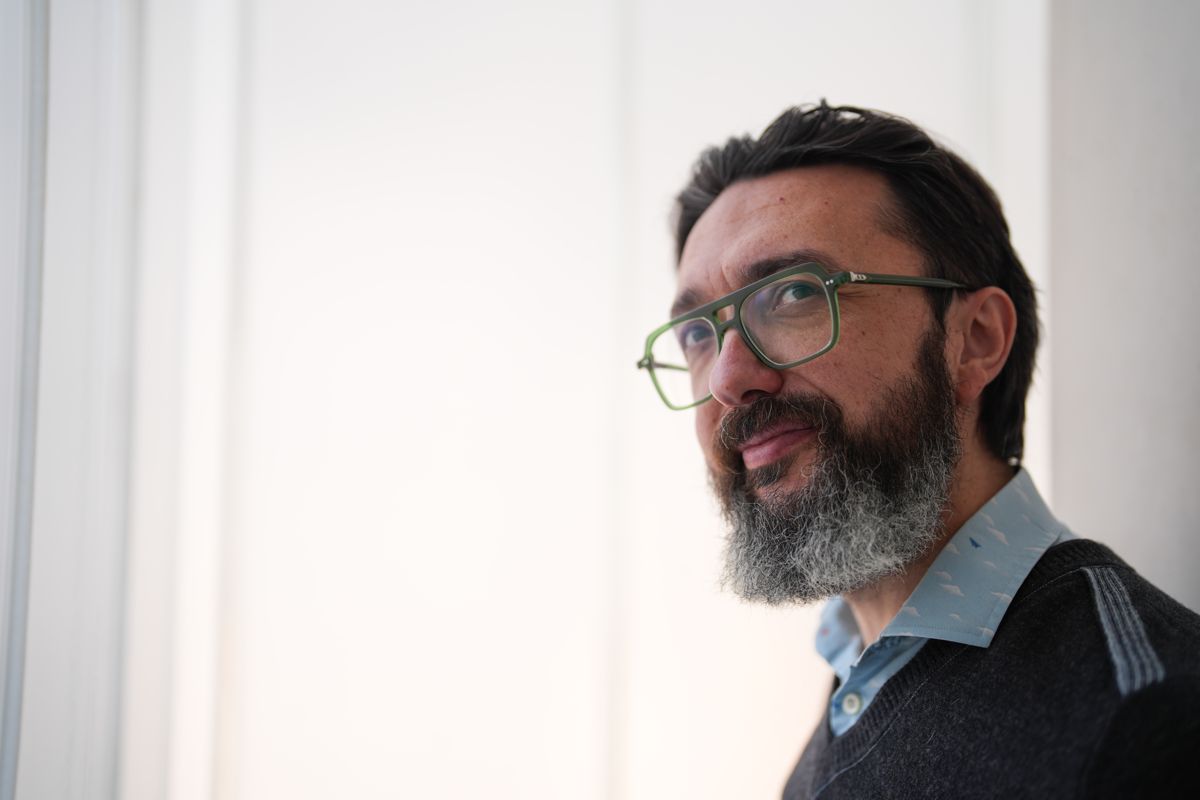
Dr Michael Chapman
Dr Michael Chapman is a Geriatrician and Palliative Medicine Physician who works as the Medical Director of Palliative Care at Canberra Hospital, and the Palliative Care Research Unit Lead for Canberra Health Services (CHS). He is also the Chair of the Clinical Ethics Committee for CHS. He has honorary roles with the Australian National University, University of Canberra and University of Technology Sydney. His research work explores topics of aged care, the dementia experience, acute, palliative and clinical care, and death and dying from empirical and ethical perspectives. Michael has roles with multiple journals, universities and has been awarded project grants from the Medical Research Future Fund among other sources. Michael has recently published his first book, “Rethinking dementia: ripples and responses” with Palaver publishing.
Transcript
[00:00:00] Dr Sanjaya Senanayake: Hi, this is Dr Sanjaya. My latest podcast guest, Dr Michael Chapman, and I covered a lot of ground when he came behind the curtain with me, from palliative care, rethinking dementia to voluntary assisted dying. Michael speaks about all these topics in such a thought provoking, empathetic, and respectful way.
[00:00:26] Dr Sanjaya Senanayake: Let's jump into our chat.
[00:00:36] Dr Sanjaya Senanayake: Welcome, Michael. A lot of our listeners will be familiar with a lot of medical specialties, but probably, even though they've heard of palliative care, maybe less so. As a medical student, I remember that I had a very good physician who was an oncologist, but also a palliative care physician, David Gorman.
[00:00:59] Dr Sanjaya Senanayake: And he was a lovely man as a medical student. And I knew he did palliative care. This was a long time ago, so it was certainly around then, but tell me about the history of it as a subspecialty in Australia. When did it first come about and has it been growing recently?
[00:01:19] Michael Chapman: Palliative care is one of those odd things that's a really old idea and a new idea at the same time. My version of what palliative care means is that for someone who's got some kind of illness, we can't confidently take away altogether.
[00:01:36] Michael Chapman: Palliative care is all the things we do to make sure each day is as good as it can be. And if you think about that idea, clearly people have been doing that for millennia. You know, that's not new. But as a specialty, it's really been only around since the turn of the century when people started to call themselves palliative care specialists in Australia and for that to mean something concrete.
[00:01:58] Dr Sanjaya Senanayake: Yeah. For old people like me, which century are you talking about?
[00:02:02] Michael Chapman: So, about 1999 is when the palliative care, the sort of fellowship became recognised and it was a thing that you could do. And so there are still, you know, colleagues I trained under and colleagues working today who were grandfathered into the specialty.
[00:02:19] Michael Chapman: Meaning that they were people who were doing the work one day. And that it became a specialty. And then the next day they were told, well, you are all the specialists now, even though you didn't have that title yesterday. And so an amazing sort of change for it to happen. But the specialty is absolutely growing both in its size, but also in recognition of the importance of its impact.
[00:02:43] Michael Chapman: There's more and more evidence that palliative care is something that we should do a lot more than we do. That it has incredibly important benefits for people, not just in improving people's symptoms and their quality of life and their understanding of their illness and, you know, how engaged and supported they feel in decision making and how cared for their families are that even in some instances, actually people living longer with the addition of palliative care to all the usual treatments that they might have. And so, it's definitely an area that's on the grow. And for my part, I think that's definitely the right thing to happen.
[00:03:24] Dr Sanjaya Senanayake: And you have largely talked about it, but if you had to tell someone, my job as a palliative care physician is this, how would you describe it?
[00:03:36] Michael Chapman: Often using the language that I was using before that, you know, that for me palliative care is care that's focused on comfort and focused on dignity and focused very intrinsically on what's important for that person. And so it's about making the days as good as they can be for that person and for the people around them.
[00:03:54] Michael Chapman: And doing that through really, um, primarily working with that person to figure out what is important and how we're going to do that together.
[00:04:05] Dr Sanjaya Senanayake: And I think I certainly, in my medical student days and early doctoring days, when I heard about palliative care and saw it, I would think of it more in the context of, or purely in the context of cancer.
[00:04:18] Dr Sanjaya Senanayake: But there's a broad purview of patients that you look after.
[00:04:25] Michael Chapman: Absolutely. Yeah. And so a lot of palliative care started in care for people with cancer. And so certainly a lot of the, if you're talking about, you know, services and practices that have got a really established history.
[00:04:42] Michael Chapman: A lot of that comes from that space. But there's evidence and clarity that palliative care is relevant for all sorts of advanced illnesses of various different types. And increasingly we're, you know, asked to be involved really early in the context of people's advanced illnesses. Advanced illnesses being, again, illnesses that are difficult to take away altogether. Because palliative care helps because it can make really beneficial impacts.
[00:05:10] Michael Chapman: And some of those things that I've been talking about, focus on comfort, focus on quality, focus on supporting carers. Uh, that those things aren't, it's not always easy to figure out exactly who it is that's providing those kinds of care in really busy, complicated health care systems like we often have in countries like Australia.
[00:05:31] Dr Sanjaya Senanayake: That's right. And very exciting development as well in terms of providing that care at Canberra Hospital. I believe there'll be a new unit?
[00:05:40] Michael Chapman: Absolutely. Yeah. So we've got an acute palliative care unit that's being designed and hoping will be starting to be built in the near future, which is incredibly exciting and for us. That's actually a really novel proposition for the hospital, but also for the community.
[00:06:00] Michael Chapman: This is going to be an acute palliative care unit, which means that it's not something, there's different types of palliative care services in the ACT. We have a place called Clare Holland House, which is sometimes called the ACT hospice, and that's a subacute environment. That's really beautifully set up to provide for people who have particular care needs often, but not always, when they're close to dying.
[00:06:25] Michael Chapman: But it's not an acute hospital and so there's lots of things about contemporary health care that are necessary and helpful for a person with advanced illness that are just really difficult to get in a small hospital like Clare Holland House. And the acute palliative care unit is hoping to kind of tick all of those boxes to provide this focus on comfort and quality and dignity, but at the same time availability of really acute and cutting-edge treatments and approaches for the people who need that as part of their palliative care.
[00:06:57] Dr Sanjaya Senanayake: Yes. Because when you think of palliative care, you think of chronic disease and making symptoms better. So, you don't necessarily think of the acute hospital setting or the acute hospital admission.
[00:07:07] Michael Chapman: Yeah.
[00:07:07] Dr Sanjaya Senanayake: But obviously there is a benefit there.
[00:07:09] Michael Chapman: Absolutely. And the increasing evidence that lots of different acute tests and treatments of various different types can have huge impacts on a person's comfort and quality and environments that cater to allowing people to get the best of both worlds rather than to choose one or the other is a really integrated approach to care, which I think will really add value.
[00:07:35] Dr Sanjaya Senanayake: Wonderful. And you did mention a fact, which I found really interesting, that people who have appropriate palliative care might live longer. Yes, because you know, you think of a lot of terminal illnesses, heart failure, chronic obstructive pulmonary disease, cancer and making them feel comfortable. But you don't necessarily think that that will have an impact on their lifespan?
[00:08:00] Michael Chapman: Absolutely. Yeah. And it's a fascinating thing. There was a really landmark study about 15 years ago now from the United States run by a person called Tamil. And they were looking at non-small cell lung cancer, metastatic non-small cell lung cancer. And they were comparing all the usual treatments plus the addition of palliative care and found as one of the outcomes from this, that actually, in addition to people's care being better and having better care experiences, they did live longer.
[00:08:34] Michael Chapman: In a way that was significant to them and to their families, but also statistically significant as well. It's not necessarily the intent or the target of palliative care provision. But I guess our sense is that when a person has a focus on these kinds of outcomes, focus on quality, comfort, dignity, sometimes that probably does influence the way choices are made.
[00:09:02] Michael Chapman: And some, for instance, how aggressive various different types of treatments are. And then maybe for some people that's actually in their best interest for them to be having slightly more comfort focus, less aggressive interventions of various different types. It may be that actually too much aggressive acute health care for some people might be harmful rather than beneficial and palliative care might actually be part of the way of kind of navigating some of those challenges for some people.
[00:09:32] Dr Sanjaya Senanayake: I don’t know if this is a stretch in terms of that analogy, but you definitely see people, again talking about the example of cancer, who just say, no, that's it, I'm not going through any more chemo. I'm getting too sick with it. Just let me go home and die. And then a few months later, they're fine.
[00:09:50] Michael Chapman: Yeah, it's true. And I mean, these are, and I hesitate, in saying all this, I'm clearly not saying that these treatments are bad ideas or that people shouldn't have them. Because they're clearly, incredibly helpful. But in the complicated world that we live in, with the number of medical options that we often have, it's definitely true that sometimes the weight of all of those treatments can have undesirable impacts. And as a geriatrician, a doctor for older people, certainly one of the things that we know is very complicated and very harmful for people as they age is polypharmacy, taking lots of medicines. That has really negative impacts.
[00:10:34] Michael Chapman: And I think, as a doctor, part of our responsibility is to know when to suggest extra treatments, but also when to actually recommend that some of the things that we have been taking previously maybe are not as useful anymore and maybe a person's health will be improved if some of those previous decisions were rethought.
[00:10:54] Dr Sanjaya Senanayake: And Michael, you've touched of course on the acute palliative care unit, so in the acute setting you've talked about. Clare Holland house, which is more a subacute setting. There's also community based palliative care. So you cover everything in the territory.
[00:11:11] Michael Chapman: Yeah, so fingers in lots of pies. And you know, when I talk about palliative care, I think that's the spirit of the care we've talked about, but the right place for that to happen is the place that's right for the person. And so it needs to follow that person where they are.
[00:11:27] Michael Chapman: And so care in the community, care through things like clinics, care in places like aged care facilities, there's specialist palliative care options for all of those things. I guess the other thing I haven't mentioned, just while I'm on the palliative care bandwidth, is that I'm a palliative care specialist clearly, but actually a lot, or even perhaps most of palliative care in countries like Australia, isn't done by specialists. If you're talking about care with that kind of focus, making each day as good as it can be for people with advanced illness, that's not unique to palliative care. Lots and lots of care providers, doctors, nurses, allied health providers, all kinds of people provide that kind of care. And that's all palliative care too.
[00:12:10] Michael Chapman: There's far more of it than people often realise, and it really is everybody's business in doing it really well.
[00:12:18] Dr Sanjaya Senanayake: I can't help but ignore the book that is standing between us, Michael, and I love to give my guests a plug. So, can you tell me about this book that I'm staring at?
[00:12:35] Michael Chapman: Thanks, Sanjaya. So, this book is called Rethinking Dementia: Ripples and Responses. And it's a book that has just become available, published by me or rather written by me very recently. It's been a real labour of love for me.
[00:12:59] Michael Chapman: My PhD, which was a number of years ago. When I completed I was very conscious working with people with dementia during that, that there was so much that I'd learned.
[00:13:05] Dr Sanjaya Senanayake: And what was your PhD about?
[00:13:07] Michael Chapman: So, my PhD was about the experience of dementia and trying to understand what that meant for the people closest to it, particularly people with dementia, the carers and the clinicians that were providing care for them.
[00:13:22] Michael Chapman: But once I actually finished the PhD, I was really conscious that while it was a big, dusty tome on a shelf somewhere, that I was pretty confident that not many people would read that, and that I felt that I had a real responsibility to try and respect the kinds of stories and just the openness and authenticity and generosity of the amazing people that got involved in that work. And to have at least my best go at trying to turn what they'd shared, what I learned from them into something that might be, you know, a bit more useful for others.
[00:14:11] Michael Chapman: And for me, the book's really important because I think that dementia is a condition that obviously is becoming more and more common. It's something that as our community ages, it's something that people are really worried about. And I think that there's a constant wish and a search for more understanding about what this means and maybe for some kind of hope that things can be different.
[00:14:36] Michael Chapman: And my book aims to sort of explore a sense that actually dementia isn't often what we characterise it as. There's often a sort of a feeling that what dementia is, it's something that's about a particular change in a particular person. Something about changes in their brain, and clearly that's part of what dementia is.
[00:15:03] Michael Chapman: But actually, it's so much more than that. It's about how we are together and how what we value and how we talk about these kinds of vulnerabilities and challenges that happen to all of us in various different ways over the course of a lifetime. And so the book tries to explore different ways of thinking about dementia, conscious that if our hope is to actually make things better.
[00:15:30] Dr Sanjaya Senanayake: mm-hmm.
[00:15:31] Michael Chapman: We don't necessarily need to wait for some kind of, hopefully not far off cure, that means dementia is suddenly not a problem anymore. There's all sorts of things we can do right now, you know, in terms of how we are together, how we care for each other, how we talk to each other, to try and actually rethink dementia and try and improve that experience for all of us.
[00:15:54] Dr Sanjaya Senanayake: Look, that's a really great point because for dementia relatives and friends of people with dementia, they're often the ones who are suffering and carrying the burden. The person with advanced dementia may not even be aware that something's wrong with them, and they may be physically quite comfortable, but it's those around them who may be crumbling and falling apart.
[00:16:20] Dr Sanjaya Senanayake: So you talked about experiencing dementia differently. Could you maybe expand on that a bit more please?
[00:16:26] Michael Chapman: Yeah, sure. And I think it's a really excellent example, because I think that carers of people with dementia and those, you know, around the person with the diagnosis are very often the sort of, you know, unsung people who are really, you know, bearing up against all those changes and all those challenges.
[00:16:47] Michael Chapman: And they're also often, um, there's a sense in dementia when people think and talk about dementia, often of a person being lost due to the course of the illness. And it's often the carers that feel that loss most keenly, you know, because they have this memory of how things were and an understanding of how different they are now.
[00:17:12] Michael Chapman: And it is a really big challenge. The book and my work doesn't in any way say that dementia's easy or that there's anything about this that is open to a quick fix. But it also does say that actually there's a lot about how our lives work and run that are not necessarily as unchanging and static as we like to pretend.
[00:17:43] Michael Chapman: And the dementia is clearly a very radical type of change that happens to someone, but it's not the only one. And that if we were more aware and more vulnerable and open to the kinds of challenges and changes that tend to happen to all of us as we age, as we move from a completely dependent child to a seemingly more independent adult, and then perhaps to more dependence again as we get older, that actually there's a lot about the kind of dementia challenges that actually is in some way reminiscent of some of these dependencies.
[00:18:23] Michael Chapman: And if we're a little bit more open and a little bit more kind to ourselves and our responses to it, maybe that will actually make responding to these kinds of challenges a little bit easier.
[00:18:41] Dr Sanjaya Senanayake: So a change of attitude and acceptance in many ways.
[00:18:43] Michael Chapman: Yeah, that's certainly part of it, but there's a lot of different elements to it.
[00:18:46] Michael Chapman: And part of the kind of notion within the book is to try and think about dementia as a change to the sort of systems of who we are and the systems of who we are together. And systems have all sorts of different parts to it. And you know how we care for people with dementia in terms of care policy, how we talk and think about dementia, and you know, think about people as they age and what they value in terms of our language and our media, how we care for and support each other when we are carers rather than when we are care recipients.
[00:19:23] Michael Chapman: You know, these are all different facets of things that probably could do with a lot of change and thought.
[00:19:29] Dr Sanjaya Senanayake: I just wanted to now move to, I guess, another aspect of life or life medicine that you are involved in; voluntary assisted dying. And of course, palliative care is not voluntary assisted dying, but you bring a perspective to it.
[00:19:48] Dr Sanjaya Senanayake: Can you tell me how, what voluntary assisted dying is and how you got involved in it?
[00:19:52] Michael Chapman: Sure. So voluntary assisted dying is, now in all the states in Australia and soon to be in the ACT, a legal end of life choice that's available for someone who has an advanced illness where dying is understood to be coming closer with slightly different legal terminology depending on which jurisdiction you're in with people who have some kind of really significant suffering that's intolerable to them, a choice that they can make to die essentially on their terms, at their choice, via a number of different means. Again, with legislation slightly being different.
[00:20:25] Michael Chapman: And so it's in that frame, an end of life choice that's available to people in lots of different places outside Australia and in Australia, um, as a response to situations that people feel that their life as they have it in the context of this advanced illness and getting close to dying just isn't valuable to them anymore.
[00:20:55] Michael Chapman: It's a really, really complicated space and, you know, I'm interested in it personally because I think it's important.
[00:21:04] Dr Sanjaya Senanayake: Mm-hmm.
[00:21:05] Michael Chapman: I've personally come from a space whereas a palliative care doctor, I've been historically very stridently opposed to voluntary assisted dying and then recognising that the community feels very differently to that. And working in a space where, uh, working with and around death and dying that voluntary assisted dying, um, is actually a thing that the community feels really needs to be a choice and option available to them, um, that I feel that I've got some responsibility to understand and engage with and to make sure whatever care practices are required are as safe and available and as, um, comfort-focused as they possibly can be.
[00:21:55] Dr Sanjaya Senanayake: And yeah, just to make that clear as well, so voluntary assisted dying is not normally part of the palliative care purview, is it?
[00:22:02] Michael Chapman: No it's not. And though there are a range of opinions, around the world as to how much it should or shouldn't be.
[00:22:09] Michael Chapman: But the general accepted perspective, you know, in countries like Australia is that these are separate things. They're different types of end-of-life choice. I would say personally that while voluntary assisted dying is different from palliative care, it's very likely that people who are considering a choice personally for something like voluntary assisted dying, that involvement or thinking about their palliative care options as part of everything else that's going on for them is very likely to be a reasonable thing.
[00:22:45] Dr Sanjaya Senanayake: When we talk about euthanasia are they interchangeable terms, voluntary assisted dying and euthanasia?
[00:22:51] Michael Chapman: Yeah, it's a really good question. The language around this can be very complicated. Voluntary assisted dying is a term that was specifically introduced by the Victorian legislation and is sort of an Australian accepted terminology for this space. Euthanasia historically and certainly still in some jurisdictions is considered the practices when someone else gives someone a treatment or a substance so that they will die as a consequence of a voluntary choice. So, for instance, a doctor giving a lethal injection in inverted commas might be euthanasia. And in some other countries, physician assisted suicide was the alternate term if a person makes a voluntary choice to want to take a substance with them, with the intent of taking that at some other point to cause them to die in the context of their advanced illness, to avoid the suffering that they've got. And so the terminology has changed quite a bit and is, and is difficult to nail down, but I'd recommend for people in our context that voluntary assisted dying is the right terminology for us in Australia.
[00:24:00] Dr Sanjaya Senanayake: And as you mentioned, it will be legalised in the ACT.
[00:24:10] Michael Chapman: Yeah. So again, not a lawyer, but my understanding is, the way to think about it is that it's legal but not enacted or not available in some sense. So, we're under an, the law has been passed, but it doesn't become, you know, active legislation until November of 2025. And so we are currently in an implementation phase, where we as a health care community, and obviously everyone else who needs to be involved in doing this, are thinking through how do we do this safely? What are all the checks and balances and plans and education that we need to have in place?
[00:24:45] Michael Chapman: So come the date that it's available, if there are people who need these options, that those are available to them.
[00:24:55] Dr Sanjaya Senanayake: Now you wear many hats. We sort of touched on a few of them. Your research hat through Clare Holland House.
[00:25:02] Michael Chapman: Yeah.
[00:25:03] Dr Sanjaya Senanayake: What sort of research are you up to at the moment?
[00:25:05] Michael Chapman: Yeah, well, it's, we talked about the voluntary assisted dying space.
[00:25:09] Michael Chapman: And for me that, that actually ties into some research that I'm really excited about, that we are doing at the moment that so conscious of voluntary sister dying was to me, a, you know, a new end of life choice that's becoming available for the ACT community. It strikes me that that's actually big and important.
[00:25:31] Michael Chapman: That's a big change, you know, for us as in the community and as a doctor one of the things that I've reflected on a lot over the years is this notion of what good dying means. For people who are approaching dying, what are the kind of ingredients to make that as okay as it can be? And there's certainly a sense in lots of the writing about voluntary assisted dying, that that's a new ingredient for good dying for some people.
[00:26:02] Michael Chapman: But we don't really know too much yet about what the availability of these kinds of things, what sort of impact that has on how we think about death and dying generally. And certainly not in the ACT because it's only just become available and we also don't really know much about what sort of education and supports that we need to provide each other to make sure when it comes to thinking through these things, what's good for me?
[00:26:29] Michael Chapman: What should I be choosing, when should I be choosing it? What sort of things are available? What that education looks like, and you know, how we do it and when we do it. And so I'm involved in a project at the moment that's trying to co-develop, meaning develop in partnership with the ACT community, um, an education that's looking at end of life choices, um, educating people to feel, more aware of and comfortable with the end of life choices available in the context of the fact that those end of life choices are going to change when VAD arrive.
[00:27:07] Michael Chapman: And for me that's, that's a really important, important idea because a lot of this is around this kind of notion of health and death and dying literacy. What are the, the sorts of things that we as people, what are the sorts of skills, the sorts of knowledge, the sorts of connection, the sorts of supports that we need to be able to do these sorts of things?
[00:27:32] Michael Chapman: You know, in a way that's the right way for us. And I, I think that's a really underexplored area currently, and my hope is that with the introduction of this legislation and the conversations which will no doubt happen and need to happen about what all this means for us as a community, that it really opens the opportunity for us to think and talk much more earnestly about what supports we need, when we need them, and how we're going to get them.
[00:28:03] Dr Sanjaya Senanayake: And Michael, I don’t know how far you are into the design of the study, but have you looked, what sort of age is the population going to be that you engage with?
[00:28:11] Michael Chapman: Yeah, thanks. So, this particular project, conscious that the legislation itself is available for adults. It'll be a project for adults. But it'll be for all ages, all adults, and we're also hoping to engage.
[00:28:26] Michael Chapman: One of the things that I'm very conscious of is, there's certainly evidence to say that when we're talking about education and around this kind of notion of health access and health literacy. And also, when we're talking about things like voluntary assisted dying, that there are equity and equality challenges that impact that.
[00:28:49] Michael Chapman: That there are some populations where they don't necessarily get exactly what they need. And so my hope with this project, and certainly the design of it, is to make sure we're very explicitly involving communities that might be underserved, um, or sometimes called vulnerable or priority populations.
[00:29:09] Dr Sanjaya Senanayake: Yeah.
[00:29:10] Michael Chapman: Uh, people that we might need to be really making sure we're explicitly focusing on their needs and their points of view, to make sure whatever's developed really has them in mind.
[00:29:20] Dr Sanjaya Senanayake: Thank you so much for coming today and I look forward to seeing how you go with your coming ventures.
[00:29:36] Dr Sanjaya Senanayake: Thank you for listening. I hope you'll join us behind the curtain for our next episode where we'll delve into the story of another of our fantastic health professionals here at Canberra Health Services. If you are interested in starting an exciting career with us, head to our website to join Team CHS, and that website is www.canberrahealthservices.act.gov.au/careers
[00:30:27] Dr Sanjaya Senanayake: I acknowledge the Ngunnawal People as traditional custodians of the ACT, the land I’m recording on, and recognise any other people or families with connection to the lands of the ACT and region.


