
Welcome to Dhulwa Inpatient Guide
Welcome to Dhulwa
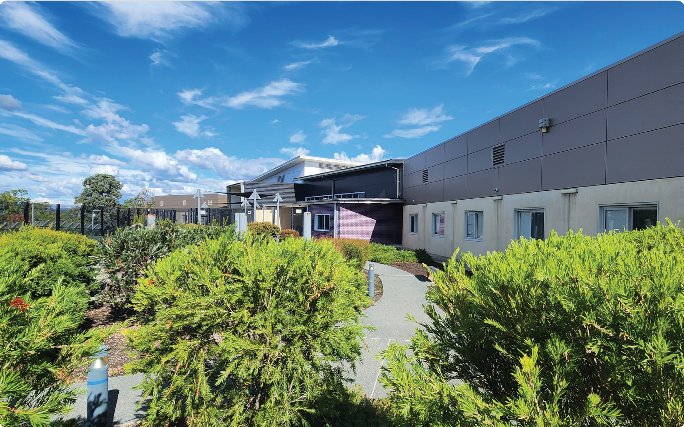
Welcome to the Dhulwa Mental Health Unit (Dhulwa). Dhulwa is a Ngunnawal name that means honeysuckle, which is a flowering Banksia. The name has been gifted to us by the Ngunnawal elders.
Your rights
People who experience mental illness or mental health problems have the same rights as any other person. You have the right to:
- Respect: for your age, culture, language, disability, gender and sexuality
- Safety: be treated in the least restrictive environment appropriate to your individual needs and receive information about all aspects of your treatment
- Communication: be heard, ask questions about your care, state your views and preferences
- Access: timely access to services, care that promotes recovery, if and when your carer, family and other support is involved
- Participation: participate in decisions about your care, access advocacy if required
- Privacy: your privacy and personal information being protected and to lawfully access your health record
- Comment: comment and give feedback on your care, make a complaint including receiving information on how to make a complaint
The ACT Charter of Rights is for all people in the ACT who experience mental health issues. The ACT Charter of Rights outlines that rights are equal regardless of age, gender, sexual orientation, religion, culture, language, diagnosis, abilities or income. Please speak with us if you would like further information about these rights.
Your recovery journey
At Dhulwa, our vision is to create:
Hope, healing and creating meaningful lives for a safer future together.
Our aim is to provide a comfortable and therapeutic environment to promote help with your recovery journey. We will work with you to improve your wellness, rather than simply treating illness. Please speak with us if you have any questions.
Safewards mutual expectations
Dhulwa uses the Safewards model which includes mutual expectations to help us provide a safe and supportive environment for your recovery journey.
Living and working together with others can be difficult; which is why at Dhulwa our staff work together with you to have mutual expectations for how we will behave and treat each other. Having rules and expectations that we all understand and stick to is important. It helps to reduce stress and frustration, support mental health recovery, and keep everyone safe.
Your nurse will take you through the mutual expectations and you can ask your nurse at any time to go through them again. You will find a list of the mutual expectations on the notice board in each of the units.
Dhulwa staff are here to help you communicate and manage any distress and frustration you may feel before it becomes overwhelming. One way that we do this is by getting to know you and keeping an eye out for when things might not be going well for you. You can also let us know when you start to feel distressed or frustrated.
DASA
While you are at Dhulwa you might hear the term ‘DASA’ used. DASA stands for Dynamic Appraisal of Situational Aggression. DASA is a tool that your treating team can use to see if your behaviour changes from your usual self.
The DASA tool isn’t used to say you are ‘bad’ or to punish you. We use it to help us know when you might need some more support or for us to try a different way to help you. Your nurse might let you know that we have noticed something is different about your behaviour – we want to work with you to keep meeting your goals, so let us know if there is any extra support you need or strategies you’d like to try.
Some of the things we can offer at Dhulwa to help you are:
- music
- reading a book or writing in a journal
- walking track
- massage chair
- sensory room
- mediation or mindfulness
- talking to your nurse
- art therapy
- watching a movie
- playing a game or a video game
- sporting or other exercise-based activity.
Wards/units
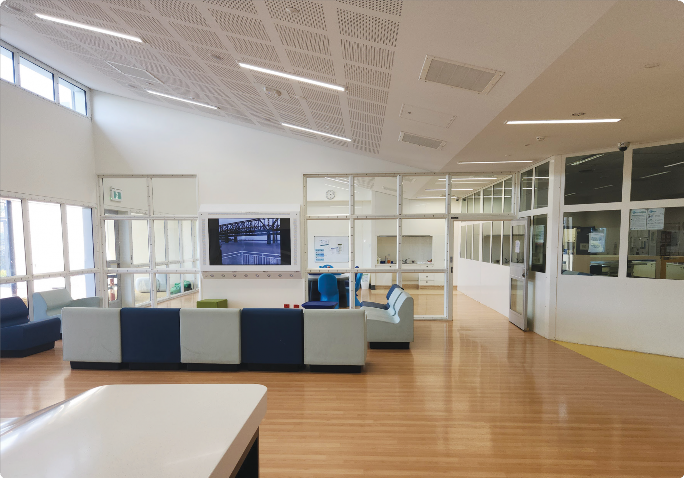
Dhulwa has two wards, or units, that can accommodate up to 25 people. Most people start their journey at Dhulwa in Lomandra unit and progress to Cassia unit. Each unit has two bedrooms located close to the staff areas for people who need additional support. Each unit also has a dining room, laundry, several social spaces, outdoor courtyards, and activity rooms.
Closed-Circuit Television
Closed-circuit Television (CCTV) are in operation at Dhulwa for the safety and security of you and the staff. Signs are displayed at the entry and exit points of Dhulwa.
We value your privacy and rights and have not placed CCTVs in areas that you expect privacy, for example:
- bedrooms, toilet facilities, change rooms, showers or other bathing facilities
- clinical treatment areas
- parent/carer or nursing room, a sick bay or first-aid room.
Single bedrooms
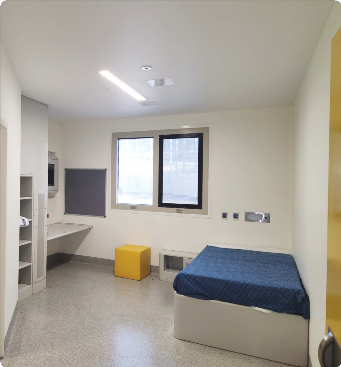
The single bedrooms have been designed for your privacy and comfort. Each room has a bathroom with a shower and a toilet. Your belongings can be secured in your room by locking the door with a special bracelet that is always kept with you. Staff can enter your room. They will speak to you before entering and will knock before entering. Please see your nurse if you have any issues entering your room or locking your door.
Your belongings
Your bags will be searched by a nurse as part of the admission process. Please ask if you would like to be present when your belongings are searched. We do this to make sure the unit is safe and no prohibited items are brought to Dhulwa. Please limit your clothing to around 4-5 changes of comfortable clothes. There are facilities to wash and dry your clothes during your stay. We may ask that excess items be sent home.
Your belongings will be recorded by a staff member and excess belongings kept in a safe storage room. We ask you to limit belongings in your bedroom to avoid work health & safety or infection control issues. Your nurse will help you access your belongings whenever you need them.
Prohibited and restricted items
Prohibited items are things that cannot be taken into Dhulwa, this is for everyone’s safety. For example:
- drugs and alcohol
- cigarettes, lighters and matches
- weapons
- mobile phones, smart watches, computers and cameras
- any other items that may put the safety of consumers, visitors or staff at risk.
Restricted items are things that may be allowed into Dhulwa but need permission first. For example:
- portable audio player (e.g. iPod or MP3 player)
- CDs and DVDs
- metal cutlery, tins, cans or containers.
A full list of prohibited and restricted items is displayed on the ward and at reception. A copy can also be provided to you and your visitors.
Telephone calls
You can make telephone calls from the patient phone in the main area at no cost to you. We will keep a list of up to 10 phone numbers that we have approved for you to call. Calls are limited to a maximum of 10 minutes. You are allowed to dial the same number again 20 minutes later if your conversation is not finished. You can make international calls in some circumstances.
Phone numbers for the Public Advocate, Official Visitor, Human Rights Commission and Legal Aid are included in the phone system for your use. You will be given a Personal Identification Number (PIN) to access your approved numbers to make telephone calls.
Smoking
We are committed to providing a smoke-free environment for all consumers, visitors and staff.
Dhulwa is a smoke-free campus, which includes the carpark.
We ask consumers and visitors to not bring cigarettes, vapes or tobacco items into the unit.
Nicotine Replacement Therapy
Our doctors will discuss nicotine dependence with you when you are admitted. If you need it, we provide Nicotine Replacement Therapy (NRT) patches, spray and inhalers at no cost to you. We encourage you to use these products to improve your health. Please speak to your doctor if you have any concerns. Nicotine patches are listed on the Pharmaceutical Benefits Scheme (PBS). We will provide a prescription for nicotine patches when you are discharged if you have used them during your stay at Dhulwa.
Support to quit
The alcohol and drugs nurse at Dhulwa can talk to you about strategies to manage addiction and help link you with support groups.
Who makes up your treating team?
Nursing team
The nursing team consists of Clinical Nurse Consultants (CNC), Registered Nurses (RN), Enrolled Nurses (EN) and Assistants in Nursing (AIN). They are responsible for giving you daily care
on the unit during your stay. The nursing team will make sure you get your medication, monitor for side effects and work with you towards your recovery journey. We also have student nurses from local and interstate universities and Canberra Institute of Technology (CIT).
You are assigned a primary nurse and a secondary nurse. Information on your primary and secondary nurses can be found on the board.
The CNC will work with you and the nursing staff to make sure all your health needs are met.
Assistant Director of Nursing (ADON)
The ADON is responsible for the quality of nursing care on the unit, and the day-to-day operation of the unit is of a high standard.
Forensic psychiatrist & psychiatric registrar
The forensic psychiatrist is the senior doctor who takes overall responsibility for your care and prescribes and monitors your medication. The psychiatric registrar works directly with the forensic psychiatrist and the nursing team. The psychiatric registrar will work with you every day and monitors your medication, side effects and mental state.
Allied health manager
The allied health manager will work with the occupational therapists, creative arts therapist, psychologists, exercise physiologists, social workers and allied health assistants to develop a therapeutic activity calendar for you. The activity calendar will have individual plans that reflect what you would like to achieve with your rehabilitation goals.
Psychologist
Psychologists can spend time talking with you to help you work through any difficulties you may be facing. They may use ‘talking therapies’ to understand your strengths, thoughts, feelings and guide you to make positive changes. They may work with you individually or in a group with other consumers.
Social worker
Social workers can support you, your nominated person, carer, family and other supports, including children, to better manage and understand why you are at Dhulwa. They will make sure you have access to funds, housing and National Disability Insurance Scheme (NDIS). They will also help you navigate the court system and legal matters if you need.
Occupational therapist
Occupational therapists will talk to you about the everyday activities that are important to you. They also support you with functional assessments such as, cooking, catching a bus, self-care and other everyday tasks. These assessments are used by the treating team and can also be used to gain a NDIS package that will help you live independently or with appropriate supports.
Creative arts therapist
The creative arts therapist offers both one-on-one art therapy and therapeutic groups. Art therapy uses creative processes, such as painting, drawing, collage, movement and music, to help you find solutions to challenges you may be facing. You do not need to have any experience, talent or even interest in art to participate. The focus is on the process of making the work and the meaning found within, rather than the final artwork.
Exercise physiologist
The exercise physiologist will give you an orientation to the gym. They will also work one-on-one with you to improve your fitness. They will work with the dietician to give you guidance on how to manage your physical wellness, to make sure you have a good physical and mental health.
Allied health assistant
Allied health assistants help you with practical support to engage in activities important to your recovery journey when you are a consumer at Dhulwa. They work directly under the supervision of psychologists, social workers, occupational therapists, exercise physiologists, dietitians, and creative arts therapists.
Aboriginal and Torres Strait Islander liaison officer
The Aboriginal and Torres Strait Islander liaison officer works with and supports Aboriginal and/or Torres Strait Islander people. They provide advocacy, support and referral to other services. We can make arrangements for you to speak to the Aboriginal and Torres Strait Islander liaison officer.
Administrative team
Administration staff are also a part of the team. Once the MDT approves your visit and leave, the admin team put this into the system. This is so that all staff are aware and can make sure your visits and leave go ahead without any issues.
Translating and interpreting service
Translating and interpreting services are available to you, your nominated person, carer, family and other support for free. We will organise one for you when needed. This service is confidential and available face-to-face or by telephone. You can also choose a male or female interpreter.
Other support services
Daily life at Dhulwa is also supported by a busy team of support staff who are responsible for cleaning, food services, maintenance, and security.
You can write down any questions or concerns you might like to remember to talk to your treating team about:
Daily routines
Dhulwa has a daily routine, and you are encouraged to take part in the routine to be an active part of the Dhulwa community. This means attending mutual help meetings, and participating in therapeutic activities that will help you with your mental health recovery journey. Physical health is equally important, and we focus on promoting healthy eating and physical activity.
| Time | Activity |
|---|---|
| 8am – 9am | Breakfast: you can prepare your own breakfast with the assistance of Dhulwa staff and facilitated by Allied Health Assistants. |
| 9am – 9.30am | Activities of Daily Living (ADLs): this is an opportunity for you to perform your ADLs, this includes showering, grooming, cleaning rooms, laundry, and other essential daily routines. |
| 9.30am - 10am | Mutual Help meeting: discuss day plan, activities, answer any questions or concerns, and take suggestion. |
| 10am – 10.30am | Morning tea |
| 10.30am – 12 noon | Core programs: the time for you to participate in formal group programs including psychological or other therapy related groups that are part of the program schedule. |
| 12 noon – 3pm | Lunch and community based activities: allocated for consumers to access their approved leave. At times, leave may be dependent on the scheduling of external activities. This is also an opportunity for you to have lunch with your visitors. |
| 3pm – 4.30pm | Core programs: sports and physical activity. The time for you to participate in formal group programs as determined by the program schedule. |
| 5pm – 7pm | Social time and meal preparation: you will have access to the kitchen to prepare your meals for dinner with the assistance of Dhulwa staff. |
| 7pm | Relaxation on the unit: no leave after 5pm unless pre - approved by the MDT. |
Meals
Breakfast: 8am
Lunch: 12 noon
Dinner: 5pm
All meals are served in the dining room, and the menu is rotated so meals don’t become repetitive.
We organise special meals to celebrate events like Christmas, Easter and Birthdays and other cultural celebrations. We also host weekly BBQs (weather permitting) to encourage engagement and interaction.
Dhulwa has a self-catering program which gives you opportunities to prepare food of your choosing.
Medication
Medication is an important part of your care and treatment as it can be helpful in stabilising your mood and treating symptoms of mental illness. For information about medication side effects and what to expect, speak with your psychiatrist or your nurse. Please let us know if you are experiencing any side effects or have any other medication concerns.
Sometimes medication can take time to start working. Please make sure you tell us about all other medicines you take (such as vitamins, supplements and natural therapies), as some of these may interact with the medications we prescribe you.
Medication is given at the same time each day at approximately 8am, 12 noon, 5pm and 8pm. If you need medication outside of these times, please speak to your nurse.
Therapy activities and programs
The therapies and activities offered during your stay are important to your recovery journey and rehabilitation back to safe community living. Activities are run every day as individual or group sessions and may be run on the ward, in our off-ward activity areas, or in the community. The daily program is on the notice board.
During your stay at Dhulwa, you will be expected to actively engage in the activities program which may include a range of activities like:
- cooking and self-care
- psychology sessions
- problem behaviour programs
- drug and alcohol counselling
- physical health and exercise programs
- creative and leisure activities
- social activities
- support for further education
- social worker interventions, including NDIS planning.
At Dhulwa we use the DUNDRUM to assess your participation in the therapy programs and your recovery journey to the community.
This helps us work with you to identify your strengths and focus on areas where you may need more support to successfully return to community living.
Speak to your treating team if you’d like to know more about DUNDRUM.
A new calendar of activities is posted every 3 months and is available on the notice board. You will have your own timetable of programs and activities that is unique to you depending on where you are at in your recovery journey. Please speak to the allied health team and your MDT about what programs are right for you.
Individual care plan
Every 3 months the team will meet and work with you to identify your recovery goals. This can include programs and activities chosen to help support you on your recovery journey for the next 3 months.
You can invite your nominated person, carer, family or other supports to attend these meetings.
Taking leave from Dhulwa
Your treating team may decide that you are able to spend some time away from the unit. This is called “leave”. Community leave is important in assisting you with your rehabilitation and recovery journey. Leave can be used for various activities, like:
- education
- employment and training
- grocery shopping
- attending appointments
- visiting with nominated person, carer, family and other supports contacts.
Leave can be escorted (by staff), accompanied (by a nominated person, carer, family and other supports) or unescorted. Leave has to be applied for and approved by the Leave Panel. Not all consumers at Dhulwa have access to leave for legal reasons.
Please speak to your nurse about the process for applying for leave.
Facilities
Television
Televisions (TVs) are located in the common areas and in your bedroom. Common area TVs are turned off during mealtimes and at night.
Computer room
Access to computers in the computer room is subject to approval by the MDT.
Laundry
Dhulwa has washing machines and dryers. You are encouraged to do your own laundry, but the nurses are available for support if needed.
The laundry is open from 7.30am – 9pm.
Gym
The gym is open daily and has a variety of equipment for both aerobic and resistance exercise, including treadmills, exercise bikes, and various weighted equipment. Your exercise physiologist will work with you to develop an individual exercise program.
Multi-faith room
Dhulwa has a multi-faith room that offers opportunities for private worship, and we can arrange visiting faith leaders to support your spiritual needs.
Activities room
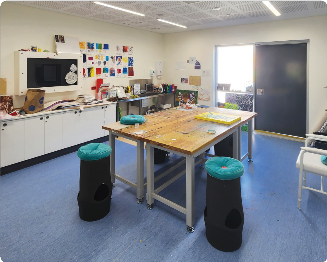
Dhulwa has activity rooms for individual and group activities, and therapy programs.
Kitchen
A kitchen is available for self-catered meals and individual group cooking activities.
Sensory modulation room
The sensory modulation room is a safe space where staff can help you explore ways to manage uncomfortable feelings and emotions. Sensory modulation is a term used to describe a range of sensory techniques to help manage emotions and calm down when you are feeling upset, stressed or agitated. It can involve all five senses: touch, sight, sound, smell, and taste.
Sports court and walking track
The sports court is open daily and has a variety of sporting options, including basketball, tennis, soccer, and volleyball. The walking track at Dhulwa is a space that you can use for relaxation, leisure and exercise, it is also used for group exercise activities and our annual Steptember Challenge.
Advocacy
Advocacy is when someone speaks on your behalf to promote your point of view. There are a number of free advocacy services in the ACT. Some services offer individual support while others focus on improving systems. They include:
ACT Disability, Aged and Carer Advocacy Services (ADACAS)
ADACAS is an independent community organisation that provides free advocacy and information for people with disabilities, including psychiatric disability, and vulnerable older people.
Advocacy involves providing information, assisting with creating options, communicating wishes and representing your views to others.
An ADACAS advocate can assist you to assert your rights or interests or to have your needs met.
You can use the phone to contact ADACAS on (02) 6242 5060.
Public Advocate of the ACT
The Public Advocate provides advocacy for people who may not be able to advocate for themselves or represent their own best interests. The Public Advocate monitors how services are provided to people within Dhulwa to make sure that the rights of people are protected and their best interests promoted.
An advocate regularly visits Dhulwa and is available to speak to or you can use the patient phone to contact the Public Advocate’s Office.
Legal Aid ACT
Legal Aid ACT provides a number of free services for people accessing mental health services in the ACT.
People who have been detained under the Mental Health Act 2015 can be advised and assisted by a legal aid duty lawyer. Legal Aid ACT can also assist people with applying for a grant of legal assistance if they need ongoing legal assistance or representation with various legal matters including criminal, family, guardianship, debt or other legal matters.
Official Visitors
Mental Health Official Visitors are independent of the Canberra Health Services Directorate and are appointed directly by the ACT Attorney-General. Their role is to assess inpatient mental health facilities in the ACT to make sure the best possible care is provided. Official Visitors visit Dhulwa each month. They also visit when requested or to follow up complaints or concerns. Official Visitors provide recommendations on their findings to Dhulwa, the Public Advocate and the Minister for Mental Health.
You can speak to the Official Visitor when they visit if you wish to do so.
ACT Mental Health Consumer Network (ACTMHCN)
ACTMHCN is an independent consumer-led organisation advocating for the interests of people with mental illness living in the ACT.
ACTMHCN does not provide individual advocacy, but trains and supports people to engage in systemic advocacy. This improves mental health services based on the individual and collective experience of people with mental health issues.
You can use the phone to contact ACTMHCN on (02) 6230 5796.
Legal Information
Mental Health Act 2015
The Mental Health Act 2015 is the legislation that relates to the treatment, care, support or rehabilitation and protection of people with a mental disorder or mental illness in the ACT.
People with a mental illness or mental disorder must be treated in a manner that is least restrictive of their human rights. This means that a person will only be required to receive treatment at Dhulwa when there are concerns for their safety or the safety of others.
The Mental Health Act 2015 aims to protect the rights of people while making sure they have access to high quality and appropriate care.
Please ask your nurse if you would like a copy of the Mental Health Act 2015.
Decision making capacity
Under the Mental Health Act 2015 you have capacity to make a decision about your treatment, care or support for a mental disorder or mental illness (decision making capacity) if you can do all of the following (with assistance if needed):
- understand when a decision needs to be made about your treatment, care or support
- understand the facts of the decision
- understand the main choices available to you in relation to the decision
- weigh up the consequences of the main choices
- understand how the consequences affect you
- make the decision based on the above information
- communicate the decision in whatever way you can.
Ask your nurse for more information about decision making capacity.
Advance agreement
An advance agreement is a document stating your preferences for mental health treatment, care and support. It is used when your mental disorder or mental illness significantly affects your ability to be involved in decisions about your treatment, care and support.
An advance agreement can include:
- your particular preferences for treatment
- your preferences, such as practical arrangements for looking after your property or pets when you are in need of treatment, care and support
- contact details about important people, such as carers, guardians, legal representatives or a nominated person.
We can provide you with more information about advance agreements. Please let us know if you have previously made an advance agreement.
Advance consent direction
An advance consent direction is a document stating treatment that you consent to receiving if your mental disorder or mental illness means you don’t have decision making capacity.
An advance consent direction can include:
- treatment, care or support you are willing to receive
- medications or procedures you are willing, and not willing, to receive
- people who may, and may not, be given information about your treatment, care and support.
We can provide you with more information about advance consent directions. Please let us know if you have previously made an advance consent direction.
Nominated person
You can nominate someone to be your nominated person. A nominated person can help you by ensuring your interests are respected if you require treatment, care or support for your mental disorder or mental illness.
We can provide you with more information about nominated person. Please let us know if you have a nominated person.
A nominated person form can be completed on admission. We will then contact your nominated person and provide them with the unit phone number and let them know of your arrival.
Your nominated person can contact you by calling (02) 5124 1851.
Human Rights Act 2004
Human rights are universal and enjoyed by all individuals in the ACT regardless of differences in gender, disability, nationality, race, religion etc. If you would like more information about human rights or have concerns, you can ask us for a brochure about the ACT Human Rights Commission or use the patient phone to contact them.
Health Records (Privacy and Access) Act 1997
By law, we are required to maintain records on specific areas of care that are provided.
The Health Records (Privacy and Access) Act 1997 states the circumstances under which this information may be shared with others. It also provides an opportunity for people to access their own personal health information.
If you have concerns regarding your privacy, you can discuss these concerns with us or use the patient phone to contact the ACT Human Rights Commission.
Mental Health (Secure Facilities) Act 2016
Dhulwa is a declared secure facility.
Mental Health (Secure Facilities) Act 2016 is the legislation that relates to the operation and management of secure mental health facilities. This Act includes the rules, procedures, rights, and safeguards for individuals within secure mental health facilities.
Information for your nominated person, carer, family and other supports
Connection with nominated person, carer, family and other supports is a very important part of a consumer’s recovery process. Dhulwa team members work positively and inclusively with nominated person, carer, family and other support, encouraging involvement and offering support in a variety of ways.
Person centred care principles and recovery-based approaches acknowledge the important role a range of people play in providing support in accordance with the Carer Recognition Act 2021.
We believe that nominated person, carer, family and other supports have a unique perspective and a lot to offer in helping us continue to meet the needs of our consumers and their loved ones.
Visits
Dhulwa values the importance of contact by consumers with their nominated person, carer, family and other supports during their admission to help with their recovery journey and to facilitate a supported transition back to the community. As a secure facility, we have special entry requirements in place for all visitors.
Before you visit
All visits must be requested, approved and booked at least 24 hours in advance, to ensure there is a suitable visiting place, that the number of visitors is appropriate, the consumer is available for a visit and there is sufficient staff to provide support during the visit.
To request a visit, please email DMHU@act.gov.au or call (02) 5124 1851.
Visits with children must be preapproved by the treating team before they visit and may not be approved if active court orders are in place or the safety of the child is in question.
Visiting times
Standard visiting hours are in place at Dhulwa. We ask you to arrange visits during these times. We also recommend you call staff on the unit ahead of time to make sure your visit is not booked at the same time as consumer programs and appointments.
Monday – Friday: 10am to 12 noon and 1pm – 8pm
Saturday, Sunday and Public Holidays: 10am – 8pm
We strongly advise you to call staff on the unit before traveling to Dhulwa. This will help ensure nothing has happened to delay or prevent your visit. It will also ensure you only bring what you need for your visit and reduce delays through security. Please be aware that visits may be delayed for a period of time to ensure a safe environment inside the unit. If this occurs, staff will keep you informed.
Bringing items into Dhulwa
The safety and wellbeing of consumers, staff and visitors is a priority at Dhulwa. If you are bringing anything in for a consumer, please check with the treating team, as certain items are restricted and need to be pre-approved.
As a condition of entry into Dhulwa you and your belongings will be searched. You can store items in a locker in the entry foyer during your visit.
When you visit
For your first visit you will need to bring 100 points of ID and have your photo taken for our security system.
On each visit you will be asked to confirm your identity and complete the visitor’s logbook.
A staff member will meet you at the security area and accompany you to our visit room. Staff will stay with you at all times during your visit. One or more staff may be in the room or outside the room during your visit. The treating team will determine the level of staff supervision needed for your visit and the location. If you have any requests or concerns about the staffing of your visits, please discuss with the treating team.
We appreciate your co-operation with all staff. Please ask questions if you are unsure about anything during your visit. We ask all visitors to:
- respect conditions of entry
- always be respectful to staff and use respectful language
- not visit if you are under the influence of drugs or alcohol
- not smoke anywhere at Dhulwa (including in the carpark)
- follow directions from staff while you are inside the facility.
If you are unable to co-operate with these expectations, you may be asked to leave the facility and/or excluded from visiting.
Individual Care Planning (ICP) meeting
If you are a nominated person, carer, family and other supports, it may be helpful for you to attend ICP meetings, if the consumer has given their consent. This is a good opportunity for you to hear how a consumer is going and how you can support them in their recovery journey.
Discharge planning meeting
Discharge planning is something we think about from the moment a consumer is admitted. All the goals that consumers identify and achieve contribute to what supports and services they may need once they are back in the community. The discharge planning meetings are important for nominated person, carer, family and other supports to attend. They offer the best support for consumers following their discharge to the community and help us make a safe discharge plan.
Carers meeting
The Carers meeting is a great way to meet other carers, find out information about the services and get more involved. This meeting is held every three months at Dhulwa. There will be discussion on a focus topic, followed by time for networking and support.
Carers are asked not to share specific information about their loved ones in this meeting. The information shared should be generic in nature, protecting consumer confidentiality.
Carers ACT
Carers ACT is the recognised expert voice with, and for, carers while being the major provider of carer services and supports in the ACT.
Carers ACT offer support such as information and advice, counselling, respite, support groups, educational and social activities.
You can contact them by calling 1800 422 737 or (02) 6296 9900.
Feedback
We are committed to continuous quality improvement and appreciate that comments, complaints and feedback provide an excellent opportunity to understand our service from your perspective.
Providing feedback about issues makes sure they are acted upon to prevent similar problems in the future. You may wish to either comment on a positive experience or report a negative experience.
In the first instance any issues should be raised with staff on the unit wherever possible. If the issue is not able to be resolved with the staff member, you can request to speak with the CNC, who may recommend the concern be raised with the MDT.
Comments, compliments or complaints can be provided as follows:
- directly through any staff member
- email: DMHU@act.gov.au
- calling the Consumer Feedback and Engagement Team on (02) 5124 5932 or emailing: HealthFeedback@act.gov.au
- completing a Consumer and Carer Feedback form. Available from us or here