
Welcome to the Day Therapy Unit
Canberra Regional Cancer Centre, Canberra Hospital Campus
We understand your cancer diagnosis can be a confusing and overwhelming time for you. This information pack provides some key facts about chemotherapy, including what to expect during your visits, common side affects you may have during your treatment, and where you can find more information. Your chemotherapy will be given in the Day Therapy Unit (DTU).
Our team of doctors, nurses, pharmacists and allied health professionals work together to give you the best care for your needs.
If you are unable to attend your treatment appointments, please contact us on 02 5124 8444

Please seek immediate medical attention or present to your nearest Emergency Department, or call 000 if you have any of the following:
- a fever of 38° or higher
- chills, sweats or shakes
- shortness of breath
- uncontrolled vomiting or diarrhoea
- pain, tingling, or discomfort in your chest and arms.
What to expect at your first visit
When you have a date for your first appointment to start treatment please attend the Canberra Hospital, level 4 of the Canberra Region Cancer Centre (CRCC) (Building 19) where our administration team will ‘check’ you in, and a member of the nursing team will come and collect you from the waiting area. Please bring your Medicare card to your appointment.
The DTU cares for many patients, and at times there may be a wait. We understand that waiting can be challenging and we will do everything we can to keep your wait as short and comfortable as possible. If you need an interpreter for your appointment(s), please let us know as soon as you can.
We have developed an appointment checklist, to help you prepare for your appointments.
Treatment plan and cycles
Your treatment plan is the cancer care prescribed for you by your Oncologist and includes cancer treatment that is decided by your Oncologist and is based on research.
Your treatment plan is given at regular times called ‘cycles’. A cycle may be a dose of one or more drugs followed by several days or weeks without treatment.
The length of a cycle and the number of cycles can change depending on the type of treatment you need.
How does the cancer treatment work?
Chemotherapy works by stopping cancer cells from dividing and growing. Treatment can cause side effects as both healthy and cancer cells can be damaged by cancer treatment.
This video can help you understand how chemotherapy works:
Immunotherapy helps your immune system find and attack cancer cells. The link below provides more information on immunotherapy:
“Targeted therapy” targets specific parts of cancer cells to block their growth.
The link below provides more information on targeted therapy:
Depending on your diagnosis you may need to have chemotherapy, immunotherapy or targeted therapy or a combination of these therapies.
Common chemotherapy and immunotherapy side effects
- nausea/vomiting
- infection
- fatigue
- loss of appetite
- taste changes
- mouth ulcers
- diarrhoea
- numbness/tingling of the hands and feet
- skin changes/rash
- blood in urine.
Help with side effects
You will be given medications before treatment and some to take home to help manage chemotherapy side effects. We strongly advise you to reach out to the Cancer Rapid Assessment Unit, if you need help at any time during your treatment.
How Treatment is given
Your treatment may be given as an intravenous infusion, tablet or as an injection under your skin or as a combination.
Cancer treatment is often given through an intravenous catheter (IVC) in your arm, or through a central venous access devices (CVADs).
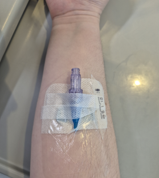
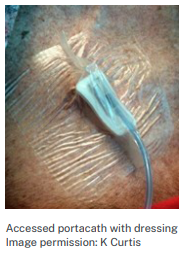
See more information here:
https://www.eviq.org.au/patients-and-carers/patient-information-sheets/how-you-have-anticancer-medicine-treatment/507-portacath-totally-implantable-venous-access-d and peripherally inserted central catheters (PICCs)
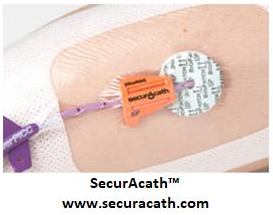
If you need long term therapy, we recommend having a CVAD to help preserve your veins. These devices are also necessary for patients who take chemotherapy infusions home. More information on central catheters can be found here:
Before each treatment
Please have a blood test 48 hours before each treatment.
You need to have an up to date pathology request ready to have the blood test. This request is ordered by your treating doctor and is available digitally on your MyDHR (see information below on how to access MyDHR). You can attend any ACT pathology centre for a blood test – all ACT pathology requests are accessible online. For more information about pathology centres see https://www.canberrahealthservices.act.gov.au/ and put ‘pathology centres’ into the search box.
If you need to attend a private pathology centre such as, Capital Pathology or Laverty Pathology, please ask for a paper referral form from your doctor or Cancer Specialist Nurse.
The blood tests you need to have are:
- full blood count (FBC)
- electrolytes urea creatinine (EUC)
- liver function test (LFT) and
- calcium magnesium phosphate (CMP).
Your blood test result before each treatment will help your treating team decide if you need to delay treatment, reduce chemotherapy dose, or extra supportive medications. It will also reduce any delay or waiting times on your appointment day.
If you are having immunotherapy treatment you may need to have a blood test to check your thyroid and cortisol levels. This test needs to be taken before 10 am 48 hours before treatment.
Your appointment checklist
- Blood test 48 hours before to each treatment
- Take your regular medications, unless your doctor has told you to stop them.
- If you are taking pain medication, please bring this with you in case you need it during your treatment
Bring:
- Your Medicare Card Healthcare Card / DVA Card/Private Health Care Card
- Your Pensioner/Concession Card if you have one
- Your Advance Care Planning Documents (if you have them)
- A list of all your current medications from your GP
- An activity to pass the time such as a book, iPad, crossword, puzzles etc
- Eyeglasses (if you wear them)
- Walking mobility aid (if you use one)
- Wear comfortable clothing and shoes
My Digital Health Record – Access to your health information on demand
My Digital health Record (MyDHR) is the patient portal for the Digital Health Record. You can access MyDHR by either:
- downloading the MyDHR app or,
- going to the MyDHR website.
MyDHR is a great way to become involved in your healthcare, it makes it easier for you to see and manage your public health information and stores your health information safely in one place. It also allows clinicians to quickly access your health information to give you the best care.
How to sign up:
- Online - https://www.mydhr.act.gov.au/MyChart/Signup
- Use an activation code - https://www.mydhr.act.gov.au/MyChart/accesscheck.asp
- Call Digital Solutions – 02 5124 5000 (available 24 hours 7days a week)
Cancer Rapid Assessment Unit
The Cancer Rapid Assessment Unit (CRAU) offers immediate care for people who are currently having cancer treatment at the CRCC.
The CRAU is not a drop-in service. You must call first on 02 5124 4401.
This phone number will be answered 24 hours a day every day of the year. If the phone goes to voicemail, please leave a message with your name and contact phone number and your call will be returned as soon as possible.
In an emergency, please call 000 for an ambulance
We will give you a brochure with more information about CRAU when you have your first treatment.