
Welcome to rehabilitation at University of Canberra Hospital
Welcome to Canberra Health Services
Canberra Health Services (CHS) delivers a range of public health services, including:
- medical and surgical services at Canberra Hospital and North Canberra Hospital
- rehabilitation and recovery care at University of Canberra Hospital
- overnight and longer stays for mental health care needs
- care for women’s health matters, pregnancy, birthing and children’s health
- cancer care at our Canberra Region Cancer Centre at Canberra Hospital
- palliative care at Clare Holland House
- community care such as early childhood services, youth and women’s health, dental health, mental health and alcohol and drug services.
We want you to feel comfortable and confident about the care you receive at our hospitals. Whether you are a patient or carer, our guide has helpful information about what happens before, during and after a hospital stay.
This guide has been developed with support from our partner organisations, including the Health Care Consumers’ Association. The back page of this guide has additional contact information should you wish to reach out to one of our partners.
More information
If you have any questions after reading this guide, you can speak to one of our team members in the hospital by calling 02 5124 5932 or emailing HealthFeedback@act.gov.au
Know your health care rights
You can expect to receive high quality services and care from us. It is important you know what to expect from us and understand your responsibilities during a stay.
The Australian Charter of Healthcare Rights (‘the Charter’) explains the basic rights all patients and consumers are entitled to receive when accessing health care services.
They are:
- access
- safety
- respect
- partnership
- information
- privacy
- give feedback.
The Charter is available in paper version. You can also access translated, Easy English and Auslan versions at www.safetyandquality.gov.au
Privacy
We respect your privacy. To care for you safely, we will need information about you and will keep records of your treatment and care. We will always seek your consent to share information with a carer. We will only share your information without your consent in certain circumstances, for example, treatment is urgent and you are unable to communicate.
Consent
We will talk to you about your options and ask for consent before starting any treatment or procedures. If you have any questions about your care, please speak with a member of your care team.
We will record your decision in your clinical notes. In most cases, you are allowed to change your mind at any time if you do not want to continue treatment.
More information
Scan the QR code for more about your health care rights or visit Rights and responsibilities

Your health care information
Your Digital Health Record (DHR)
Your health record is stored electronically. You can view your own record through our online patient portal, MyDHR.
MyDHR is safe and secure and can be accessed through a mobile app or on the website www.mydhr.act.gov.au
On MyDHR, you can:
- view ‘after visit’ and discharge summaries
- view pathology and imaging results
- submit and review advance care planning documents
- receive appointment reminders
- complete pre-appointment surveys.
More information
To find out more, including how to download the app, scan the QR code to visit the ACT Health web page Digital Health Record.

Accessing previous health records with CHS
We keep a record of all treatments and medicines you receive.
We will not release your health records to a third party without your consent.
You can access your own health record at any time.
More information
Health record request forms are available on our website. Scan the QR code below to find the page.

Before your hospital stay
Paying for your hospital care
Most Australians and permanent residents with Medicare cards will not be required to pay. However, we encourage you to talk to our Patient Accounts team by calling 02 6207 6131 or check our website to get the most up-to-date information.
If you are not an Australian citizen and do not have a Medicare card, you may need to pay for your hospital stay. You will need to bring your:
- passport
- visa
- insurance information
- proof of your address.
If you have private health insurance and want to use it, please speak with one of our team members on admission or early in your stay.
Long stays and non-acute care billing
If you are a DVA card holder, public or private patient and your doctor determines you no longer need acute-hospital care and your stay in hospital exceeds 35 days (in any Australian hospital without a break of more than seven days), you will be classified as a Nursing Home Type Patient (NHTP) and may be billable.
Your care team will talk to you in detail about this and will provide separate information sheets about what this means. If you have been notified you may be classified as a NHTP and have any questions or concerns, you can contact our Patient Accounts team on (02) 6207 6131.
How to make a payment
You can make a payment in person, over the phone, or online.
Pay in person at the Cashier Office at Canberra Hospital.
Monday – Friday
(except public holidays).
Pay over the phone by calling the Cashier Office on (02) 6207 6131.
Pay online through Access Canberra.
Scan the QR code for the payment form.

What to bring to hospital
The items you may need will be similar to what you needed during your previous hospital stay. If you were staying at Canberra Hospital, you can find the lists in our guide called ‘A Patient and Carer’s Guide to Canberra Hospital’.
You will also need to bring:
- comfortable clothes to wear in the gym
- enclosed shoes to wear during gym and therapy
- swimwear for the pool (if you are having hydrotherapy).
If you are staying for more than a day or two, you will need to ask someone to take your dirty clothes home and bring you more clean clothes. Please tell us if you don’t have someone who can do this for you.
Getting to University of Canberra Hospital
University of Canberra Hospital (UCH) is located at Guraguma Street, Bruce. It is adjacent to the University of Canberra campus.
Arriving by taxi or hired vehicles
There is a drop-off and
pick-up location at the
main entrance.
Arriving by bus
Public transport options are available. There are transport options for older people or those with mobility difficulty who have limited access to public transport. For more information contact Transport Canberra’s free Flexible Bus Service on (02) 6205 3555 or email fbs@act.gov.au
Arriving by car
Parking, including accessible parking spaces are in the:
- multi storey car park across the road from the hospital
- basement car park under the hospital
There are also accessible parking spaces across from the main entrance.
Make sure you have your parking ticket validated at reception before you leave.
We have a smoke-free campus
All Canberra Health Services locations are smoke-free.
There is no safe level of exposure to environmental tobacco smoke; therefore, smoking products including e-cigarettes, herbal products or personal vaporisers are not permitted on any of our sites or facilities.
We can help you quit smoking while you’re staying in hospital.
We can give you:
- information and advice on quitting
- Nicotine Replacement Therapy (such as patches, gum, lozenges, inhalers or tablets)
- referrals to other supports, such as Quitline.
Please talk to your care team about support they can give you to quit smoking.
Help for individual needs
If you need help, talk to any member of your care team. We can make changes to support you and your carer.
Help for a physical disability
Wheelchairs are available from reception and upon request. There are lifts to access all areas you may need, as well as accessible toilets. We also have specialist lifts and hoists in the wards if you need assistance to get in and out of bed.
Help for people who are Deaf/ deaf or hard of hearing, blind or have low vision
We welcome guide dogs, audio dogs and therapy dogs to the hospital. Hearing loops and braille are available in some locations. Our lifts have voice announcements.
Please let us know if you need an Auslan interpreter and we can arrange this for you.
Assistance animals
Translating and interpreting help
Let us know if you need an interpreter – we can arrange this service for you.
If you are a carer, you can arrange for an interpreter for free by calling Translating and Interpreting Service on 131 450.
Support for Aboriginal or Torres Strait Islander peoples
If you or your family members identify as Aboriginal or Torres Strait Islander peoples, let a member of our team know. This helps us plan and deliver suitable health services and ensures your health care team are considerate of your cultural practices and needs.
Our Aboriginal or Torres Strait Islander Liaison Service can be contacted by phoning 02 5124 2055.
Other in-hospital support services:
Spiritual Support Services
Our Spiritual Support Services can help you with emotional or spiritual needs. Call 02 5124 3849. We also have a multi-faith room in Building 3, Level 2 which can used by anyone from any background or religion as a sacred space.
Support for veterans
Veteran Liaison nurses provide emotional and practical support to military veterans and war widow(er)s and can see you in the ward or in the Veterans Lounge. Call 02 5124 3696.
During your hospital stay
Participating in your care
It is important to ask questions about your care and treatment options. Speak up if you have questions or concerns. You should also ensure you receive all the information you need to make informed decisions.
- Learn more about your condition or treatments by asking your care team.
- Keep a list of medicines you are taking and what they are for.
- Make sure you get the results of any tests or procedures.
- Talk to your doctor about your options and what is involved if you need a procedure.
Questions to ask about your treatment, procedure or therapy:
- Why do you think this is right for me?
- Is this new or uncommon? Is there research that says this is right for me?
- How many times have you done this?
- What has happened in the past when you have done this?
- How quickly do I need to have this? What will happen if I do nothing?
- How long will it take me to get better afterwards?
- Are there things about my life I will need to change?
- What can I do to get ready?
- Will it cost me anything?
- What else can you tell me that will help me decide if this is right for me?
- What if I need time to talk with my family, friends or someone else about this before I decide?
Make sure you agree with your doctor and surgeon on exactly what occurs during the operation or procedure. You can also ask your doctor or other health professionals to explain the treatment plan for home before you leave hospital.
Staying safe in hospital
We need to know who you are
We will put an identification band on your wrist. If any information on the band is incorrect or out of date, please tell your nurse or the ward clerk. We will regularly ask you to confirm your name and date of birth and check your identification band. It may feel repetitive, but we do this to keep you safe.
Clean hands for safe care
Cleaning your hands often helps stop germs from spreading. To keep you and others safe, please ask your visitors to wash their hands.
Stopping the spread of infection
To help stop the spread of infection and germs, we may put you in a room by yourself or with another person with the same illness. If this happens, we will explain it to you. Team members may wear protective clothing while they are caring for you and you may be asked to wear a mask. If your visitors are unwell with COVID-19, a cold, flu or stomach bug, they should not come to the hospital.
Pressure injuries
You can be at risk of pressure injuries (bed sores) if you are lying or sitting in the same position for too long. If you have any discomfort or need help moving around in your bed, please let your care team know. This can help reduce the risk and keep you comfortable.
Falls
- We will talk with you and your family or carers and work together to make a plan to keep you safe from falls.
- We will work out if you need supervision from team members to do things like get out of bed, walk to the bathroom
or around the ward. - We will work out if you are safer with your bed rails up or down.
- We will watch to see how you are recovering and make a plan to help
you stay safe once you leave hospital. - We may place a sign above your bed so team members know you may need help moving around.
- We may ask other health care workers to help us work out how likely you are to fall. They might look at how you walk, your balance and if you need any equipment to help you.
Please talk to us if you have any concerns about falls.
It’s OK to speak up
If you don’t understand something,it’s OK to ask us to explain.
If you think we might have you confused with someone else, it’s OK to check with us.
If you did not see us wash our hands,it’s OK to ask us to.
If you think we might be giving you the wrong medicine, it’s OK to ask us to check.
If you think you are having side effects from your medicine, it’s OK to tell us.
If you are in pain,it’s OK to ask us for pain relief.
If you would like a second opinion,it’s OK to ask for one.
If you would like some written information about your condition, it’s OK to ask us for some.
If you want us to talk to your family or carer, it’s OK to ask us to.
If you’re getting sicker
Let us know if you feel like you are getting sicker. It may be that something does not feel ‘quite right’, you have new symptoms or find it hard to breathe. If you need help:
- Press your call bell and tell your nurse or midwife why you are worried. You can also ask to speak with the nurse or midwife in charge.
- If you still need urgent assistance, call our Call And Respond Early (CARE) for Patient Safety program on 02 5124 3337 and a senior team member will help you.
Our wards and facilities
There are four rehabilitation inpatient wards (where you stay in hospital overnight).
Stromlo Ward provides rehabilitation for people with disease or injuries affecting their brain or neurological system including stroke, brain or spinal injury.
Majura Ward offers lower intensity rehabilitation for older people who may have several health conditions.
Namadgi Ward provides higher intensity rehabilitation for people who have had orthopaedic surgery, a limb amputated or are recovering from an acute illness.
Cotter Ward cares for people who are unable to participate in an intense program of rehabilitation. This may be because the person is unable to weight bear or is waiting to move into a residential facility or completion of modifications to their home.
You may also do some of your rehabilitation in other areas of the hospital, including:
- the gym and/or hydrotherapy pool
- outside in one of the courtyards
- the dining room
- in a ward lounge
- in your room and bathroom
- in Activities of Daily Living (ADL) therapy areas. Activities of daily living are things you do every day, like cooking, preparing food, eating and drinking.
Facilities
You can purchase light meals, snacks and hot and cold drinks at Brindy’s Cafe in the main foyer.
Lounges/ shared spaces
We offer a range of shared spaces including gyms, dining rooms and courtyards. You can ask team members about where these are located throughout the campus. We also have a shared space with a workstation. Anyone is welcome to use this space.
Visiting hours
Visiting hours for the Stromlo, Namadgi, Cotter and Majura wards are 6am – 9pm every day.
Main reception is open from 7am – 8.30pm Monday to Friday, and 8.30am – 5pm on weekends and public holidays (not including Christmas).
For access after-hours, please use the intercom at the front door to call security.
Your care team may ask your visitors to come back later if they arrive when you are resting, participating in therapy or having a procedure.
Our team members will always ask you if you are happy for us to discuss your care in front of your visitors. You may prefer your visitors to step out before we talk to you about your health care.
You have the right to choose who can visit you. If you do not want someone to visit, please speak to someone in your care team.
Food and mealtimes
Eating healthy food is an important part of your treatment and recovery. Our dietitians and chefs create meals that are balanced and nourishing to support your recovery.
We cater for a wide range of diets including allergies, intolerances, religious or personal preferences.
Three meals and three snacks are served daily. A menu will be provided each day to fill out your choices. If you cannot fill out
the menu, let us know and we will help. Water, tea and coffee is also available through the day.
Mealtimes
Meals are served in our dining rooms. Each ward has separate mealtimes:
Breakfast 7.30am – 9am
Morning tea 10am – 10.30am
Lunch 11.30am – 1pm
Afternoon tea 2.30pm – 3.30pm
Dinner 5pm – 6.30pm
Supper 7pm – 8pm
Your care team will tell you which time your meals are.
Food from home
We do not encourage family or friends to bring in food for patients as there may be special dietary requirements or restrictions while you are in hospital. If food prepared at home is necessary, please check with your care team to ensure it is suitable and safe.
Please do not offer or share food with other patients for their safety.
What’s in your room?
Communication board
Your room has a communication board. We use this for important information about you that will help us care for you better.
Your bed
Beds have side railings that can be raised or lowered. Having the railings up is useful to give you something to hold on to when you are moving position in bed.
Please follow your care team’s advice on when to keep the bed railings up.
Your bed has a panel of buttons, a wired controller that allows you to move the bed into different positions.
Bed linen will be changed weekly, or as required.
Call bell
The call bell is a white remote control you can use to call the nurse and control the lights and television. Keep the call bell close by where you can reach it.
The call bell buttons let you:
- call for a nurse
- turn your light on and off
- use the television and radio
- control the volume of the television and radio.
Bathrooms
You will have a room with an ensuite bathroom.
Bath towels will be provided. You can press your call bell to ask for help using the bathroom. We can also arrange a time to help
with showering.
If you need to call for a nurse while in the bathroom press the call button on the wall of the bathroom.
Please tell your care team if the bathroom needs cleaning.
Using and charging your personal devices
You can use your phone in your room, but please be considerate by keeping noise levels low. We ask you do not unplug anything that is plugged in. If you are unsure where you can plug in your device or charger, please ask a member of your care team.
To respect everyone’s privacy, please ask for permission before taking photos or videos in your room.
Your rehabilitation journey
What is rehabilitation?
Rehabilitation is about getting back to doing the things you want or need to do each day, after an illness or an injury.
Rehabilitation can help you learn new ways to live if you are not able to do things the way you used to before your illness or injury.
Your care team
The rehabilitation team are a group of health professionals who will work with you and anyone else supporting you to reach your goals in the hospital.
Below are some of the health professionals that may be in your care team. You may not work with all the health professionals listed here.
Nurses look after your overall wellness and help you with things like going to the toilet and taking your medicines. They may have an assistant in nursing (AIN) helping them.
Rehabilitation medicine doctors are specialist doctors with experience working with your health issues. They will talk with you about what treatment and care is best for you. They may refer you to other specialist doctors.
Physiotherapists help you to move, get stronger and improve your coordination.
Occupational therapists help you improve how you do everyday things like having a shower, going to the toilet or doing things around the house. They also help you to live safely in your home by helping you make changes to it if you need.
Physiotherapists and Occupational therapists may have an allied health assistant (AHA) helping them.
Exercise physiologists help you manage your health conditions through physical activity and exercise programs.
Neuropsychologists and psychologists help you with your thinking skills and managing your emotions.
Rehabilitation counsellors and social workers can help you (and others) cope with changes in your life after your illness or injury. Social workers can also help you find services in your community that can give you practical support when you leave hospital.
Rehabilitation care coordinators help you understand your rehabilitation plan and help you get ready to leave hospital.
Speech pathologists help you with talking and swallowing. They may have an allied health assistant (AHA) helping them.
Dietitians offer advice on how to eat well. They will teach you how to plan a balanced diet to help with your rehabilitation.
Pharmacists check your medicines and give you advice about how to take your medicines.
Your care is also supported by administration and support teams, as well as our transport team who will take you to any medical appointments we have arranged for you at other facilities.
Respect our team members
Your care team is here to provide you the care and support you need to get well. Please treat our team members, other patients and visitors with care and respect.
How to provide feedback to Canberra Health Services
If you would like to provide feedback about the care you have received, please speak with the nurse in charge in the first instance. Alternatively, you can contact the Consumer Feedback and Engagement team:
(02) 5124 5932
Monday – Friday, excluding public holidays
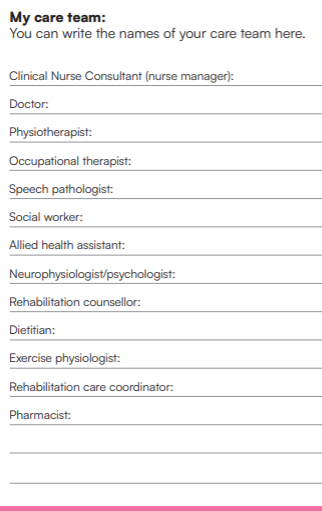
You can ask your Clinical Nurse Consultant (CNC) if you would like to talk to someone in your rehabilitation team.
Your rehabilitation goals
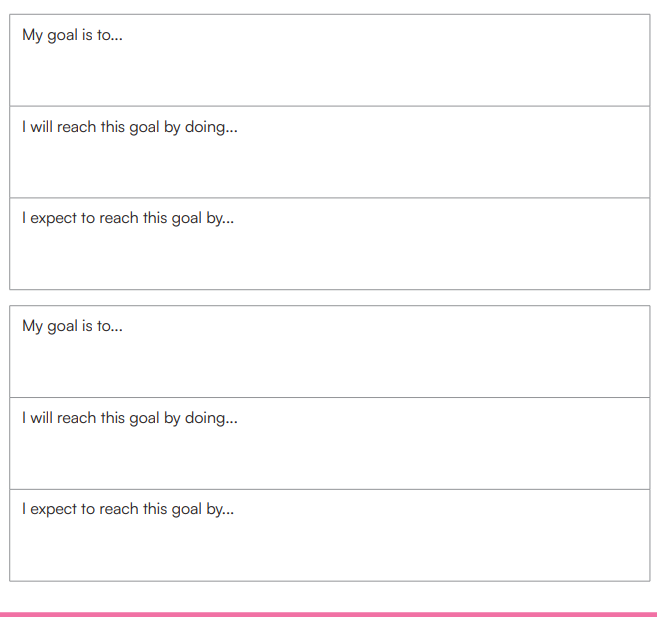
A goal is something you want to achieve, like being able to do things that are usual for you. An example of a goal might be to walk by yourself, go to the toilet without any help or take your own medicines.
Goals should:
- be very clear, relevant and important to you
- be timely. Schedule times for you and your rehabilitation team to review your plan to make sure you are on track
- be agreed to by you, your rehabilitation team and any of your support people who are helping you.
Your rehabilitation team will work with you and your support people to help you set your goals. They will help you make a plan so you can reach your goals. Your plan will be written down in your medical notes.
You can change your goals at any time by talking with a member of your rehabilitation team.
Following your rehabilitation plan will help you make the best recovery you can.
My goals: You can write your rehabilitation goals here.
We will ask you every day: What is important to you today?
It may be one thing like going to the gym on time or having a shower. Your daily goal will be written on a board in your room so you and your rehabilitation team can work together to help you achieve this.
Attending appointments
During your stay you may need to attend appointments at Canberra Hospital or other medical facilities as part of your treatment. For example, to have scans or to see a specialist doctor. We can arrange transport for you in either a taxi or the UCH patient transport bus. A member of our team will escort you if needed, and family or your carer may also go with you.
If you have to attend a private appointment that is not part of your rehabilitation plan, you will need to arrange your own transport.
When will I go home?
When you have been at UCH for a few days, we will give you an estimated discharge date. This is the date we expect you will
leave hospital. We will base this date on the rehabilitation plan you develop with your rehabilitation team.
We will write your discharge date on the communication board next to your bed.
Your rehabilitation team will go over your plan with you regularly. Your estimated discharge date may change depending on progress with your rehabilitation.
We won’t keep you in hospital any longer than you need to be.
We won’t send you home until we can make your discharge from hospital as safe as we can.
We will work with you, your family or support people to arrange services and supports you may need to leave hospital safely.
You can talk with any member of your rehabilitation team at any time about this.
Preparing to go home
We want to make sure you are safe when you leave hospital and receive the care and support you need after your hospital stay.
You can talk with us about any concerns or questions you have about leaving hospital.
You can write down any questions or concerns you might like to remember to talk your care team about.
Being discharged from hospital
Discharge is at 9am. Make sure you have collected your belongings.
Here’s what will happen before you go:
Medicines and scripts
We will give you scripts for any medicines you need at home. We will talk to you about how and when to take them.
You may need to pick up medicine from our University of Canberra Hospital Pharmacy before you leave the hospital. We will provide you with three business days’ supply of new medicines to enable you to see your GP after discharge.
Medical/carer’s certificates
If you need a medical or carer’s certificate, please ask us for one before you leave hospital.
Important paperwork
We will give you a copy of your discharge summary. This is a summary of what happened during your hospital stay. If we have your permission, we will also send a copy to your GP after your hospital stay.
We may also give you:
- written instructions for things you may need to remember, like what types of food or drink to have, or when to take your medicines
- details of any follow-up appointments we made for you
- contact information of someone who can help if you have problems or concerns once you leave hospital.
Getting home safely
It’s a good idea to plan how you will be getting home. If you need help making plans to get home or are worried about what happens when you are at home, talk to your care team.
After you leave hospital
Medicines and scripts
It is important for you to follow the instructions your doctor gave you for this medicine. These instructions will also be printed on the packaging the medicine comes in.
If you have any questions about the medicines, please talk to your GP about your concerns.
GP follow-up
We will ask you to see your GP for a follow-up appointment and to check with your doctor about any prescriptions you may still need. If you have already given us permission to share your discharge summary, your GP will have all the information they need for your appointment.
Lost property
If you think you may have left something behind, you can check by talking to the team at the UCH reception.
Continuing your rehabilitation journey after you leave
When you leave hospital, you may not be able to do everything you used to do. If you have goals that you still want or need to work on, your rehabilitation may continue at home or at the place you will be living.
Brindabella Day and Ambulatory Rehabilitation Service
Your continuing care may involve attending appointments at Brindabella Rehabilitation Centre at UCH.
Some of the services your program may include are:
- hydrotherapy
- driving assessment
- physiotherapy
- occupational therapy
- social work
- speech therapy.
We have a list of our services and clinics on our website. Scan the QR code to view.

There are some services you can self-refer to, or you can ask your GP or other health care worker to refer you.
Walk-in Centres
Walk-in Centres provide free health care for non-life threatening injuries and illnesses to anyone who is over one year of age.
The centres are open 7 days a week, including Christmas Day and New Year’s Day between 7.30am – 10pm. You don’t need to make an appointment.
Locations
Belconnen
Corner of Lathlain and Cohen Street, Belconnen
Inner North
Joan Kellert Way (previously called Dickson Place), between Joan Kellert Way and Cowper Street, Dickson
Gungahlin
Ernest Cavanagh Street, near Hinder Street, Gungahlin
Tuggeranong
Corner of Pitman and Cowlishaw Street, Greenway
Weston Creek
24 Parkinson Street, Weston Creek.
Caring for you in the community
We have outpatient and community-based services and clinics.
These are services in your local community providing health care, such as:
- physiotherapy
- follow-up appointments with nurses psychosocial and mental health appointments
- psychosocial and mental health appointments
What to do if you’re not getting better
If you need to contact us because you are not getting better, check any written correspondence we may have given you while you were at UCH for information on who to contact.
If you are unsure who to call you should talk to your GP or attend a Walk-in Centre.
If you are very sick, please call 000 or attend the nearest emergency department.
Did you know you can pop into a Walk-in Centre to have your bandages or dressing changed?
Useful contacts
Canberra Health Services:
Access Mental Health
24 hours/seven days a week
Phone: 1800 629 354
For people who have concerns about their own or someone else’s mental health. We provide information, make recommendations, and/or refer you for further mental health support.
Canberra Hospital Switchboard
24 hours/seven days a week
Phone: 02 5124 0000
Consumer Feedback and Engagement Team
Phone: 02 5124 5932
Email: HealthFeedback@act.gov.au
Central Health Intake
Monday to Friday (excluding public holidays).
Community based services phone: 02 5124 9977, 8am – 5pm
Hospital services phone: 02 5124 2415, 8.30am – 4.30pm
Please note that both phone lines close at 3.30pm every Wednesday for quality and staff training.
Advocacy and support organisations in the ACT:
Health Care Consumers’ Association of the ACT (HCCA)
Phone: 02 6230 7800
Email: adminofficer@hcca.org.au
Web: www.hcca.org.au
Carers ACT
Phone: 02 6296 9900
Email: carers@carersact.org.au
Web: www.carersact.org.au
ACT Disability, Aged and Carer Advocacy Service (ADACAS)
Phone: 02 6242 5060
Email: adacas@adacas.org.au
Web: www.adacas.org.au
Advocacy for Inclusion (AFI)
Phone: 02 6257 4005
Email: info@advocacyforinclusion.org
Web: www.advocacyforinclusion.org
Women with Disabilities ACT (WWDACT)
Email: info@wwdact.org.au
Web: www.wwdact.org.au
Migrant and Refugee Settlement Services (MARSS)
Phone: 02 6248 8577