
Venesection
What is a venesection?
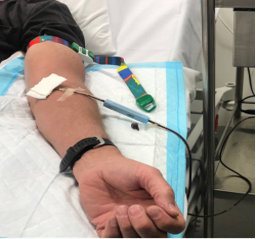
A venesection is a procedure where a nurse or doctor takes some of your blood using a needle like a blood test or blood donation.
Why am I having a venesection?
Venesections are usually done to reduce the amount of red blood cells or the amount of iron circulating in your body. Two of the most common reasons that you might need to have this procedure are:
Polycythaemia
If you have polycythaemia your body makes too many red blood cells. When the number of red blood cells is too high, your blood thickens, making the blood flow to your organs slower. This can increase your risk of developing blood clots which can be life threatening. A venesection will reduce your number of red blood cells and will improve your blood flow.
Haemochromatosis
Haemochromatosis is a condition where your body absorbs too much iron. Iron is stored in your organs, mainly your liver, and can cause damage to them. By removing the blood through a venesection, the level of iron is reduced and the damage to your organs is minimised.
How is a venesection done?
A nurse will put a needle into a vein, usually in your arm and remove approximately 450mls of blood. You will be able to sit or lie down during the procedure.
To help you recover after your procedure and to prevent a drop in your blood pressure, we will offer you something to eat and drink. If you have any dietary requirements, you might like to bring some food and a drink with you.
Before your appointment
At least one week before your appointment you will need to have a blood test to check your Haemoglobin (red blood cells) and Ferritin (iron) levels. This will determine how often you will need to have a venesection.
On the day of your appointment in the Cancer Centre
Check in with reception on level 4 at the Cancer Centre, located in Building 19 at the Canberra Hospital with your Medicare card. We recommend you eat normally and drink extra fluids before your appointment.
Please tell your nurse if you:
- are taking any anticoagulation or blood pressure medication
- have a heart condition
- have fainted or have felt unwell after having a blood test or venesection
- weigh less then 50kg
- are frightened of needles or have a phobia of blood
Are there any side effects?
Fainting and tiredness
You may feel dizzy or lightheaded during or after your venesection. If this happens, we will give you extra fluid (water) and lay you down. This should help you feel better within a few minutes. To reduce your risk of feeling faint, always eat normally and drink plenty of water before your appointment. You may feel tired after your procedure for a day or two. We recommend you avoid strenuous activity, avoiding alcohol or lifting heavy objects for at least 24 hours after the procedure.
Bruising or bleeding
Sometimes you may get a bruise or bleed where the needle was placed into your arm. A pressure bandage will be applied over the area once your procedure is completed. Keep the bandage on for 2 to 4 hours after the procedure to reduce the bruising and risk of bleeding. Avoid heavy lifting with this arm to reduce the risk of further bruising. If bleeding occurs, apply pressure to the site until the bleeding stops. If bleeding continues, talk to the nurses located on level 4, building 19 or go to the Emergency Department.
Pain
Venesections can be mildly painful at the site of the needle; any pain should start to go away once the needle has been removed. The nurses will offer you the option of a numbing cream before they start the venesection. If your pain is still there after the venesection, let the nurse know, or contact your GP.
Nerve damage
Nerves sit close to veins therefore there is a low risk of nerve damage when inserting the needle into your arm. If the needle touches a nerve, there will be a sharp pain or possible pins and needles down your arm. If you feel any pins and needles sensation or pain during the procedure, it is important to let your nurse know so the needle can be removed immediately.
Heart conditions
If you take regular blood pressure medications or have a heart condition, tell your Haematologist and nurse before the procedure.
If you experience any of the following after your procedure present to the nearest Emergency Department or your GP:
- bleeding or swelling around the needle site is getting worse or more painful
- a fever (temperature of 38 °C)
- clear liquid or pus is leaking out of the area where the needle was placed
- ongoing pain in the area where the needle was placed.
If you have any questions, you can contact the Access Team on 13 22 81 for further details.