
Health Information Sheet | Canberra Health Services
Stainless steel crowns
A stainless steel crown is a tooth crown made with a blend of different metals. They come in a range of different sizes and shapes. A stainless steel crown is used on baby molars to protect the tooth and make it stronger.
When is a stainless steel crown used?
A stainless steel crown is placed on a baby molar (back) tooth. They are strong and should last until the baby tooth naturally falls out. They can be used to:
- Cover a baby tooth that has decay in more than one area.
- Treat teeth with poor quality enamel (outer layer of tooth).
How is a stainless steel crown put on a tooth?
- Space often needs to be made for the crown to fit onto the tooth properly. Space may be made by:
- Trimming the sides and the top of the tooth with a dental drill.
- Putting dividers between teeth a few days before placing the crown. The top of the tooth may still need to be trimmed before the crown is placed.
- The tooth is cleaned, and the crown is placed on the tooth to check it is the right size.
- Once the correct size is found, the crown is glued to the tooth.
It is important that your child does not floss or eat sticky foods on the day their crown is placed. This may make the crown fall off.
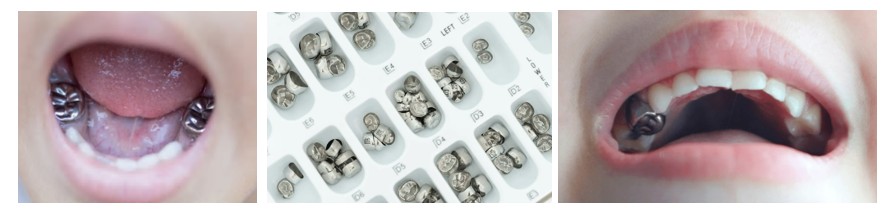
What will the stainless steel crown look like?
Important note
- Stainless steel crowns are not tooth coloured. They are a silver colour and are easy to notice in your child’s mouth.
- Stainless steel crowns contain nickel-chromium. Please tell your dental professional if your child has an allergy to nickel-chromium or other heavy metals.
- After placement, please look after your child’s stainless steel crown the same way you would look after your child’s natural tooth.
Tips for healthy teeth:
- To have good health, you must have a healthy mouth.
- Drink tap water to help keep your teeth healthy.
- Limit sugary foods and drinks to special occasions. This includes food and drinks with added sugar, honey, syrup, and fruit juice.
- Do not put babies and children to bed with a bottle. Bottle feeding through the night is linked to tooth decay.
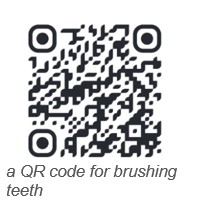
- Brush your teeth every morning and night using a toothpaste that has fluoride in it. Use toothpaste that is suitable for your age. For more information and a guide on how to brush your teeth, scan the QR code or visit https://www.teeth.org.au/brushing-teeth.
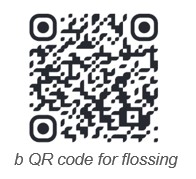
- Clean between your teeth every day. For more information and a guide on how to clean between your teeth, scan the QR code or visit https://www.teeth.org.au/flossing.
- Ask for help if you have trouble cleaning your teeth. Help others who might need help, such as children under eight years.
- The first dental check should be when your baby turns 12 months old. You can book sooner if you have any concerns.
- Have regular dental check-ups. Talk to your dental professional about how often to have a check-up. This is different for everyone. It depends on how well you look after your teeth, if you have had past or current problems with your teeth and gums, and any health issues you have.
- Avoid smoking, vaping, tobacco products (like chewing tobacco) and limit drinking alcohol. They can hurt the health of your mouth. Talk to your dental professional for support quitting.
If you have any questions, please talk with your dental professional – Central Health Intake: 02 5124 9977.