
Silver fluoride
What is silver fluoride?
Silver fluoride is used to slow down or stop the tooth decay (hole in tooth) process. It can also be used to treat certain types of tooth sensitivity. Silver fluoride contains silver and fluoride – both of which are colourless and odourless liquids.
How does it work?
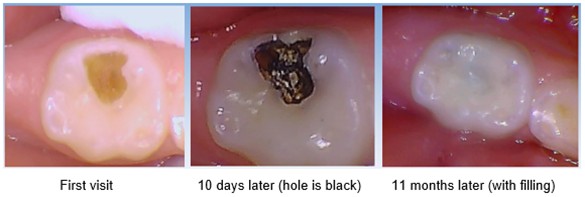
When applied to tooth decay, silver kills the bacteria that cause the decay. The fluoride reacts with the silver and dead bacteria to form a hard crust, making the tooth stronger and less sensitive. This process slows or stops the decay and helps prevent the hole from getting bigger.
Depending on the size of the hole, the tooth may need multiple applications of silver fluoride. The tooth may also need future treatment such as a filling, stainless steel crown, or tooth removal.
Who can have this treatment?
Silver fluoride is not suitable for every tooth or situation. Your dental professional will assess whether it’s appropriate for you or your child. Please let them know if you have any allergies, including silver or tin.
How is silver fluoride applied?
- The tooth is gently dried.
- A small amount of silver is painted onto the affected area. This takes 1-3 minutes.
- A small amount of fluoride is painted on top, causing immediate blackening of the area.
Fluoride varnish is placed on top to hold the other liquids in place. You will be asked not to eat or drink for 30 minutes.
What are the benefits?
- This procedure is quick, safe and painless.
- It is a good option for young and anxious patients.
- Silver fluoride can help stop the decay from getting worse and can give you extra time before other dental treatments are needed, often without the need for local anaesthetic.
- Silver fluoride may prevent the need for other complex treatments in the future, for example treatments that need general anaesthetic.
What are the concerns?
- After silver fluoride treatment, the decay will permanently turn dark brown or black. The black colour is a sign that the decay has stopped growing. This can be covered later with a filling or a stainless-steel crown if appropriate.
- Gums and other soft tissue in your mouth may stain for a short time. This will not harm you and will go away in a few days.
- There may be a brief unpleasant taste which can be masked by fluoride varnish or toothpaste.
Tips for healthy teeth:
- To have good health, you must have a healthy mouth.
- Drink tap water to help keep your teeth healthy.
- Limit sugary foods and drinks to special occasions. This includes food and drinks with added sugar, honey, syrup and fruit juice.
- Do not put babies and children to bed with a bottle. Bottle feeding through the night is linked to tooth decay.
- Brush your teeth every morning and night using a toothpaste that has fluoride in it. Use toothpaste that is suitable for your age.
- Clean between your teeth every day.
- Ask for help if you have trouble cleaning your teeth. Help others who might need help, such as children under eight years.
- The first dental check should be when your baby turns 12 months old. You can book sooner if you have any concerns.
- Have regular dental check-ups. Talk to your dental professional about how often to have a check-up. This is different for everyone. It depends on how well you look after your teeth, if you have had past or current problems with your teeth and gums, and any health issues you have.
- Avoid smoking, vaping, tobacco products (like chewing tobacco) and limit drinking alcohol. They can hurt the health of your mouth. Talk to your dental professional for support quitting.
If you have any questions, please talk with your dental professional – CHI: (02) 5124 9977.