
Receiving Cancer Care at Canberra Region Cancer Centre
Receiving Cancer Care
Receiving a cancer diagnosis can be a difficult time. Finding out you have cancer and starting treatment may happen quickly and can be overwhelming. Canberra Health Services (CHS) provides a range of cancer services as well as support and counselling to guide you through the process.
Whether you’re a day or overnight patient, this guide includes information about your cancer care.
You will find information about tests, treatment options, services and how to contact us.
Look out for ‘A Patient and Carer’s Guide to Canberra Hospital’, where you’ll find more detailed information about parking, visiting hours and other on-site facilities.
If you haven’t received a copy, ask any member of your care team or see our staff at Canberra Region Cancer Centre’s main reception desk (Building 19, Level 1).
More information
We offer a range of services for cancer care. Scan the QR code with your mobile phone to see the list on our website.

Care Setting
Cancer care can happen in different parts of Canberra Hospital, not just at the Canberra Region Cancer Centre (CRCC). No matter where you receive care, we're here to make sure you feel supported, respected, and looked after.
We understand that being told you have cancer can feel overwhelming. Canberra Health Services offers a wide range of treatments, as well as support and counseling to help guide you through this experience. Everyone's treatment is different. You may not need chemotherapy or radiotherapy. Your care will be tailored to your needs. Here are some examples of what cancer care might look like:
- Some people only need surgery and won't need further treatment at CRCC.
- Others may have treatments like hormone therapy, immunotherapy, or take part in clinical trials.
- Some people don't have cancer but may be at higher risk due to family history or genetics. They may be monitored and supported without needing treatment.
- A small number of people may need to receive care outside the ACT.
- Some care may even be provided in your own home.
We know it can be complicated if your care happens in different places. If you have any questions or need help, please call our enquiry line on 02 5124 8444. You can also speak with a Cancer Specialist Nurse, who can help guide and support you.
Cancer Care
Your care team
Your care team are a group of health professionals who will care for you throughout your cancer experience. These professions include:
- Oncologists
- Radiation Oncologists
- Radiation Therapists
- Medical Oncologists
- Haematologists
- Cancer Supportive Care Team
- Cancer Specialist Nurses
- Cancer Psychosocial Specialists (including Social Workers, Spiritual Support Workers and Counsellors)
- Nurses
- Multidisciplinary Team (MDT)
Are specialist doctors who diagnose and treat cancer. Your oncologist will often be your main doctor who organises your treatment and can refer you to other specialist doctors for treatment in different fields. Involved in your care, you may have a Radiation Oncologist and/or a Medical Oncologist.
Specialise in treatingcancer with radiation therapy techniques. They are supported by Radiation Therapists, who ensure the radiation treatment is delivered accurately and safely.
Are a team of allied health professionals with specialised knowledge and training who patients will see daily when receiving radiation therapy. They are responsible for designing the radiation plan to comply with the prescription from the Radiation Oncologist. They operate advanced technology and imaging equipment and are responsible for ensuring the treatment is delivered accurately and safely. Radiation Therapists also provide you with physical, emotional and social support throughout your treatment.
Specialise in treating cancer with medicines like chemotherapy, hormone therapy and immunotherapy.
Diagnose and treat blood-related cancers.
Includes Cancer Specialist Nurses (also known as Cancer Care Coordinators) and our Cancer Psychosocial Specialists. This team provides services to meet your physical, emotional, social, psychological, educational, spiritual and practical needs during all phases of the cancer experience.
Have an in-depth knowledge about specific cancers and provide information and education around diagnosis, treatment, symptoms and support you and your family.
Can help with support information and referrals for financial issues, transport needs and practical support. Our Cancer Psychosocial Specialists are also available for counselling and emotional support for the psychosocial impact of cancer. They are also able to organise and facilitate family meetings.
Look after your overall wellness and review, assess and help you with your treatment and managing side effects. They may have an assistant in nursing (AIN) helping them
Is a group of doctors, nurses, and other professionals who specialise in different types of cancer. This team-based approach is the best way to plan and provide care for cancer patients. In multdisciplinary care, all the relevant health professionals come together to discuss treatment options and make joint decisions about the best care for each patient. They create a personalised treatment plan that considers the patient's preferences. Working as a team helps to improve the quality of life for cancer patients.
Your care team may also include allied health professionals, such as:
- Radiologists
- Pathologists
- Pharmacists
- Genetic counsellors
- Physiotherapists
- Occupational therapists
- Exercise physiologists
- Speech pathologists
- Dietitians
- Social Workers
Take images and scans, and check for problems or changes in your results.
Are specialist doctors and scientists who test blood, urine and cell samples to help diagnose illness.
Within cancer care are specialised pharmacists responsible for the management of chemotherapy production to ensure appropriate dosing and safe handling. They also review cancer treatments to optimise quality of care for you. Pharmacists support nurses with patient education, medication adherence and reviewing medication history to identify drug interactions.
Can help you understand your hereditary risk of cancer.
Help you to move, get stronger and improve your coordination after illness or surgery.
Help you improve how you do everyday things like having a shower or going to the toilet. They can also help arrange modifications to your home if needed.
Help you manage your health conditions through physical activity and exercise programs.
Help you with talking and swallowing.
Offer advice on how to eat well when you are having cancer treatment. They can provide you with a diet plan to promote your recovery.
Can help you navigate appropriate services to help you adjust to the financial, social and psychological impacts of having cancer. They can support you, as well as your family and carers.
Your care is also supported by administration and support teams who keep the service running day-to-day and can also point you in the right direction if you have questions about appointments, or about how to get in touch with your clinical care team.
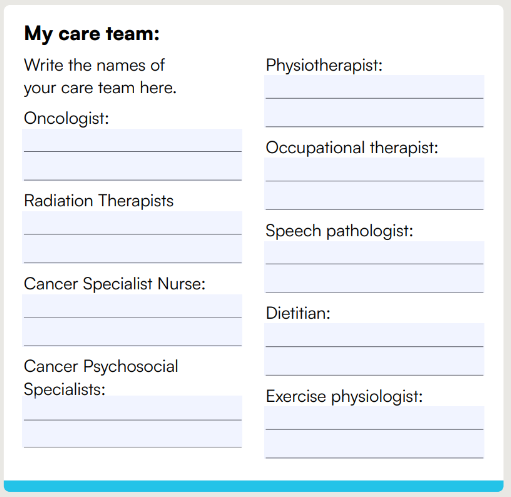
You can ask your Cancer Specialist Nurse if you would like to talk to someone in your care team.
Treatment options
We will talk with you about your treatment options. What your doctor recommends will depend on:
- the type and stage of cancer you have
- your physical and emotional wellbeing
- your personal preferences.
Your oncologist and care team will give you more detailed information about treatment options that may be suitable for you.
You are welcome to have anyone you wish to be part of these conversations. This can include people like your family members or Aboriginal Liaison Officers.
Scans and tests
Your care team may arrange for you to have scans and tests to help your diagnosis. Your team will co-ordinate the ordering and timing of these scans and tests. The results provide your care team with important information, like:
- the type of cancer
- the size of the cancer
- whether cancer cells have spread to other parts of your body
- how the cancer is responding to treatment.
Your doctor or nurse will tell you why you need the test, if there is a cost and when the results are likely to be available. You may need to arrange someone to take you home after the scan or test.
If you need to have scans or Positron Emission Tomography (PET) imaging at a private facility, please know that you might have to pay some extra costs. These charges are set by the private facility or follow Medicare rules, and Canberra Health Services does not have the ability to regulate these out of pocket expenses. Make sure you check with the provider if there are any extra costs before your test.
Before coming for treatment
Things to think about before coming for treatment
If you come to the Canberra Region Cancer Centre for day treatment, such as chemotherapy or radiation therapy, you might like to:
- Bring a support person
- Wear comfortable clothing
- Parking
- Plan how to get home
You are welcome to bring a support person to help you make medical decisions or provide comfort and company while you receive treatment.
If you are coming for treatment or need to have a blood test, wear something that will allow access to your arm.
To help make your visit as comfortable as possible, and arrive on time for your appointment or treatment, we recommend allowing sufficient time to park in the hospital's multi-story car park or feel free to use the drop off zone see Arriving by car.
You might like to arrange for a friend or family member to drive you.
If you need help arranging transport, you can talk to your oncology social worker about community transport options.
Questions and concerns
It is normal to have questions, concerns or feel overwhelmed about starting treatment. We will offer you a private education session before you start.
We will give you information about your treatment and any potential side effects. You may like to share this with family, carers, or a support person who can help you plan and prepare.
You’ll also be informed about support services available through Canberra Health Services and in the community. If you don’t have someone to help you prepare, let us know and we can arrange support for you via our Cancer Supportive Care Team
Preparing for chemotherapy
Chemotherapy education
In this one-hour appointment, a chemotherapy nurse will help you understand:
- how chemotherapy works, potential side effects and how to manage them
- chemotherapy precautions at home
- self-management advice such as nutrition and exercise.
What to bring
Chemotherapy sessions can take a long time. You may like to bring some of your own comfort items. Here are some suggestions:
- A pillow or blanket. We can provide you with a pillow and blanket, but some people prefer to bring their own.
- Something to keep your head warm, such as a beanie or head scarf.
- Books, a tablet or other entertainment to keep you occupied during your treatment. Pack headphones if you want to listen to audio on your personal device.
- Personal items, such as lip balm, eye mask, warm socks or slippers with non-slip soles to prevent falls.
- Snacks. Our staff and volunteers will arrange a meal, drinks and snacks, but you may wish to bring something extra.
Preparing for radiation therapy
Radiation therapy education
Our radiation oncology care team will help you understand:
- how radiation therapy works
- potential side effects and how to manage them
- skin care during and after treatment
- self-management advice such as nutrition and exercise.
What to bring
Wear comfy, easily removable clothes. We will give you a private space to change into a hospital gown before your treatment.
During and after your treatment
Day patients
Chemotherapy
Chemotherapy and infusions are given while you are in a recliner chair, so you are seated and comfortable during treatment. We can give you a warm blanket if you are feeling cold.
Our volunteers are on hand to arrange a meal or drinks and a snack.
Chemotherapy safety
Chemotherapy is strong medicine, so our nurses and doctors may wear protective equipment like gloves, goggles, gowns or masks to limit their exposure to chemotherapy medicine.
The chemotherapy medicine may stay in your body for up to a week. Your chemotherapy nurse will talk to you more about safety precautions whilst you are having treatment.
Radiation therapy
Radiation therapy sessions are generally quick, usually lasting only 10 to 30 minutes.
During treatment, you will be able to listen to music and communicate with the Radiation Therapists delivering your treatment.
Staying overnight
Your ward
We have two cancer wards for patients staying overnight. These are wards 14A and 14B.
We do our best to have you admitted to one of our wards, however this is not always possible. If you are admitted to a different ward, you will still be cared for by specialist oncology / haematology or radiation oncology doctors.
Family friendly space
The wards share a dining area and an outdoor courtyard where you can spend time with loved ones. The rooms also have day beds to ensure your family and friends are comfortable when they visit.
Keeping airborne bacteria away
Ward 14A is positively pressured. This means air flows out of the ward, not in, which keeps away airborne bacteria. This reduces the risk of infection to immune-suppressed patients. It also means you will be able to walk freely around the ward.
Important paperwork
With your permission, we will send your GP a copy of your discharge summary. This letter provides the GP information about your stay in hospital, as well as details of any follow-up care you may need.
It is important for your GP to know about your hospital stay so they can understand changes in your health and give you the best care.
More information
We have more information about how to prepare, what to bring and what to expect during your stay in our ‘A Patient and Carer’s Guide to Canberra Hospital’. If you haven’t received a copy, ask any member of your care team or see our staff at Canberra Region Cancer Centre’s main reception desk (Building 19, Level 1, 02 5124 8444).
Medications and pharmacy scripts
If we have given you a script, you will need to take it to your local pharmacy to be filled. Your GP may also give you scripts at your next GP appointment.
It is important to take the medications as prescribed. If you have any questions about your medication, ask your oncologist.
Care and support close to home
We have services and clinics in the community which we may refer you to. Our Cancer Supportive Care Services Team can help with any community service referrals you might need after treatment.
We can provide counselling at several of our facilities around Canberra. You can contact the team Monday to Friday, 8.30am to 4.30pm by calling 02 5124 1221 or send an email to CancerPsychosocialTCH@act.gov.au
Our Cancer Wellbeing Space can help you with the transition to life after cancer treatment. Search our website for more information.
Cancer Council ACT can provide information about a range of support services for people affected by cancer in your local area. You may find this helpful during and after your treatment.
What to do if you need urgent medical care
Rapid Assessment Unit
The Cancer Rapid Assessment Unit is an alternative to attending the emergency department if you need urgent care related to your cancer diagnosis or treatment. This service is only available to patients having cancer treatment within the Canberra Hospital whether they are living in the ACT or NSW.
It is open:
Monday to Friday, 8am to 5.30pm
To access the service, call the 24-hour triage line on 02 5124 4401 and a nurse will answer your call. Please ring before attending the service as there are a limited number of beds available. The face-to-face service closes at 5:00pm.
If we ask you to come in to be assessed, you can find us in the Radiation Oncology area at Canberra Hospital’s Canberra Region Cancer Centre, Building 19, Level 1.
Our Cancer Rapid Assessment Unit is run by nurse practitioners and nurses. They can assess your symptoms and give you the treatment you need.
This may include:
- giving you a prescription for medicine to take home
- recommending you be admitted to hospital, which our staff will arrange.
Will I have to pay?
As a public patient, you will not have to pay for your treatment or stay if:
- you have a Medicare card
- your treatment is clinically necessary.
Note: you will still need to pay co-payments for medications. There may be out of pocket costs associated with treatment. It is best to discuss the potential out of pocket costs with the consultant or the cancer care pharmacists.
You will have to pay for your care if:
- you are not a permanent Australian resident/citizen or from a country that holds a reciprocal health care agreement with Australia
- you are visiting Australia on a student visa
- your treatment is not covered by Medicare.
Your doctor may suggest a medicine or treatment that is not on the Pharmaceutical Benefits Scheme (PBS). This is because cancer treatments evolve rapidly and sometimes effective medicines, while approved by the Therapeutic Goods Administration (TGA), have not yet been listed on the PBS. This means you may need to pay for your medicine or treatment.
Your doctor may suggest a diagnostic test that is not fully covered by Medicare. This means you may need to pay for your diagnostic test. Your doctor will talk through the options with you, including alternatives. Your doctor should give you an estimate of any costs associated with your treatment.
As a private patient, it is your responsibility to check if you have enough health care insurance to cover your hospital charges.
More financial assistance information is available at:
Funding your treatment
There may be options to cover the cost of treatments that are not otherwise funded. Speak to your social worker about these options.
More information
For more information about payments, you can scan the QR code to visit our website or talk to our Patient Accounts team on 02 6207 6131.

How to provide feedback to Canberra Health Services
If you have concerns or questions about your care, talk to any member of your care team or ask to speak to the Nurse in Charge or a Senior Manager.
If you would like to provide feedback about our services, contact the Consumer Feedback and Engagement team 02 5124 5932 or HealthFeedback@act.gov.au