
Pulpotomy
A pulpotomy is where part of the nerve of a baby molar (back) tooth is removed. The nerve in the part of the tooth that sits above the gum is removed, leaving the part of the nerve within the roots of the tooth.
A pulpotomy is done to baby teeth to relieve pain and to help keep the tooth for as long as possible. Sometimes tooth decay can come very close or go into the nerve of a tooth. If this happens, there is often pain or sensitivity to hot, cold or biting pressure. Your dental professional may recommend the tooth have a pulpotomy.
How is a pulpotomy done?
- An x-ray is taken of the tooth to check how much damage or decay there is. The x-ray will also show whether the tooth is infected. (If the tooth is infected, a pulpotomy cannot be done. The tooth will need to be removed).
- You will be given local anaesthetic in your mouth to numb the tooth. The tooth (and surrounding area like gum and lip) will be numb for a few hours.
- The decay is removed from the tooth with a dental drill.
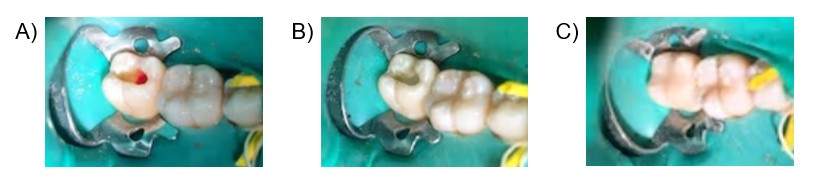
- The nerve is removed from the tooth crown (part of the tooth above the gum). The nerve is left in the tooth roots. See image A.
- A dressing is placed inside the tooth. See image B.
- The tooth is then filled with filling material. See image C.
- Depending on how long your dental professional expects the tooth to last, they may recommend putting a stainless-steel crown over the tooth. This will help keep it strong and sealed from bacteria. This crown is often put on at a separate appointment.
- After a pulpotomy, the area of the tooth may be uncomfortable for a day or two. You can take over the counter pain medicine following the instructions on the packet. If you are not sure what to take or what dosage you need, talk with your local pharmacist. If the pain or discomfort gets worse or doesn’t get better with medicine, or you have any other concerns, please contact the dental clinic on 5124 9977.
Important information
Pulpotomies often work to ease pain or sensitivity in affected teeth. Depending on the tooth and how much decay it has, sometimes treatment does not work. If this happens and there is ongoing pain or sensitivity, or infection develops, the tooth will need to be removed.
If there is pain, swelling of the gum near the tooth, or swelling of the face please contact the dental clinic on 5124 9977 as soon as possible. In an emergency, please call 000.
Some children with other medical conditions like a heart defect may not be able to have a pulpotomy. Please tell your dental professional of any medical conditions before starting treatment.
Tips for healthy teeth:
- To have good health, you must have a healthy mouth.
- Drink tap water to help keep your teeth healthy.
- Limit sugary foods and drinks to special occasions. This includes food and drinks with added sugar, honey, syrup, and fruit juice.
- Do not put babies and children to bed with a bottle. Bottle feeding through the night is linked to tooth decay.
- Brush your teeth every morning and night using a toothpaste that has fluoride in it. Use toothpaste that is suitable for your age.
- Clean between your teeth every day.
- Ask for help if you have trouble cleaning your teeth. Help others who might need help, such as children under eight years.
- The first dental check should be when your baby turns 12 months old. You can book sooner if you have any concerns.
- Have regular dental check-ups. Talk to your dental professional about how often to have a check-up. This is different for everyone. It depends on how well you look after your teeth, if you have had past or current problems with your teeth and gums, and any health issues you have.
- Avoid smoking, vaping, tobacco products (like chewing tobacco) and limit drinking alcohol. They can hurt the health of your mouth. Talk to your dental professional for support quitting.
If you have any questions, please talk with your dental professional – CHI: (02) 5124 9977