
Kangaroo Care
What is Kangaroo Care?
Kangaroo Care is skin-to-skin contact between a newborn baby and their parent or carer. During Kangaroo Care the baby is dressed in only a nappy and is held in an upright position against your bare chest. The baby is covered with a warm blanket. Your top is closed over your baby like a Kangaroo’s pouch. Both parents or carers can give Kangaroo Care but Kangaroo Care is known to help lactation, so in the first two weeks it is best to prioritise how you plan to feed your baby over other considerations.
When can I begin Kangaroo Care?
Many babies can begin Kangaroo Care at a very early age. We try to start Kangaroo Care as soon as babies are well enough, often on the first day that they are in the neonatal unit. Sometimes babies are too unwell to have Kangaroo Care. If this is the case for your baby, your nurse will explain why. They will give you other ways for you to spend time with your baby until they are ready for their first cuddle.

Planning Kangaroo Care
Your nurse can help you to make a time for Kangaroo Care. It is best to hold your baby for at least one hour, but you can hold your baby as long as you feel comfortable. The first time might feel a bit scary, but our staff will be there to help you.
- Make sure you are feeling well and have no wounds or skin rashes. Speak to the nurse caring for your baby if you have any concerns.
- Try not to wear perfumes or strong fragrances as they can irritate your baby’s breathing and always avoid smoking before Kangaroo Care.
- Make sure you bring your water bottle and a snack.
During a cuddle you can consider reading or singing to your baby. Hearing you talk to them is good for their language development. A mirror will help you to see their face better.
The nurse caring for your baby will let you know if there are any changes in your baby’s condition and will explain if there is a need to place your baby back into a cot early.
Kangaroo Care and breastfeeding
During Kangaroo Care you might notice your baby showing feeding cues like making sucking movements with their mouth, turning their head to one side or the other, opening their mouth (rooting) and looking for something to suck on.
Your baby may attempt to self-latch, or lick or sniff the nipple. These are all good signs of early feeding behaviours. If so, ask your nurse to assist you to position your baby at the breast.
Twin Kangaroo Care
If you have twins in the NICU/SCN there may be opportunities to Kangaroo Care both babies at the same time. This may depend on what medical support your babies need. Speak to your nurse about whether your babies are ready and organise a time.
Parent led Kangaroo Care
Once your baby is no longer on breathing support or a drip, they are able to have parent led Kangaroo Care. This means that if you feel comfortable, you can take them out of their bed without the help of a nurse once you have been shown how. Please check with your nurse to see if your baby is ready for this. It’s better for babies to have fewer long cuddles per day, rather than frequent short cuddles where possible. We aim for cuddles to last for at least an hour unless there is a medical reason for your baby to return to their bed.
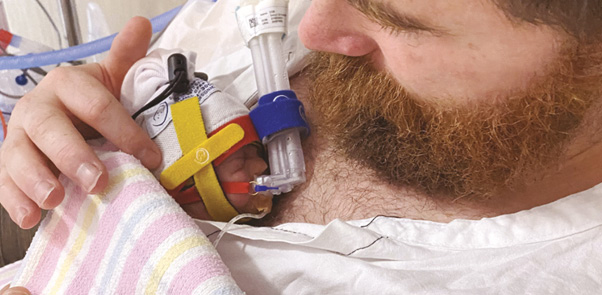
Benefits of Kangaroo Care
Body temperature: Your body regulates the warmth of your skin to keep your baby at the right temperature. This helps the baby rest.
Vital signs: During Kangaroo Care your baby becomes relaxed in an upright position on your chest. This has been shown to help your baby’s breathing, stabilise your baby’s heart rate and increase oxygen to your baby’s body, helping your baby to grow.
Weight gain: Weight gain, length and head growth are improved through regular Kangaroo Care by helping your baby sleep and reducing your baby’s stress hormone levels.
Procedural pain management: Kangaroo Care is a form of pain relief. Where possible, we use Kangaroo Care if your baby is having a painful procedure like a heel prick blood test or an immunisation.
Infection: Kangaroo Care helps to lower your baby’s risk of infection by allowing the transfer of healthy bacteria from a parent to baby.
Bonding: Daily Kangaroo Care enhances the bond between baby and parent. This leads to a better understanding of your baby’s cues and improves parent mental health, stress, confidence and wellbeing.
Brain development: Holding your baby during Kangaroo Care helps your baby to be calm and relaxed. It can improve sleep and brain development. Talking, reading and singing to your baby during Kangaroo Care helps language development.
Lactation and breastfeeding: During and soon after Kangaroo Care, you may notice an increased supply of milk. This is due to a natural release of hormones from holding your baby skin to skin. Kangaroo Care helps babies learn to breastfeed earlier.
Contact Us
Canberra Hospital Neonatal Unit
North Canberra Hospital
Special Care Nursery