
Health Information Sheet | Canberra Health Services
Breastfeeding in the first few days
What you should know
Skin-to-skin contact and the first breastfeed
- Place your baby on your abdomen or chest after birth for at least an hour.
- If skin-to-skin isn’t possible right away, your midwife will assist as soon as possible.
- Family, friends, and carers can assist with part of the breast screen appointment.
- If your baby can’t feed within two hours, your midwife will help you express colostrum.
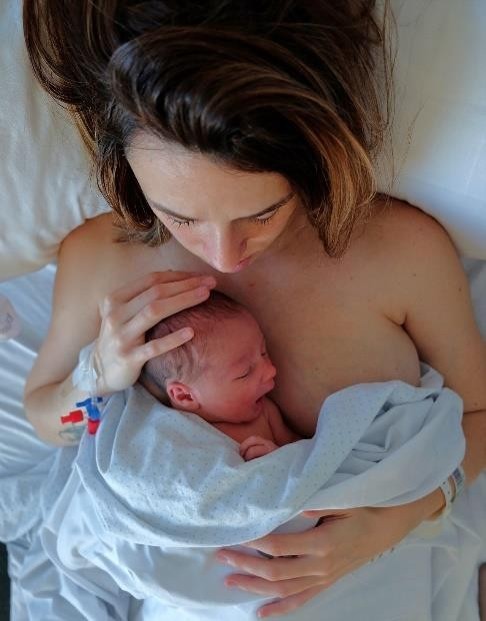
What are the benefits?
Skin-to-skin contact helps to:
- regulate baby’s heart rate, temperature and blood sugar
- enhance bonding and attachment
- protect from infection by introducing health gut bacteria
- support natural feeding behaviours and first feed
- release hormones for milk production and uterine contractions.
Feeding cues
- Follow your baby’s cues for feeding frequency and duration.
- Frequent feeding helps establish and maintain milk supply.
Breastfeeding positions and attachment
Various positions can be used for feeding and more information is available on our website.
Mother-led attachment
Breastfeeding is a skill involving practice to attach or latch your baby to your breast.
- Practice positioning your baby chest-to-chest.
- Aim your nipple to the roof of baby’s mouth to latch correctly.
- Bring baby up onto your breast keeping their chin in and nose out, supporting around the shoulders (not the head).
- It’s normal for your baby to come on and off the breast at the beginning of each feed.
- Notice swallows as your milk begins to ‘let-down’.
Baby-led attachment
- Get comfortable in a semi-reclined position with your baby lying on you.
- Place your baby chest to chest and let their cheek touch your bare breast.
- Help as needed; you may need to hold your breast with one hand.
- Relax and enjoy the moment; your baby will seek the breast when ready.
- Hand express if it has been a while since the last feed to motivate your baby.
Feeding frequency
- Birth to two hours: baby is usually awake and alert (best time to feed).
- First 24 hours: baby often has a big recovery sleep, feeding 2-4 times. More frequent feeding or expressing may be recommended.
- 24 – 72 hours: baby may seem unsettled as colostrum changes to milk. Increased breastfeeding is often needed.
- After milk is in: baby will feed often to establish milk supply. Normal to breastfeed 8-12 times or more in 24 hours.
Rooming in
- You and your baby will stay together unless medically necessary to separate.
- This helps you to recognise and respond to early feeding cues.
- If separated, support breastfeeding by expressing colostrum soon after birth, continuing to express regularly, spending time with your baby, getting rest, and practicing skin-toskin contact.
Need more information?
- Early Parenting Support Line: (02) 5124 1775
- Breastfeeding Resources - Canberra Health Services (act.gov.au)
- Royal Brisbane and Women’s Hospital| Metro North Health
- Australian Breastfeeding Association