
Breastfeeding and your baby- What to expect from my baby
Birth to 6 months
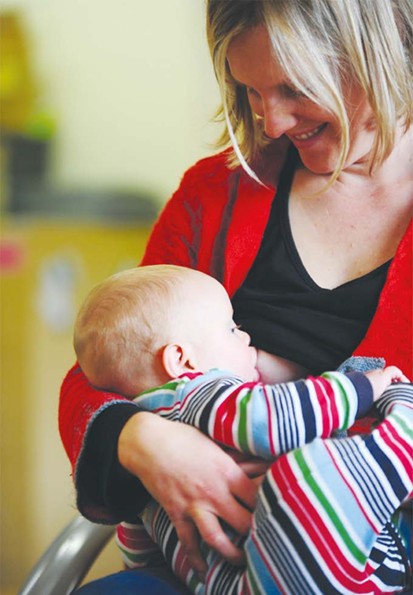
Babies, especially those under 6 months of age, may feed very often (between 6 and 12 times a day from both breasts). They start off with very small stomachs that gradually stretch to accommodate bigger feeds. Feeding stimulates your breasts to make enough milk for your baby. When you feed, your body replaces the milk your baby receives.
Breast milk is really easy to digest. This means fewer tummy aches, but it also means that your baby may be hungry again quite quickly. It is important to try and rest when your baby is sleeping.
Crying or unsettled behaviour can make parents feel concerned their baby is hungry. Babies cry to communicate their needs. Sometimes they are hungry, uncomfortable, they may need sleep, or they may just need comforting.
The following information can help you feel confident that your baby is getting enough milk.

Key Tips
Wet and dirty nappies
The number of wet nappies increase after the milk changes from colostrum to mature milk. Expect at least 6–8 soaked cloth nappies or 4–6 heavy disposable nappies in 24 hours.
Very young, breastfed babies usually do several bowel motions (poos) a day. Even if your baby seems to be pushing hard, the poo is usually very soft. After a few weeks most babies have a poo every day, but some only poo every few days and it will still be soft. If your baby hasn’t pooed for a week, or your concerned, contact your GP or Maternal, Child and Family Health nurse/midwife.
Weight gain
Your baby should gain weight after an initial weight loss and will regain their birth weight by around 2 weeks of age. In the first three months of your baby’s life there is an average weight gain of around 150-200 grams per week. Babies grow in spurts. Some weeks babies may have smaller weight gains, and other weeks they may have larger weight gains.
Crying
Many babies can cry for up to 3 hours a day, or sometimes more, in the early weeks. Most babies like being held and comforted, but some babies still cry when they are being held. They cry when they are hungry, need to sleep, or sometimes for no known reason.
Sleep
All babies are different. In the first few weeks after birth, babies sleep much of the day and night. Most wake 2 to 4 times during the night for feeds. Babies have shorter sleep cycles than adults and wake or stir about every 20-40 minutes.
Between 3 to 6 months of age, some babies have 2 or 3 long sleeps during the day, while others just have short naps. Most babies have learned to sleep more at night than they do during the day, but some babies will often continue to wake for feeds overnight 2-3 times. This is normal.
Sleeping through the night or for long periods in the early days may indicate that your young baby is NOT getting enough milk. If your baby is lethargic or sleepy with feeds, seek advice from a health professional or your doctor.
How can I find more information?
Phone
- Maternal Child and Family Health - Early Parenting Support Line (02) 5124 1775
- Central Health Intake (CHI) on (02) 5124 9977