
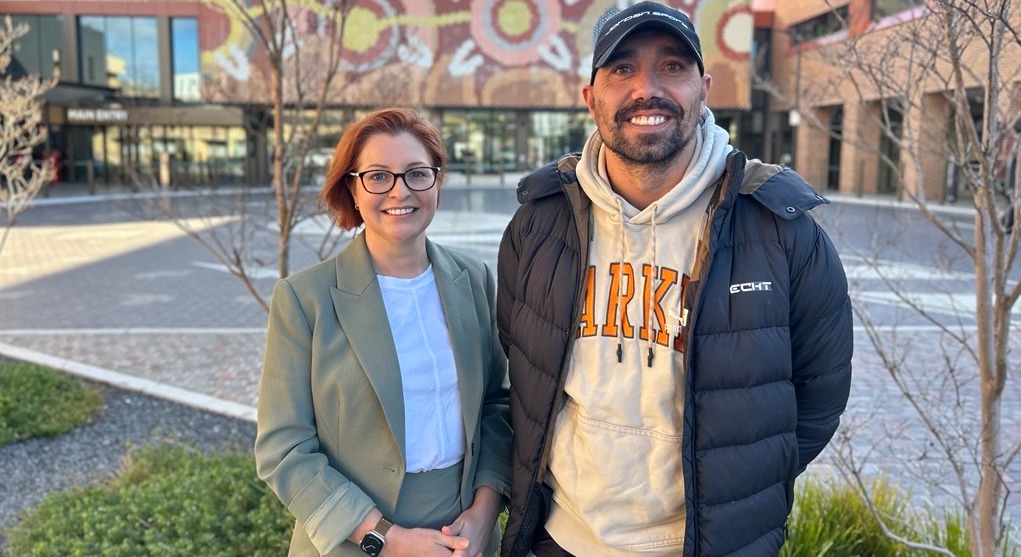
Reeion is the first Aboriginal Health Worker in the Renal team at Canberra Health Services.
07 August 2026
Building trust through culturally safe kidney care
Kidney disease continues to disproportionately affect Aboriginal and Torres Strait Islander peoples, who often face barriers accessing timely, culturally safe care. Many start dialysis unexpectedly, are hospitalised more often, and are less likely to access home dialysis or transplantation.
Dr Alice Kennard, Nephrologist and Renal Supportive Care Physician at Canberra Health Services (CHS), says improving these outcomes takes more than excellent clinical care.
‘We recognised that improving these outcomes requires more than excellent clinical care – it requires trust, relationships and genuine partnership.’
That's the gap Reeion's role was created to bridge. As an Aboriginal Health Practitioner within the Renal team, he brings cultural knowledge, advocacy and lived understanding that strengthens the way the team cares for patients and families.
‘He helps patients feel more confident navigating the health system, supports culturally appropriate education and self-management, and builds stronger connections between CHS and the community.’
For Reeion, the connection to renal health is personal.
‘Kidney disease is a huge issue among the Indigenous community. It’s something I’ve also experienced within my own family, so the work is very personal and rewarding to me.’
Growing up around family and community members living with chronic health conditions shaped his passion for the work.
‘They always highlighted the value of culturally safe support, and the difference Aboriginal Health Workers can make in helping people feel informed, supported, and connected throughout their health care journey.’
A typical day sees him building rapport with patients, providing culturally safe support, advocating for their needs, involving families when appropriate, and connecting patients with local Indigenous community services for ongoing care.
‘Sometimes this means providing resources and guidance, and other times it’s simply being there to sit down, listen and have a yarn.’
He also spends time learning alongside the renal team, deepening his understanding of chronic kidney disease, dialysis, transplantation and patient education.
He hopes his non-Indigenous colleagues come to see just how much the connection matters.
‘Aboriginal Health Workers can often help build connections and relationships between our patients and the health care teams. We help patients and families navigate the health care system, support communication between patients and clinicians, and provide cultural insight that compliments clinical expertise.’
Since Reeion joined in May 2026, both he and Dr Alice have noticed real shifts in how patients engage.
‘One of the most noticeable changes has been the way patients engage with the service. We’ve seen people feeling more comfortable asking questions, expressing their concerns and taking a more active role in decisions about their care,’ Dr Kennard explains.
‘It's still early to formally measure long-term clinical outcomes, but the value is already clear. The hope is that, over time, this will contribute to earlier engagement with kidney services, better preparation for treatment decisions, fewer unplanned dialysis starts, and greater access to home therapies and transplantation.’
Reeion has seen it firsthand too.
‘Many patients just appreciate having an Aboriginal Health Worker as an additional option for support. One patient told me he loves having a ‘black fulla’ on the team. Not because of a specific health need, but because he could sit down, have a yarn about family, community and life, and feel understood. It reminded me that sometimes cultural support is simply about connection, trust and belonging.’
What the team has learned
Dr Kennard says one of the biggest lessons since Reeion joined has been that cultural safety isn’t delivered through policies or training alone – it’s built through relationships.
‘Reeion has helped us appreciate the importance of taking time to listen, understand each person’s story and recognise the historical experiences that shape how Aboriginal and Torres Strait Islander people interact with health care today. He’s also reminded us that small things like how we introduce ourselves, the language we use, making time for conversations and creating a welcoming environment – can have a profound impact on whether someone feels respected, safe and willing to engage in their care.’
For any Aboriginal or Torres Strait Islander person considering this career path, Reeion has one clear message.
‘I’d encourage anyone considering this career path to please give it a go. The opportunities are incredibly diverse. There are a lot of areas you can specialise in and because health care is always evolving, there is always something new to learn and ways to grow professionally.’
Dr Kennard has similar advice for other managers and health services thinking about creating a similar role.
‘Do it with purpose, and do it in partnership,’ she says.
‘This isn’t simply about creating a position; it’s about committing to a different way of delivering care. Success depends on investing in the person, providing specialist clinical orientation and ongoing mentorship, and ensuring the role is embedded as a valued member of the multidisciplinary team.’
‘If we are serious about Closing the Gap, we need to move beyond acknowledging inequity and invest in models of care that genuinely change the way people experience our health system.’
This National Day of Recognition for Aboriginal and Torres Strait Islander Health Workers and Health Practitioners, we’re proud to celebrate Reeion and the difference his role is making – for patients, for families, and for the renal team.
If you have a story you would like to share, get in touch.