
Listen to this episode
About this episode
Join Dr Sanjaya Senanayake and Dr Sean Chan as they delve into the world of intensive care and trauma. Dr Chan shares his journey from an emergency registrar in Newcastle to becoming an intensive care specialist, drawn to the challenge of treating the sickest patients. They discuss the evolving role of intensive care, the ethical dilemmas posed by advanced technologies like ECMO (heart and lung bypass), and the importance of balancing technical skills with compassionate patient and family care. Dr Chan also highlights his role with DonateLife ACT, emphasizing the critical impact of organ donation conversations.
Guest speaker
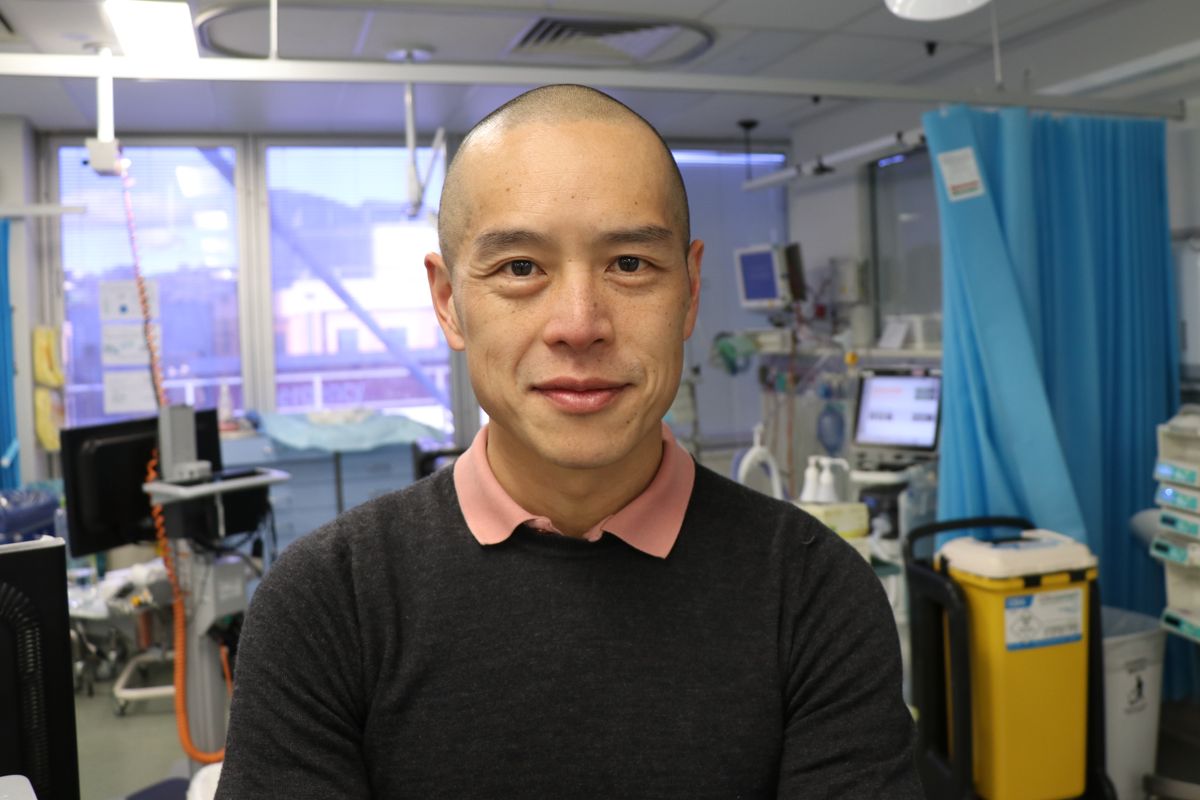
Dr Sean Chan
Dr Sean Chan is a Senior Staff Specialist in Intensive Care Medicine at Canberra Hospital. He is the Acting Clinical Director of the ACT Trauma Service and the State Medical Director of DonateLife ACT.
Dr Chan completed his Bachelor of Medicine at the University of Newcastle, Australia in 1999, then obtained his Fellowship of the Australia and New Zealand College of Intensive Care Medicine in 2010.
His formative years were largely spent in the NSW Hunter region and included an influential period working for the NHS (UK) where he developed a passion for Intensive and Trauma Care.
He was acting Clinical Director for Canberra Hospital’s Intensive Care Unit in 2013-14 and has been the Acting Clinical Director for the ACT Trauma Service since 2023.
He is a strong advocate for organ donation and transplantation and has worked as a Medical Donation Specialist since 2017, adding the role of State Medical Director of DonateLife ACT to his responsibilities in 2020.
Transcript
[00:00:00] Dr Sanjaya Senanayake: Hi, this is Dr Sanjaya. In the latest episode of Behind the Curtain, I sit down with Dr Sean Chan for a thought-provoking chat about the inspiring work his team do in the trauma and intensive care space. Let's jump into our chat.
[00:00:28] Dr Sanjaya Senanayake: Hi, I'm Dr Sanjaya. Welcome to another Behind the Curtain podcast. Today we have a very special guest. One of our staff specialists in intensive care and trauma, Dr Sean Chan. Welcome.
[00:00:43] Dr Sean Chan: Thanks very much, Sanjaya.
[00:00:45] Dr Sanjaya Senanayake: And I should add, you do wear other hats, including the State and Territory Medical Director for DonateLife, which we'll definitely talk about.
[00:00:53] Dr Sanjaya Senanayake: When was it that you decided that intensive care trauma was your field?
[00:00:59] Dr Sean Chan: Oh my goodness, that was a long time ago. That would be I think the epiphany came while I was working as an emergency registrar. I was working in a small hospital in Newcastle. It was the Tox hospital, Momoneta Tox hospital, which you might imagine brought all kinds of people.
[00:01:15] Dr Sean Chan: They might be having psychiatric emergencies. Uh, they might be having toxicological emergencies and sometimes they were related and, I don't know. I found myself gravitating towards looking after the sickest patients in recess. Particularly, and gravitating away from the people spitting at me and biting, trying to bite me.
[00:01:37] Dr Sean Chan: Uh, so, I found myself making some phone calls.
[00:01:40] Dr Sanjaya Senanayake: These are patients we're talking about?
[00:01:41] Dr Sean Chan: These are patients, yeah. The staff, that was more recreational. I found myself making phone calls to the people who seem to, I seem to refer all these really sick patients to. Uh, seeking an alternative career.
[00:01:58] Dr Sanjaya Senanayake: Wonderful. And so that sort of opened your eyes to the possibility of intense or critical care, intensive care.
[00:02:05] Dr Sean Chan: Yeah. And look, it wasn't that I hadn't had exposure to it. Um, so I spent in some of my formative years working in the NHS and particularly ITU, in Aberdeen, in the Royal Infirmary Hospital there, back in the day.
[00:02:22] Dr Sean Chan: And it was fascinating and they worked so hard and there were some amazing patients, and amazing staff, inspiring, but at that stage I thought emergency was where, where my passions lay, but that got bitten, uh, beaten out of me over time.
[00:02:41] Dr Sanjaya Senanayake: No, no, fair enough. And look, within intensive care, like we talk about different subspecialties within a speciality.
[00:02:49] Dr Sanjaya Senanayake: So cardiology, you can do echoes or you can put in, do electrophysiological stuff, put in pacemakers. Within intensive care is there much opportunity to branch out or?
[00:03:01] Dr Sean Chan: Oh look, yes and no. There absolutely are subspecialties, so to speak, within intensive care. But, you know, I sort of view intensive care as one of the few remaining generalist specialties in modern medicine.
[00:03:15] Dr Sean Chan: And, you know, I have such respect for acute general medicine as a, as a specialty, but it's, you know, how you feel about it. It feels to me like it's a dying profession. Um, a lot of the interesting patients are increasingly being looked after by subspecialty teams and realistically it's evolved into intensive care.
[00:03:38] Dr Sean Chan: And so we are the last, the last frontier, so to speak, for anyone who's sick. Male or female, young or old, whether they're smashed up to within an inch of their life from a major trauma, or they come in as a consequence of a variety of acute and chronic disease states, we're in. And I find it fascinating, particularly, personally.
[00:04:01] Dr Sean Chan: It's a great intellectual challenge, and it's non-discriminatory in that respect. And so, so on the one hand, I can say, yes, there are some specialties within ICU. For example, ECMO, or, um, our
[00:04:17] Dr Sanjaya Senanayake: And do you want to tell our audience what ECMO is?
[00:04:20] Dr Sean Chan: Yeah, sure. ECMO is, is one of the technologies that we've got that's causing a lot of controversy.
[00:04:24] Dr Sean Chan: And, some of our audience might have read this amazing New York, uh, The New Yorker article about ECMO. It, like many things, it's a technology that's outstripped our capacity to process things intellectually and ethically. Thank you. And so you've got people being preserved in this liminal state between life and death with no go to.
[00:04:47] Dr Sanjaya Senanayake: And what are the very basic level is it?
[00:04:49] Dr Sean Chan: Oh, of course. It's essentially cardio, heart and lung bypass. And so if your heart and or lungs are no longer, are too diseased or injured to sustain your life. Yeah. We'll use machines to take over their function. You know, we, for years, for decades, we've had dialysis and people can conceptualize that.
[00:05:12] Dr Sean Chan: It's probably familiar to many people, both from their personal as well as professional lives. But, ECMO, so heart lung bypass, for us, it was around, but it was one of those technologies that was in search of a disease to make it, make it famous. And that was swine flu. Back in 2009.
[00:05:38] Dr Sean Chan: So you remember it well. It was one of those things that, you know, if you could keep patients alive for long enough and help them survive that initial insult, they actually got better. And so that was the thing. And so there were these machines that we could just keep people alive for a long time.
[00:05:57] Dr Sean Chan: And as we got, we've gotten better at it. increasingly longer and longer times and then you're stuck in this ethical conundrum where it's a bridge to what? And for some people, would it be a bridge to transplant? And what if they weren't transplant candidates? Because we haven't got enough organs to keep it to save everyone.
[00:06:18] Dr Sean Chan: Okay. And so, then it becomes a bridge to nothing. And now you're stuck in an ethical conundrum. What do you do with this poor patient who you're sustaining with machines has got no plan b.
[00:06:30] Dr Sanjaya Senanayake: That's right. I mean, the technology is there. We're keeping, we're able to keep people alive and stop them from dying from conditions that they would have succumbed to before.
[00:06:38] Dr Sanjaya Senanayake: And you're right. We then, but does that mean that they're going to end up with the same quality of life they had before the illness? So then that is that conundrum. Absolutely.
[00:06:46] Dr Sean Chan: And, so not always, is the concern. Yes, it's a first world problem. I mean, it's not like we've got that many ECMO machines in outback South Africa, for example.
[00:07:00] Dr Sean Chan: And there are people for whom, you know, we spoke often about people on the subcontinent, during COVID. So you didn't die of COVID, you died of being poor. Um, you didn't have access to health care. And this is, so this is a global problem. And the fact that we're having debates about ethics and technology, it's a first world problem.
[00:07:22] Dr Sean Chan: Most people who we put onto ECMO, I have to admit, would have, even a handful of years ago, died. Um, now what do we do? So there's, when swine flu came and went, the, there was this flurry of spending. Um, to prepare us for the next the next pandemic, and so a lot of units around Australia bought up these machines.
[00:07:48] Dr Sean Chan: And so we had a sudden expansion of this fleet of life support machines, advanced life support machines that we suddenly didn't know what to do with. And so we got bracket creep. And so people who we wouldn't have considered a few years back for this kind of technology support technology, being placed on this support.
[00:08:10] Dr Sean Chan: And so...
[00:08:12] Dr Sanjaya Senanayake: We have ECMO in Canberra?
[00:08:13] Dr Sean Chan: We have ECMO in Canberra. I've got some exceptional colleagues who have trained in other units and have brought their skills back here. And, we've got an expanding program. And yes, it absolutely does save lives. Um, we mercifully have not had the same as many of the same concerns about placing people with no bridge.
[00:08:36] Dr Sean Chan: If used as a bridging therapy, we didn't put people on it, didn't have a plan B. Um, and so we've been very careful about that, but it's here and there are places around the world who are, who are running into these ethical problems.
[00:08:52] Dr Sanjaya Senanayake: And I think you've also, by bringing up that point, that's a segue into another part of intensive care, which some people may not appreciate.
[00:08:59] Dr Sanjaya Senanayake: We think of you as running these very complicated machines and patients who you know, often can't communicate with you, but at the same time, intensive care, there is a very close relationship, if not with the patient who is unconscious, with their family. So I know there are very intense meetings at regularly updating family and friends about, you know, someone who's in a very critical condition.
[00:09:28] Dr Sanjaya Senanayake: So you really need to have good people skills to be in intensive care, don't you?
[00:09:32] Dr Sean Chan: To be a good intensive care doctor, I think to be a good doctor, I think you need to have a blend of technical, intellectual, as well as interpersonal skills. And absolutely, I do tell my trainees that, or, you know, what I feel is that at some stage in your career, the medicine almost becomes the easy part.
[00:09:55] Dr Sean Chan: Um, people die from a few common pathways. We are mortal. Everyone dies. Life is a chronic degenerative disease with 100 percent mortality. No one escapes it. Um, and so we tend to dive our, a number of common pathways, particularly intensive care. So the medicine eventually becomes not so much easy, but easier than helping families navigate.
[00:10:25] Dr Sean Chan: Death and dying. And, you know, another way to frame it that I sometimes talk about is that getting sick and recovering is easy. Getting sick and dying as a consequence is in some respects, it's clear. It's not easy, but it's very clear. The difficult parts that, that limbo in between where it's, you're not getting better.
[00:10:51] Dr Sean Chan: Okay. And that's very difficult. And that you have to start to incorporate what people want to, want to imagine, life with disability or chronic disease would mean for themselves and what it means to them as a person and how that fits in within their family and their social circumstance. And there is no magic formula.
[00:11:14] Dr Sean Chan: That's not easy. Um, you toss in the complexities of families and their relationships. And you never know what's, uh, you never know what you're going to be faced with every time you walk in the door.
[00:11:28] Dr Sanjaya Senanayake: Yeah, absolutely. And I think it is really important to have that skill can't be understated in medicine and in intensive care, because I don't envy you some of the discussions you must have to have about with relatives about really sick patients, particularly when it was completely unexpected.
[00:11:47] Dr Sean Chan: It's interesting, isn't it? Denial is a powerful drug, and you and I both know that a lot of the diseases that people are coming in with, increasingly these days are disease, the end result of chronic disease. And we've gotten so good at kicking the can down the road, so to speak, and sort of preserving people with chronic morbidity and disease, that people forget that there is an end point to all of this.
[00:12:13] Dr Sean Chan: And, you know, as a society, I think we've been so divorced from all of this. The cycle of life and death, particularly in an urban environment that, you know, a lot of people haven't developed the language and social nows to discuss it, frankly. Um, we've anesthetised ourselves from death, so to speak, and I, you know, I contrast the conversations I have with farmers.
[00:12:40] Dr Sean Chan: Farmers get it. They see the cycle of life and death. You know, some of us will see pets, dogs, well, you know, dogs and cats, they become part of the family, but they teach you something about love and loss that many people are only faced with sometimes at the end of a human relative's, not so much a furry relative, but a human relative's end of life.
[00:13:11] Dr Sean Chan: And I think that being anesthetised to that. That makes us unprepared for the conversation when it comes time.
[00:13:18] Dr Sanjaya Senanayake: I agree Sean. And in fact, I think people don't contemplate death enough, particularly when they get to a certain age. I got to a certain age not long ago and, I sort of decided, well, I realised that my chance of dying from various things was exponentially rising.
[00:13:39] Dr Sanjaya Senanayake: Now, it may not happen for a long time. But you do sit back and think, okay, if it does happen, what things do I want to have achieved in my life that I can achieve shortly? Then from a practical point of view, in terms of estate planning and those sorts of things, is everything ready for my wife, my kids, if something happens, or do I have to do something?
[00:14:04] Dr Sanjaya Senanayake: So if those things do occur, then you are comfortable that everything will be relatively smooth sailing for your family after you've moved on. So I think that's important. And also I think it's really important to think about death after a certain age because it makes that final hospitalisation less traumatic for everybody.
[00:14:28] Dr Sanjaya Senanayake: Because I do see some people who are very elderly with a lot of sick, chronic illnesses Where they're coming in really for the final time and it's not, doesn't seem surprising to me. But the patient is in shock, the family are in shock, and you think wow, you've never even considered this moment.
[00:14:48] Dr Sanjaya Senanayake: And it just makes it so much harder for them. And I feel very sorry for them that they have to go through that.
[00:14:53] Dr Sean Chan: And that's it. And so the difficulty with working with families who are in that kind of position is that you have to accelerate that process, that coming to terms with death, understanding what it means for them and to do so in an uncontrolled manner through tragedies. Uh, it's probably, that's why I think that's the more difficult part of our jobs.
[00:15:20] Dr Sean Chan: And it's in some respects that can be one of the most difficult yet rewarding things that we face. And if you can actually, help guide a family through the dying process. I think it's one of the greatest privileges. If you can do that successfully, with minimal trauma, that's one of the greatest privileges that we have in our profession.
[00:15:41] Dr Sanjaya Senanayake: Just before we leave talking about intensive care, one thing you did raise, which I must admit, I never really thought of, but of course, it's quite true, is that intensive care is a generalist subspeciality, because of course we think about, I think, I'm in infectious diseases, so every organ can get an infection, whether it's musculoskeletal, cardiac, pulmonary, whatever, so we have to maintain our generalist knowledge, similarly with oncology as well, because you can get cancers in any part, but I never really thought about intensive care.
[00:16:15] Dr Sanjaya Senanayake: But of course, intensive care, every organ can get affected. And so many etiologies, whether, as you say, it's trauma, whether it's a poison or a drug or a natural or an autoimmune condition, et cetera. So you need to, so that is another attractive part of intensive care that you have to maintain that general knowledge of medicine and surgery.
[00:16:39] Dr Sean Chan: And it's a funny kind of balance, isn't it? Because we do have to simultaneously acknowledge that we are absolutely a collaborative speciality because I can't be an expert in every single area, every single condition. And so I do rely on infectious disease specialists like yourself, surgeon, subspecialty surgeons, particularly, a lot of times our patients have multiple issues.
[00:17:05] Dr Sean Chan: And so they might have an infection, but it might be an infection in a joint, for example, that joint was replaced because they had a major trauma. And in fact, they've also got multiple other injuries. And so while we have to end up being this uncomfortable balance between a highly collaborative specialty, but the buck stops with us.
[00:17:27] Dr Sean Chan: And we have to ultimately using the big, our big brains and heuristics to incorporate all of the recommendations from our colleagues, ultimately, what's the next best path towards recovery? And so, it's a coordination, aspect of the profession I find fascinating.
[00:17:50] Dr Sanjaya Senanayake: Sure. Now the other hat you wear, which is also a very big hat, is that you are State, Territory, Medical Director for DonateLife.
[00:17:59] Dr Sanjaya Senanayake: So tell us about, well first of all, DonateLife, but how you got in, got that interest and got into the position. Okay.
[00:18:09] Dr Sean Chan: So DonateLife, I work with DonateLife ACT, which sits, it's a, it's um, a territory-based agency working underneath the Organ and Tissue Authority. Um, organisationally the Organ and Tissue Authority national program to coordinate organ donation and transplantation, really started in 2009.
[00:18:31] Dr Sean Chan: Um, it's one of those things where it's a highly complex series of everything from public education and, and awareness to, potential organ donor support, identification support, and hopefully affecting organ transplantation for people who need it. For some people, much as exceptionally important as dialysis is, for example.
[00:19:04] Dr Sean Chan: For some people, survival really depends on transplantation of a functioning organ. And it might be someone who's got AGI nephropathy. So a kidney disease which disables them so much, because dialysis is not easy. Um, a lot of people are tethered to machines three times a week, three to four hours at a time.
[00:19:28] Dr Sean Chan: It can be uncomfortable, painful, and it's a debilitating condition. It could go to liver failure, on the other end of the spectrum. It could be young, it could be old. These people die without a transplant. We haven't got a machine to replace the liver. You can put people onto heart support machines, so left ventricular assist devices, onto ECMO, but these are time limited.
[00:19:55] Dr Sean Chan: People suffer from complications, and so there you've got this complex series of programs, therapies, and organisations working together to provide the only possible means to survive for many people around Australia. So, it's not easy even receiving a transplant. Let alone, surviving for years onwards without.
[00:20:19] Dr Sean Chan: And then there's certainly some are more difficult, to live with than others. It's interesting, a boss of mine I worked with years ago visited Spain. One of the recognised world leaders in organ transplantation. They've got a very interesting, people always talk about an opt out system. The difference in the Spanish experience where...
[00:20:43] Dr Sean Chan: My boss went along and visited Barcelona and said, oh, okay, can you show me your dialysis centres? He was met with incredulity. What dialysis centres? We don't have people on dialysis. So, kidneys are remarkable. They're actually surprisingly robust organs. And, you know, it, look, it's taken decades and decades of work to get to this point.
[00:21:06] Dr Sean Chan: But if you give someone a new kidney in 2024, you can basically say goodbye to them. These people are very well managed in the community. You don't see them in the hospital system anymore. Um, by and large, I'm not saying everyone's journey is that smooth. You give someone a set of lungs and it's like marrying them.
[00:21:24] Dr Sean Chan: You know, they are challenging organs to maintain functioning. And so, not that it's, uh, it's no, all I'm saying is that, yes, it's lifesaving, can be life transforming, absolutely. But it's not easy. Um, so my role, getting back to that, is, is on the donation side, and it's to...
[00:21:47] Dr Sanjaya Senanayake: Sorry, I'm just going to interrupt you quickly.
[00:21:49] Dr Sanjaya Senanayake: So basically, in Barcelona, they don't have a kidney transplant waiting list.
[00:21:57] Dr Sean Chan: Look, to my knowledge, um, I haven't been back to Barcelona, from what I hear, um, certainly that program has been an enormous success. Wow. Um, so you contrast it with 14,000 people receiving dialysis in communities and hospitals around Australia, three to four hours a day, three times a week.
[00:22:24] Dr Sean Chan: Um, that's a big difference in the quality adjusted life years. Let's talk about medical ethics and a social justice point of view. We harp on about beneficence, non-maleficence and autonomy, but very few people talk about social justice and it's, and yes, we're groomed to make sure we're not coercive in the language to say that, you know, it's actually to benefit someone else.
[00:22:53] Dr Sean Chan: Benefit. Australia as a whole, but the fact is it does. It transforms lives. So, you know, there are many people for whom, look, organ donation and transplantation, for whatever reason, people find, some people can, will find grisly and they don't like the idea. And some of that's religious encumberment.
[00:23:15] Dr Sean Chan: Um, some of that's just not liking to talk about death and life and the cycle there. And so I, I don't think everyone can be turned around to, to believe that it's a good thing, but it's unequivocally, it changes lives.
[00:23:32] Dr Sanjaya Senanayake: And look, having said that there are some people who make a conscious decision not to donate their organs, which is fine.
[00:23:39] Dr Sanjaya Senanayake: That's no problem. I suspect that there are a lot of people out there who'd be more than happy to do it. Who haven't registered or aren't aware of how they can register themselves to be an organ donor. So, do you want to tell us a bit more about, are there figures around that? About what percentage of people in Australia have registered for organ donation?
[00:23:59] Dr Sanjaya Senanayake: The ACT and what we can do about it?
[00:24:03] Dr Sean Chan: Yeah, that's a fascinating one. So, by contrast then, Australia is an opt in system. You have to opt in to be an organ donor. Um, it is certainly not uniform around Australia. Um, the leaders in, um, being on the Australian Organ Donor Registry is South Australia, with about 70 percent of their eligible population are actually on the donor registry.
[00:24:28] Dr Sean Chan: Um, a lot of those admittedly were grandfathered through the, their indications on a driver's license, from decades past. Um, New South Wales did have it on their licenses at one stage and took it off, but, and the same was true, I believe, of Queensland. Um, I think we were too in the ACT. No, that's an interesting one.
[00:24:48] Dr Sean Chan: We never had it on the driver's licence. Um, the reason no one knows about this is because most of Canberra are transients. Uh, a lot of people came here from other states. There are, you know, by contrast, the people who've lived and breathed, born and born, in Canberra is relatively smaller.
[00:25:11] Dr Sean Chan: Um, and so there is no grandfathering from a driver's license, so to speak. And so ACT, in fact, has got one of the lowest rates, around Australia for eligible people being on the donor, indicating their wishes on the registry. We're sitting around 26%, I think.
[00:25:31] Dr Sanjaya Senanayake: Wow.
[00:25:31] Dr Sean Chan: Uh, the last I looked.
[00:25:32] Dr Sean Chan: Um, and so here's what we know and what we don't. Um, if your family, bring up organ donation, because you've had a conversation with them that you want it to be a donor. And you've indicated your wishes on the donor registry. We know that the likelihood of you becoming an organ donor, so the likelihood of your family saying yes to organ donations around eight out of ten.
[00:25:58] Dr Sean Chan: Yeah. Eight families in ten will consent if they've brought it up. And that by inference means that you've had a conversation in life. And you've indicated your wishes on the registry. That falls to somewhere about, around four in ten. If the staff members have to bring it up and you're not on the registry.
[00:26:23] Dr Sean Chan: So, we see a dramatic difference in the consent rate. And all it is, is a few clicks, on an app or a website. But, yes, it can be a confronting conversation with your families about your wishes at your end of life. Um, and that's, I think, where people fall into the, actually, I'm too young to think about death.
[00:26:49] Dr Sean Chan: I'm too well, it's not something for me. I won't talk to my families about it. But as you, you said before, sometimes really the benefit of talking about your death is for your families who are then. Forced to be in a position to make decisions on your behalf without knowing what your wishes were. And you can, the difference you see in, it's almost relief.
[00:27:15] Dr Sean Chan: Oh, you're asking me a question I actually know the answer to. Yes, of course he wanted to be a donor. We spoke about it last year. And even, and you know, when I have that conversation, it's not with an agenda. It might be, yes, we absolutely know what he wants. He would not want to be an organ donor and that's fine.
[00:27:36] Dr Sean Chan: Um, but you see the relief when the family are asked a question they actually know the answer to. It's one of the few things that it's giving control back to the family. Um, so it's, you know, people have also a misconception about the registry. It's not a legally binding statement. Okay, we can't say that, Sanjaya, you've indicated the wish to be a donor on the registry.
[00:28:02] Dr Sean Chan: Um, and despite your family protestations that we don't want him to be a donor, you know, we can't override that. And so, yes, your family ultimately has vetoed. And so if you do one and not the other, you don't have that conversation. They may still be in a position to say no against your prior stated wishes.
[00:28:23] Dr Sean Chan: Um, and people have many reasons for that. Uh, and I'm not here to second guess that. We're not here to judge either. No, I can empathise with what all these people are going through. And so we're not monsters. We're not going to, we're not going to override them, but that's the reality of it is that we need both.
[00:28:40] Dr Sanjaya Senanayake: Sean, we've talked about a whole lot of things and I guess one thing we haven't touched on is your Canberra story. When did you, now you've talked about being in Aberdeen and Newcastle, when did you come to Canberra?
[00:28:50] Dr Sean Chan: Uh, so we've been visiting Canberra on and off for years, so my wife's sisters live in Canberra and we finally made the decision to move to Canberra in 2009 and I started working here in 2010.
[00:29:04] Dr Sean Chan: So I've been part of the furniture here in Canberra Hospital since then. Um, yeah, look, we had one child at the time and we've now settled on two and that's it. Uh, Canberra's a wonderful place. It's a great place to bring families up. It's, you know, it's clean, it's safe, it's progressive, um, socially progressive.
[00:29:25] Dr Sean Chan: We've got great access to green spaces. It's lovely. Um, yeah, so we've got no regrets.
[00:29:33] Dr Sanjaya Senanayake: Wonderful. And of course, now, in terms of coming to work in intensive care in Canberra, I guess you've now got a big shiny building and a big shiny unit.
[00:29:42] Dr Sean Chan: Yeah. This is such a privilege to walk into a brand spanking new facility that updates us, um, brings us to the state of the art, uh, with respect to tertiary level health care in Australia.
[00:29:54] Dr Sean Chan: Some, for some people, and I imagine for myself, this is a once in a career opportunity. Uh, and I love it. It's fantastic.
[00:30:02] Dr Sanjaya Senanayake: Sean. It has been a fascinating discussion covering continents and ethical issues and various topics. I hope to have you back later. But before we go, really important. If you want to learn more about organ donation and registering for organ donation, please go to www.donatelife.gov au and I believe you can also register through the Medicare app.
[00:30:29] Dr Sanjaya Senanayake: Thank you once again, Sean.
[00:30:30] Dr Sean Chan: Thanks very much, Sanjaya. Thanks for the opportunity to come have a chat with you
[00:30:33] Dr Sanjaya Senanayake: Anytime.
[00:30:41] Dr Sanjaya Senanayake: Thank you for listening. I hope you'll join us behind the curtain for our next episode, where we'll delve into the story of another of our fantastic health professionals here at Canberra Health Services. If you're interested in starting an exciting career with us, head to our website, to join Team CHS and that website is www.canberrahealthservices.act.gov.au/careers
[00:31:31] Dr Sanjaya Senanayake: I acknowledge the Ngunnawal People as traditional custodians of the ACT, the land I’m recording on, and recognise any other people or families with connection to the lands of the ACT and region.


