
Listen to this episode
About this episode
In this episode, Dr Marrwah Ahmadzai, a third-year obstetrics and gynaecology registrar at Canberra Health Services, shares her inspiring journey. Born in Canberra to Afghan refugee parents, Marrwah discusses the challenges she faced as a junior doctor, including patients questioning her credentials based on her appearance. She highlights the importance of overcoming these prejudices and promoting diversity in medicine.
Marrwah has been instrumental in running antenatal education classes for women from culturally and linguistically diverse backgrounds, helping them navigate the health care system.
Nominated for ACT Australian of the Year in 2022, Marrwah is recognised for her efforts in promoting diversity and inclusion and addressing racism in medicine.
Guest speaker
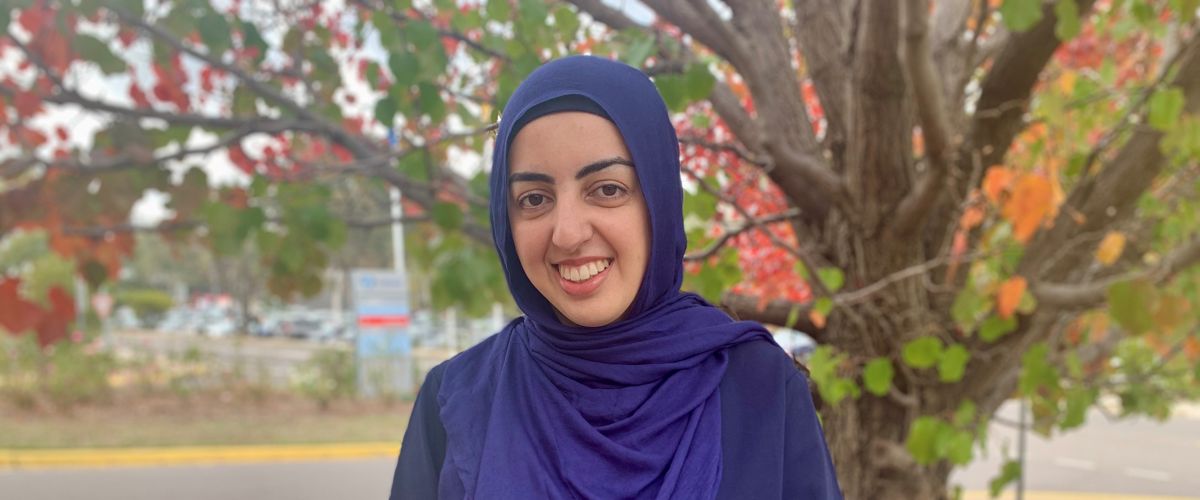
Dr Marrwah Ahmadzai
Dr Marrwah Ahmadzai is an Obstetrics and Gynaecology Registrar, speaker, writer and advocate.
Marrwah is passionate about anti-racist medicine and the provision of culturally safe health care. She was involved in an antenatal education program for culturally diverse women in the ACT. She was interviewed by Jean Hailes for Women’s Health to develop clinical guidance for clinicians working with culturally diverse communities in sexual and reproductive health. Marrwah has also delivered community health education at a local level on health topics like Ramadan and fasting with the Australian Islamic Medical Association.
Marrwah represents junior doctors on the Royal Australian New Zealand College of Obstetricians & Gynaecologist Magazine Advisory Group, Canberra Region Medical Education Council Education Committee and the Australian Capital Territory's Council of Doctors in Training coordinated by the Australian Medical Association.
Marrwah’s writing has featured in The Guardian, the Australian Broadcasting Corporation and the Special Broadcasting Service. She is a speaker who has made appearances on the national and international stage including a TEDx talk on the power of storytelling in breaking down barriers.
In 2021 Marrwah was the recipient of the ACT Government Individual Multicultural Champion Award.
Transcript
[00:00:00] Dr Sanjaya Senanayake: Hi, this is Dr Sanjaya. Imagine having a member of the public question your skills or your right to work in Australia based on your appearance. It sounds unbelievable, but this very encounter happened to Dr Marrwah Ahmadzai. She joins me on Behind the Curtain to share her own experience across the health care sector.
[00:00:27] Dr Sanjaya Senanayake: Let's jump into our chat.
[00:00:37] Dr Sanjaya Senanayake: Hello everyone. Welcome to the latest edition of our podcast. Today we have a very special guest, Dr Marrwah Ahmadzai, who is a third-year Obstetrics and Gynaecology Registrar here at Canberra Health Services. Hello, how are you?
[00:00:55] Marrwah Ahmadzai: I'm well, thank you, Dr Senanayake. Thank you so much for having me.
[00:00:59] Dr Sanjaya Senanayake: That's fine. And look in the podcast world, Sanjaya is fine.
[00:01:05] Marrwah Ahmadzai: Thank you.
[00:01:05] Dr Sanjaya Senanayake: And yes, you've certainly come in on your day off and, uh, I know you have, uh, a very busy time. Where are you up to in your training at the moment?
[00:01:13] Marrwah Ahmadzai: Um, so I'm in third year of training now, um, of a six-year training program. Um, and I've finished my oral, sorry, my written exam and just need to do my oral examination and sign off my time.
[00:01:29] Dr Sanjaya Senanayake: Wonderful, wonderful. And I was recently listening to a TEDx Talk that you've done, which talks about storytelling and the opening is, is quite dramatic. It grabs you, it talks about something that I do and all of us do, when we have patients in clinic, we sort of walk into the waiting room and we call out a name and we get greeted by, uh, the patient and we take them in and commence the consultation.
[00:02:00] Dr Sanjaya Senanayake: But for you, it had been different. Do you want to just tell me the sorts of things that were happening, please, Marrwah?
[00:02:06] Marrwah Ahmadzai: Yeah. So in the TEDx Talk I opened by sharing a few interesting encounters where I called out a patient name and was met with, um, interesting responses, I suppose. One of them was a patient who said that they wouldn't see someone without an Australian visa, who I reassured by saying I had an Australian passport. I managed to get through that one with humour.
[00:02:34] Marrwah Ahmadzai: But yeah, I shared those stories 'cause I think that there might be many clinicians who may have experienced them, who may not have spoken about them and hopefully that helped those people.
[00:02:43] Dr Sanjaya Senanayake: Yes. I think for those people who, who made those remarks, they made assumptions that you were born in an exotic part of the world.
[00:02:52] Dr Sanjaya Senanayake: And, what exotic part of the world were you, were you born in?
[00:02:56] Marrwah Ahmadzai: I was born in Belconnen in Canberra, actually.
[00:02:59] Dr Sanjaya Senanayake: Belconnen, look, that's, that's out west somewhere, isn't it?
[00:03:02] Marrwah Ahmadzai: Uh, yeah, on the north side of Canberra.
[00:03:03] Dr Sanjaya Senanayake: I think there might be a DFAT warning. So, but look, I, I have been to Belconnen so to, to any of our listeners today, I think it's a wonderful place to visit.
[00:03:15] Dr Sanjaya Senanayake: And actually, not that exotic.
[00:03:17] Marrwah Ahmadzai: It could be. It could be that I was born in the north side and the actual hospital is on the south side. I know there's a bit of North / South divide, so perhaps that's where it was coming from.
[00:03:27] Dr Sanjaya Senanayake: No, no. There's no issues between north and South. Everyone accepts that South is better, but let's not go there.
[00:03:36] Dr Sanjaya Senanayake: So, when these things happened, you would've been quite junior. Were you a registrar?
[00:03:43] Marrwah Ahmadzai: I was an intern resident for the majority of them.
[00:03:48] Dr Sanjaya Senanayake: And one thing you didn't mention in the TEDx talk was what happened after you took those patients? Did they come into the rooms with you and were you able to build a rapport?
[00:03:59] Dr Sanjaya Senanayake: What happened?
[00:04:01] Marrwah Ahmadzai: Yeah, I think most of the time with a bit of conversation and clarification, things are okay, and you're able to continue on and build rapport and complete the consultation. And in some of the consultations I was with other clinicians, and so they took the lead and I stepped back a bit.
[00:04:21] Dr Sanjaya Senanayake: I do find if patients don't have initial confidence in you, if they give you a chance, then they will throw away those stereotypes and then see you and take you on face value.
[00:04:37] Marrwah Ahmadzai: Yeah, that's right.
[00:04:38] Dr Sanjaya Senanayake: And accept you, which is great. I think the other thing is as you become more senior, it'll be your clinic.
[00:04:46] Dr Sanjaya Senanayake: So, they'll know exactly who they're seeing and those, uh preconceptions won't be there.
[00:04:53] Dr Sanjaya Senanayake: Is it less of an issue these days? Do you find?
[00:04:55] Marrwah Ahmadzai: Yeah, it is less of an issue. Also, sometimes when you, I think when someone looks at you, they have these preconceived notions, and then when I open my mouth and start talking, the privilege of the Australian accent.
[00:05:08] Marrwah Ahmadzai: It kind of, first of all, it throws people off a bit 'cause they're like, oh, you look like that, but you sound like that. But also, yeah, having an Australian accent is a privilege in many ways in that a lot of people prefer to see someone who they think is local.
[00:05:27] Dr Sanjaya Senanayake: Yeah. Look, I, know no one could see this on the podcast, but I'm a person of colour as well, and I do believe that the way you speak is very important in overcoming some of those prejudices. It shouldn't necessarily be, but I do find, as you say, if you speak clearly with an Aussie accent, patients can understand you to some extent. It seems to be reassuring.
[00:05:53] Marrwah Ahmadzai: Yes, that's right. As you say, it shouldn't be an issue, but unfortunately that's nature of the world we live in and yeah.
[00:06:01] Dr Sanjaya Senanayake: And another thing you touched on in that TEDx talk was a very poignant quote by Martin Luther King Jr. Where he said that people hate each other or men hate each other and the reason that men hate each other is that they don't know each other. The reason they don't know each other is because they don't talk to each other.
[00:06:21] Dr Sanjaya Senanayake: And that's why a consultation's a beautiful way to build a rapport and build a relationship with patients.
[00:06:28] Dr Sanjaya Senanayake: And now you've chosen obstetrics and Gynaecology. What drew you to that profession?
[00:06:34] Marrwah Ahmadzai: It's a really great specialty because you get to look after women throughout their life course.
[00:06:40] Marrwah Ahmadzai: There's a saying that you look after women from womb to tomb, which is true in many ways.
[00:06:48] Dr Sanjaya Senanayake: Oh, I love it.
[00:06:49] Marrwah Ahmadzai: Yes. So, from birth all the way through to adolescent years, menstruation, pregnancy, postpartum, menopause and beyond. There's a lot of diversity in the work. So, no two days are the same. So, one day you might be on a birth suite running from room to room, having the privilege of watching new life entering the world multiple times in a day. And then in another day you might have a more easier paced day in the clinic. And then there's operating days. So, it's all very varied and diverse.
[00:07:26] Dr Sanjaya Senanayake: You're probably at a stage of your career where you're enjoying all aspects of it, but do you have a feel for whether you might head down the obstetrics or the gynaecology pathway?
[00:07:35] Marrwah Ahmadzai: It's really hard 'cause there's so many areas within the specialty. So, I'm really grappling with that at the moment. I feel like every rotation I do, I'm like, this is the one. I love it. This is so interesting. And then I move on to the next one and I feel the same way. But I really like the Oncology space.
[00:07:55] Marrwah Ahmadzai: It's very interesting and very rewarding. However, I'm still trying to discover where I want to end up.
[00:08:03] Dr Sanjaya Senanayake: Yeah. I certainly have colleagues who, you know, are in their fifties and sixties and are doing obstetrics and I really admire them 'cause those late nights and disrupted sleep must get to you after a while.
[00:08:18] Marrwah Ahmadzai: Yeah, you really need to be able to sleep anywhere, that's for sure. At any time. And on any hard couch, but I've heard that once you pass 60, the on-call is no longer mandatory at night time.
[00:08:32] Dr Sanjaya Senanayake: And Marrwah, do you want to tell me about any interesting projects you're doing in the O & G space?
[00:08:38] Marrwah Ahmadzai: Yeah. There's one that we're doing within the hospital, which is really cool. Our antenatal education leader for the hospital who's a midwife, whose name is Rebecca Clark, shout out Rebecca if you're listening. She approached me a few years ago when we had a large cohort of Afghan refugees who came across after the Taliban takeover and she asked me if I would do an antenatal education class with her because I speak two other languages, which are Dari and Pashto.
[00:09:08] Marrwah Ahmadzai: She said it would be nice to have someone who's kind of bicultural, who can speak the language. So, we met up and went over to Companion House and we had a really great session with some Afghani women. One of them had brought along her mother-in-law who was this hilarious matriarchal figure who was basically running the education with us, putting in a few pearls of wisdom.
[00:09:32] Marrwah Ahmadzai: It was very good, and they all got to speak to each other and network, which was really good. And then it sort of evolved from there. We now run these classes once a month and they're for women with limited language proficiency, so we just run them in smaller groups.
[00:09:55] Marrwah Ahmadzai: The pace is slower compared to the standard classes, and they bring support people. And there's an option to have a face-to-face or phone translator or interpreter if needed.
[00:10:05] Dr Sanjaya Senanayake: At the moment, is it still very much confined to the Afghan community or it's others?
[00:10:12] Marrwah Ahmadzai: No, it's opened up. It's very multicultural.
[00:10:14] Marrwah Ahmadzai: Every class we see people from different backgrounds and often within the same class, there'll usually be about seven or so families, and everyone speaks a different language.
[00:10:26] Dr Sanjaya Senanayake: And have you been amazed, shocked, surprised by the level of knowledge or the lack of knowledge in these groups?
[00:10:38] Marrwah Ahmadzai: I'm amazed to see the health knowledge within communities that is different to our traditional Western knowledge. There's a wealth of knowledge within these communities that's passed down from generation to generation. That these women carry with them. And that's really inspiring to see. But often they are struggling to navigate with the health system, a new health system, and it's really nice to be able to talk them through how a system works and make them feel more empowered.
[00:11:08] Dr Sanjaya Senanayake: Now, look, having said that you were born in Canberra, the story of your family though goes beyond that. Do you mind letting us know?
[00:11:16] Marrwah Ahmadzai: Yeah, sure. So, my parents were born and raised in Afghanistan. And they left Afghanistan sort of in the era of the Soviet invasion, and they moved, they were refugees in Pakistan, and then eventually they were sponsored and migrated over to Australia in the nineties, early nineties.
[00:11:38] Dr Sanjaya Senanayake: Okay. And your family, I know you've got a brother. Yes, and he worked for us as a registrar on infectious diseases. And he's gone on to do great things. He's passed his physician's exam and he's doing very well. And he was a lovely fellow. I think he was going to be a neurosurgeon at one stage.
[00:11:56] Marrwah Ahmadzai: That's right. But now he is almost, almost there with his gastroenterology training.
[00:12:02] Dr Sanjaya Senanayake: Oh fantastic. And Canberra, you've been here for really all, all your life? Your medical school?
[00:12:10] Marrwah Ahmadzai: No, not medical school. So, I was born and raised in Canberra, but I moved away for medical school. So, I went to med school in Sydney at the University of New South Wales.
[00:12:21] Dr Sanjaya Senanayake: Ah, my old hunting grounds.
[00:12:23] Marrwah Ahmadzai: Did you also go to uni there?
[00:12:25] Dr Sanjaya Senanayake: Uh, yes I did. Oh, a very long time ago.
[00:12:28] Marrwah Ahmadzai: Yeah. Okay. Yeah, so I lived in Sydney for about six years and then towards the end, home beckoned and I came back. I was just sick of the long commutes and the lack of parking and the plentiful flying cockroaches.
[00:12:46] Dr Sanjaya Senanayake: Actually, that's true, isn't it? You don't realise how many cockroaches there are in Sydney. And I think it's the one where, at least in, in the Canberra winter, we take care of the cockroaches, but Sydney doesn't have that luxury.
[00:12:57] Marrwah Ahmadzai: And the Canberra ones don't fly as much, so.
[00:13:00] Dr Sanjaya Senanayake: No, no. Well, I think, the audience is listening to two people who've experienced Sydney but came back to Canberra.
[00:13:09] Dr Sanjaya Senanayake: And I would imagine with, being on call and other things, having a short commute and coming to hospital quickly must be a real luxury.
[00:13:20] Marrwah Ahmadzai: Yeah, it makes a big difference, particularly after night shift. The short drive is very much appreciated.
[00:13:26] Dr Sanjaya Senanayake: That's right. I remember I was whinging to a colleague from Melbourne, some years ago about how I had to go to Calvary, what is now North Canberra Hospital, and I said, oh, look, it's ridiculous.
[00:13:39] Dr Sanjaya Senanayake: It, you know, it can take 15 minutes. I think she slapped me. We don't realise how lucky we are.
[00:13:48] Marrwah Ahmadzai: Yeah, Sydneysiders always laugh when I say something is too far away 'cause it's more of a 15 minute drive.
[00:13:55] Dr Sanjaya Senanayake: Exactly. So, no, I think Canberra is a remarkable place.
[00:14:01] Dr Sanjaya Senanayake: They talk about it being a small town with big city amenities and uh, so it is something unique.
[00:14:09] Marrwah Ahmadzai: It does have country town feels, doesn't it?
[00:14:11] Dr Sanjaya Senanayake: That's right, that's right. And look, obviously it's, it's early, still early in your training, but do you potentially see yourself setting up or settling in Canberra as a consultant?
[00:14:21] Marrwah Ahmadzai: Yeah, absolutely. I have a big family here. So, Canberra is home and it's a wonderful community. So, I do see myself staying on as a consultant.
[00:14:34] Dr Sanjaya Senanayake: The other thing that I've also found is because it's its own territory, you can get involved at a very high level, but travel short distances, for example, the work you're doing with, culturally and linguistically diverse women from various communities, that would be much harder to do in Sydney or Melbourne. You could do it, but in a much more targeted region, whereas in the ACT, you can cover the whole territory.
[00:15:01] Marrwah Ahmadzai: Yeah, that's true. And I think in Sydney and Melbourne often there are pockets of communities in different part of the city, so you'd have to travel a fair way to get to certain communities.
[00:15:13] Marrwah Ahmadzai: Whereas Canberra, it's a bit different that there's a lot of diversity, but it's all throughout the town. I think it's less siloed.
[00:15:21] Dr Sanjaya Senanayake: We’ve so far talked a lot about your medical career, and I've touched on the TEDx Talk and for those who know what TEDx Talks are, it's where remarkable people get asked to talk about their experiences on a topic.
[00:15:37] Dr Sanjaya Senanayake: So Marrwah isn't just a remarkable doctor. She's done a lot of work outside that sphere. And I think one point you were nominated for ACT Australian of the Year. When was that?
[00:15:49] Marrwah Ahmadzai: That was for the 2022 Awards.
[00:15:53] Dr Sanjaya Senanayake: Wonderful. And what was that for?
[00:15:55] Marrwah Ahmadzai: Uh, so it's funny actually. I still don't know who nominated me or what exactly inspired them to nominate me because you can nominate people and keep it confidential.
[00:16:09] Marrwah Ahmadzai: And so, the story behind it, it's quite funny. I think I was on leave or something, so I hadn't checked my work emails for a while. And then when I came back, there was all these emails to go through and I looked at the email and actually thought it was a spam email. I was like, this surely is not meant for me.
[00:16:27] Marrwah Ahmadzai: And I was about to delete it, and I thought maybe I'll just have a little look. So, I opened it and saw the nomination. But I think the nomination was just for the work I've done outside of medicine with sort of promoting anti-racism in medicine and in general and promoting diversity and inclusion.
[00:16:47] Dr Sanjaya Senanayake: Yeah. And I mean, that's, that's wonderful. That, that really is wonderful. And for those of us who've never been nominated for ACT or Australian of the Year or New South Wales or anywhere else, what's the process? Do you all have a big party or?
[00:17:03] Marrwah Ahmadzai: So, the first process is the nomination that you receive.
[00:17:06] Marrwah Ahmadzai: And then you have to fill out a bit of a questionnaire. So, they, like, they check your criminal history or lack thereof, and they check your particulars. And then there's like a judging process. So, they look at all the nominations, which I assume they receive thousands of across the nation.
[00:17:26] Marrwah Ahmadzai: And each state or territory has its own judging panel. And then a number of people are shortlisted for each state. And then the finalists attend an award ceremony, which in the year that I was nominated, was held at the National Gallery, and they pick one nominee for each state in each category. And then all those people will go to the nationals, which they decide on Australia Day.
[00:17:50] Dr Sanjaya Senanayake: Okay. And, uh, who won ACT Australian of the year in 2022?
[00:17:56] Marrwah Ahmadzai: Um, oh, what's his name?
[00:18:06] Marrwah Ahmadzai: He's a First Nations basketballer.
[00:18:11] Dr Sanjaya Senanayake: Oh, um, Patty Mills. That's right. Patty Mills. That's right. Yes.
[00:18:17] Dr Sanjaya Senanayake: Marrwah was pretending to forget Patty Mills. Yes. Just to show it wasn't important to. No, no, no. Of course. We're joking. We all love Patty Mills. No, but that is a remarkable feat. And tell me a bit more about this work, we've touched on some of it. So, in terms of discrimination, I guess, in terms of religion and gender?
[00:18:41] Dr Sanjaya Senanayake: Yep. What do you see the state of that now, I guess in the medical setting and in the broader community? And are we on the way to fixing it? Are we getting better? Tell me your thoughts.
[00:18:53] Marrwah Ahmadzai: Yes. Unfortunately, research would suggest that there is significant racism or discrimination within our communities at large.
[00:19:02] Marrwah Ahmadzai: To different groups and there's different statistics for groups, but I know that Islamophobia is on the rise, for example. And there was a recent report issued around that. Within the medical setting, there definitely is racism and discrimination, but I found that people are hesitant to talk about it because they don't want it to affect their career trajectory or progress by talking about discrimination they've experienced because they don't want it to somehow disadvantage them.
[00:19:31] Marrwah Ahmadzai: And certainly discrimination because of gender is a massive thing, which we're talking about a lot more and there's a lot of, um, initiatives in place to try and address that. But I think we're getting better because there's more people talking about it. And there is in fact a whole body of literature now sort of dedicated to racism within medicine and how we can better do our job for patients and for clinicians who work in the sector. So, there is, um, uh, recently established in Australia, the Australian Multicultural Health Collaborative, and they put out really good research and work around in terms of educating people around this space. And in the UK for example, the NHS has started the Race and Health Observatory, and that was during Covid. So, across the globe, there's a big push to address this issue. In the United States, for example, you might have seen in the news recently there was news that the maternal mortality rate in the United States is unacceptably high. And in fact, the figures for people who are black or Hispanic are exponentially higher compared to the rest of, um, Americans, but also compared to many developing nations.
[00:20:48] Marrwah Ahmadzai: So, I think there's a lot more awareness of it and a lot of, there's a lot of organizations doing good work to work on these issues.
[00:20:55] Dr Sanjaya Senanayake: Yes. You, you've raised the point when we talk about inequity. It’s not just among health care workers, but also in terms of patients and communities.
[00:21:07] Dr Sanjaya Senanayake: Australia has the highest or, or one of the highest, if not the highest rates of rheumatic heart disease in Indigenous communities.
[00:21:18] Marrwah Ahmadzai: Yeah. Uh, and that's just terrible. It's unacceptable.
[00:21:20] Dr Sanjaya Senanayake: It is appalling.
[00:21:21] Marrwah Ahmadzai: So, when I started doing this work, I kind of, the inspiration was to talk about my own experiences in order to try and help other people who'd, uh, face discrimination.
[00:21:31] Marrwah Ahmadzai: But as I transitioned, like I went from being a medical student to a doctor and witnessed the impact of racism in terms of health inequity. It's inspired me a lot more to talk about the health impacts of racism, which often we don't appreciate or link the two.
[00:21:48] Dr Sanjaya Senanayake: And this may be a difficult one to answer in terms of biases and discrimination.
[00:21:54] Dr Sanjaya Senanayake: There's your religion where you faced issues, uh, race and gender. Is gender still a big issue, do you think?
[00:22:07] Marrwah Ahmadzai: Look, I think so because on face value, we know that women, um, earn less than men in this country. Um, across all professions and in the medical, um, sphere, it's harder for women to progress through training because they take time off work for pregnancy or maternity leave.
[00:22:31] Marrwah Ahmadzai: And so, you know, they end up progressing slower than their male colleagues. And that does affect their training because when you take leave from training, that affects the opportunities that you have and the amount of time it takes to complete your training. So even on, obviously a very basic level, ignoring all the other impacts, um, to women and their career progress, uh, progression.
[00:22:57] Marrwah Ahmadzai: So, I absolutely, I think it is still a problem. Um, the specialty that I'm in, there are a significant proportion of female trainees. In fact, uh, there are very few male trainees. Um, however, if you look at a leadership level, women are still underrepresented.
[00:23:20] Marrwah Ahmadzai: Yeah. Um, and that's the case for most medical colleges.
[00:23:25] Marrwah Ahmadzai: Women are underrepresented at a leadership level, and then if you look at culturally diverse women or women who have another layer added to that, it's even less.
[00:23:35] Dr Sanjaya Senanayake: I think, uh, you're, you're right. There's still a way to go, but I look back on my medical student days, which was a very long time ago, and it was really the wild west out there.
[00:23:45] Dr Sanjaya Senanayake: Yeah. If you were anything different, it was, uh, potentially lethal to one's career. So, I think we are heading in the right direction. I think the work that you are doing and people who are working with you in that sphere, in that space are, are really making a difference. Is there anything you'd want to say about storytelling?
[00:24:09] Dr Sanjaya Senanayake: And the reason I ask that is in your TEDx talk, you did mention that when you were experiencing difficulties in school at a very young age, you were able to tell your story to a larger group, and then they, it was a light bulb moment for some of them, and they learned how to accept you and treat you fairly, and you've done that again.
[00:24:31] Dr Sanjaya Senanayake: Now, storytelling, it's nice to tell stories, but are we heading towards a book or a documentary? You're a lady of many talents, so tell me more.
[00:24:42] Marrwah Ahmadzai: I thought about writing a book a few times and then I thought nobody would read that, but, uh perhaps in the future. I used to write more, I do more creative writing, but I feel like I've lost the creative flare.
[00:24:55] Marrwah Ahmadzai: So perhaps I need to work on that a bit. But I think you've written a book, haven't you? Maybe I should take some tips from you?
[00:25:02] Dr Sanjaya Senanayake: Oh, yeah. I have written, and it is a catharsis as well. It really is, if you have any pent-up frustrations or points you want to make, it's nothing like writing it on paper.
[00:25:14] Dr Sanjaya Senanayake: Yeah. Because that, particularly at that time, it's private. It's just you and the laptop or you and the typewriter. Of course, then if you send it for publication, it, becomes a bit more widely read. Yeah. But I highly advise it. And I also think it's very important to have interests outside medicine.
[00:25:31] Dr Sanjaya Senanayake: Because particularly in obstetrics and gynaecology or whatever you do, it does take a big toll on you. So, it is good to have something where you can relax.
[00:25:42] Dr Sanjaya Senanayake: Well look, uh. Dr Marrwah Ahmadzai, it has been a pleasure talking to you and uh, I hope we see you soon.
[00:25:51] Marrwah Ahmadzai: Thank you so much for having me. That was a nice chat.
[00:25:54] Dr Sanjaya Senanayake: Thank you.
[00:26:02] Dr Sanjaya Senanayake: Thank you for listening. I hope you'll join us behind the curtain for our next episode where we'll delve into the story of another of our fantastic health professionals here at Canberra Health Services. If you're interested in starting an exciting career with us, head to our website to join team CHS, and that website is www.canberrahealthservices.act.gov.au/careers
[00:26:53] Dr Sanjaya Senanayake: I acknowledge the Ngunnawal People as traditional custodians of the ACT, the land I’m recording on, and recognise any other people or families with connection to the lands of the ACT and region.


